The urge to explore the roots of our family tree is pretty universal. According to irishgenealogy.ie, there has never been an easier time to trace your Irish roots. And with the publication of the 1926 census last week, there has been an explosion of interest in doing just that.

The 1926 census return for the Fitzimons family of Beechwood Avenue in Dubin, home of a young Maureen (aged 5), who would later go on to become Hollywood star, Maureen O’Hara.
The census holds records for everyone in Ireland on the evening of 18 April 1926, from future Hollywood stars like the young Marureen O'Hara, to literary giants like W. B. Yeats.
Many of the My Irish Jeweler team have had a look, too! Uncovering little nuggets of information about grandparents and great grandparents and gaining an insight into the lives our ancestors lived in Ireland 100 years ago. These dusty records that had formerly been stashed away in archives, have been painstakingly conserved and scanned to provide a unique connection with the past, now available online for all to access.

A record for my own Grandmother who was just a baby at the time of the census in April, 1926.
Why is the 1926 Census interesting?
It was the first after the establishment of the Irish Free State, giving a measure of a newly independent nation after a significant period of upheaval and multiple wars.
There are over 560,000 household records to trace, recorded across over 750,000 pages scanned by the team at the National Archives. But before this treasure trove could be released, the 1,200 or so surviving centenarians whose information is contained in the census had to be contacted for their consent.

The Dublin suburb of Donnybrook a little over a year after the 1926 census was taken.The accessibility of informtion in the digital age that we take for granted would seem like science fiction to the people in this photo!
The records paint an interesting picture, too. The average life expectancy of both men and women was a shockingly low 60 years; today it is closer to 90! Despite being the first census where families could respond in Irish, just 1% chose to do so. More than half the people in rural areas were farmers or lived on a farm. The other half of the population worked all manner of professions, many that are largely gone, including coopers, horse cart drivers, umbrella fixers, and lamplighters.

One of the last of the Dublin lamplighters, Paddy Hunter in Dublin in 1989. The 224 gas lamps in the Phoenix Park are still there and maintained by the same family, the Flannagans, that worked on them 100 years ago. Though they light automatically these days.
Photo Credit: Dublin City Council Photographic Collection
Packed with intriguing information and direct insights into life 100 years ago, we are not the only ones that have found the 1926 census interesting! There has been a huge response to its release a week ago, with over 20 million hits to the site in the first two days alone!
This interest is likely to reach far beyond Ireland’s shores. Close to half a million Irish people emigrated in the 1950s, many of whom would have been counted in the 1926 census. Many millions of people claim Irish ancestry in Britain, the United States, Canada, Australia and New Zealand. Will you be taking a look, too? Let us know in the comments below.
Search the 1926 Census
Tracing Irish Roots
If you fancy tracing your own Irish roots, resources like the 1926 census are invaluable. Yet despite Ireland being one of the earliest adopters of hereditary surnames in Europe, there can be plenty of complications to make tracking your roots a little trickier.
Names were often lost in translation from Gaelic, spellings were often garbled in transcription, prefixes and suffixes were often dropped and reclaimed from one generation to the next. These factors make tracing Irish roots less than straightforward.
Here are our four tips to keep in mind when tracing your own heritage.
1) Follow the Paternal line
Given that Irish hereditary names generally follow the name of the father or grandfather (think of Brian Ború), it can be easier to start with a paternal line.
2) Remember prefixes may come and go
A missing Mac or O is nothing to get concerned about. Prefixes like these may come and go - especially if you are searching between the 17th and 19th centuries.
3) Don’t worry too much about spellings either
Names change with translation and transcription. If your search leads you to what might seem like a drastic name change, that might not be the end.
4) Get expert help when you need it
If your search runs cold, and it often does given all the ins and outs of Irish names, it can be useful to enlist the help of an expert. There are many resources to draw on, like professional genealogists or free online resources.
Your Own Family Coat of Arms
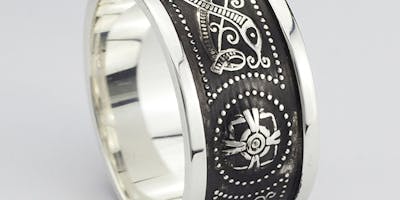
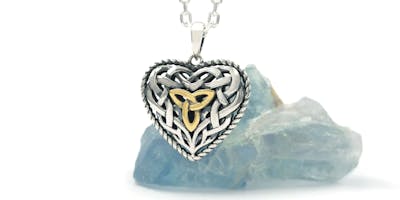
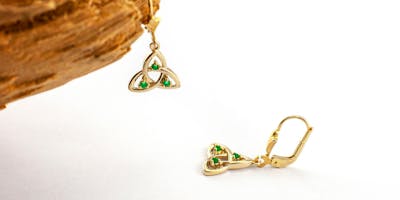
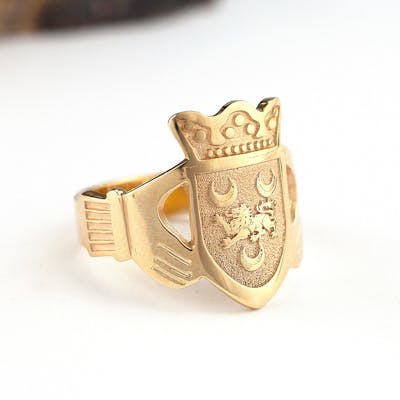
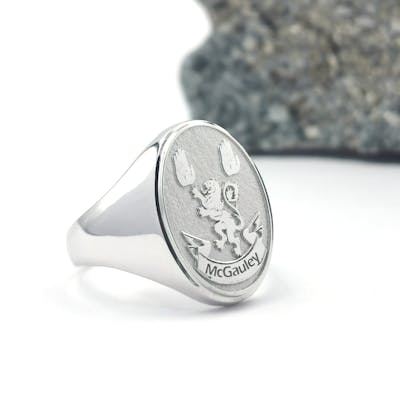
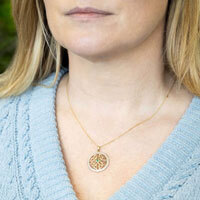
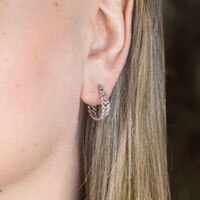
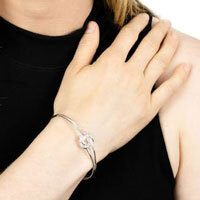
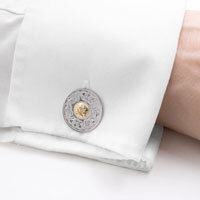
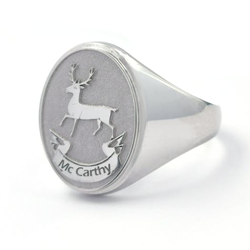
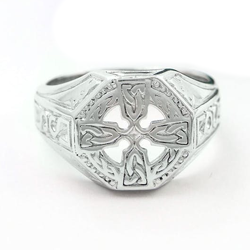
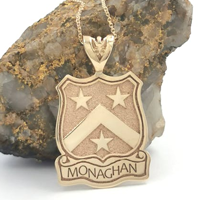
And of course, if in your digging you uncover an Irish root or two in your family tree and are curious to see your own Coat of Arms, please do get in touch. Our beautifully detailed Coat of Arms jewellery is a fantastic way to celebrate Irish Heritage.






 Ask Gemma


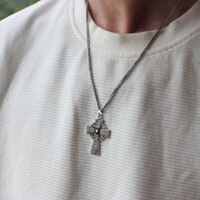
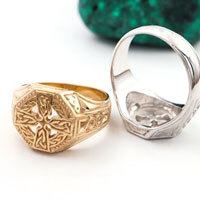
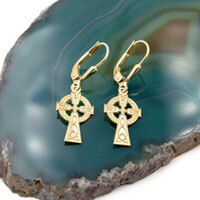






I want to thank all of you for the very informative email I received today at 2:37 PM, CST, here in Temple, Texas. I trust this store and appreciate the woman (sorry I forgot her name) that I talked with in regard to a Heraldry ring and Signet ring. My heritage on both sides of my family is very Irish, as well as Scottish and English. CONNOR, HALE, ABERCROMBIE, CASSIDY, O'BRIEN, O'QUINN, MURPHY. I AM HUMBLILY PROUD AND HONORED TO BE OF IRISH, SCOTTISH AND ENGLISH DESCENT. GOD BLESS ALL OF YOU. ON THE IRISH CREST, I STILL HAVE, IT HAS THE WORDS, IN GAELIC: "FROM GOD, EVERY HELP." I love My Irish Jeweler. Thank you all and all the best! :)