Hot on the heels of St. Brigid’s day is the feast of another female Irish saint on February 11th. It’s an important one for fans of sweet treats as she is the patron of beekeepers: St. Gobnait of Ballyvourney. Bees hold a unique place in Ireland, so in honor of St. Gobnait, we thought we would look at the curious tales of bees and beekeeping in Irish myth, law and folklore.
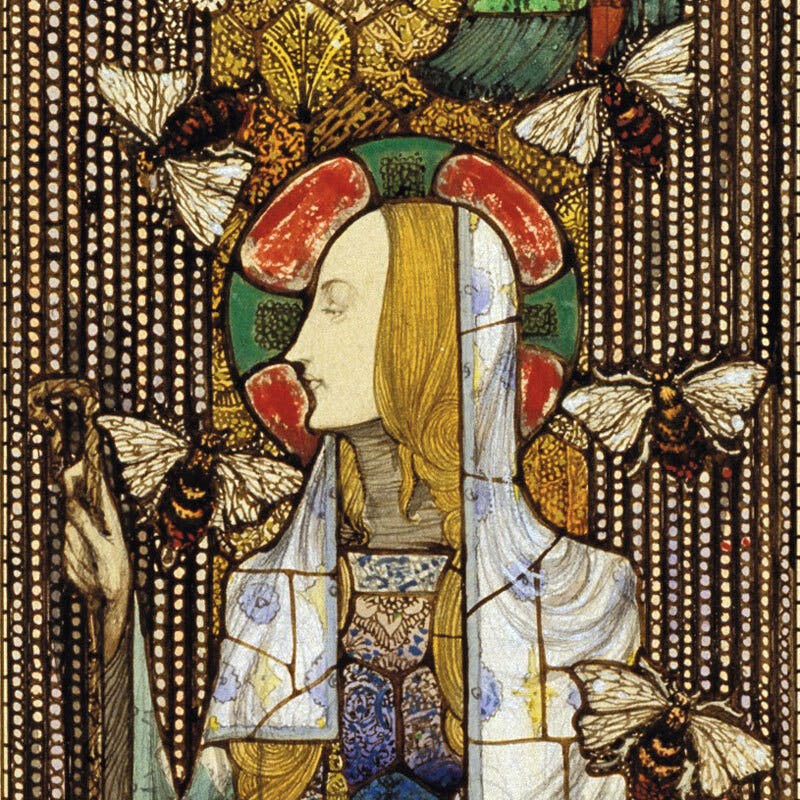
Harry Clarke's design for the Saint Gobnait window, Honan Chapel, Cork
Bees in Celtic Myth
Beekeeping in Ireland is thought to have been practiced for at least 2,000 years, and bees themselves were held in very high regard in ancient Ireland. Tír na nÓg, the land of the gods, was said to have rivers that ran with honey and mead.
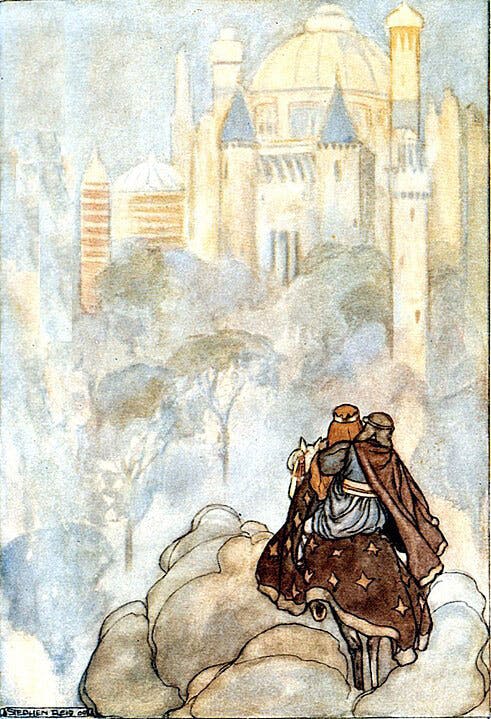
Niamh and Oisín on their way to Tír na nÓg, the otherworldly land of honey and mead
Photo Credit: Stephen Ried (Public Domain) in The High Deeds of Finn (1910)
Celtic myth tells us that bees were otherworldly beings, capable of buzzing their way between this world and the next, acting as messengers. It was also said that when a soul left the body it did so as a bee or a butterfly, so woe betide someone who harmed such a creature!
Bees in Ancient Irish Law
Bees make an appearance in the Brehon Laws, one of the earliest forms of written law in Europe, in a section known as “The Bee Judgements” or the Bechbretha. Composed in the 7th century, they dealt with all manner of issues related to beekeeping, including the ownership and value of swarming bees, what compensation was owed by the beekeeper to a person stung by one of their bees, and even the compensation owed to a beekeeper if someone's hens ate their bees! We can tell that these were extremely important creatures indeed to be given such attention in the law of the land.
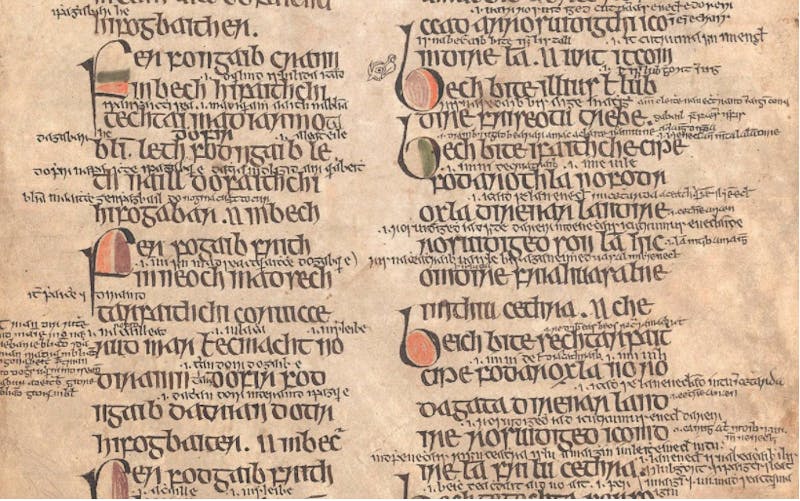
An excerpt from the Bechbretha in The Brehon law manuscripts held in the Library of Trinity College Dublin.
But then perhaps this protected status is not so surprising when you consider that honey was the only appreciable form of sugar known on the island of Ireland until the Normans brought others in the 12th century.
Bees in Irish Folklore
Given this elevated, and at times otherworldly status, all manner of superstitions arose around bees in Irish folklore. A single bee entering your house was a sign of good luck or wealth on its way. And it was deemed prudent to keep any bees you were caring for well housed, protected and even respectfully informed of all the important events of daily life!
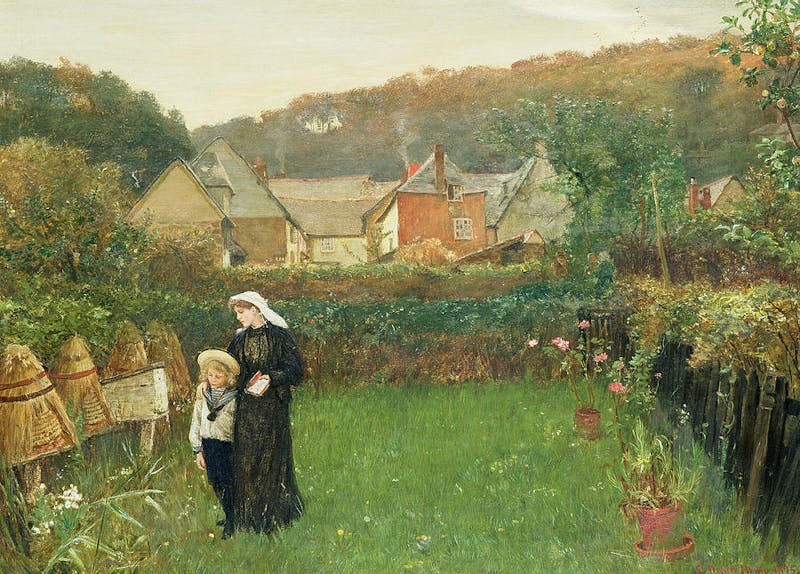
A painting from 1895 depicting a woman and her son telling the bees of a death in the family
If you kept them well, bees would bless your home with honey, mead, and by association, wealth. Honey had a near-magical status and was used in healing and rituals. When turned into mead, it was considered to have greater power still, and was the beverage required to mark big celebrations including ritual feasts and weddings. This led to the banquet hall on the Hill of Tara being known as Tech Mid Chuarda, the house of the circling of mead. It was even used in decision making - Mead was infused with hazelnuts, givers of wisdom, and said to grant prophetic abilities to the drinker.
Bees and St. Gobnait
And after all that, we finally come to St. Gobnait, the patron saint of Beekeepers. Born in the 5th or 6th century in Co. Clare, she was a resident of the smallest of the Aran islands, Inisheer, where she reportedly set up a small church. After having a vision, St. Gobnait returned to the mainland and established a monastery at what is now known as St. Gobnait's Wood in Ballyvourney, Co. Cork. And alongside the church, beekeeping was St. Gobnait’s calling.
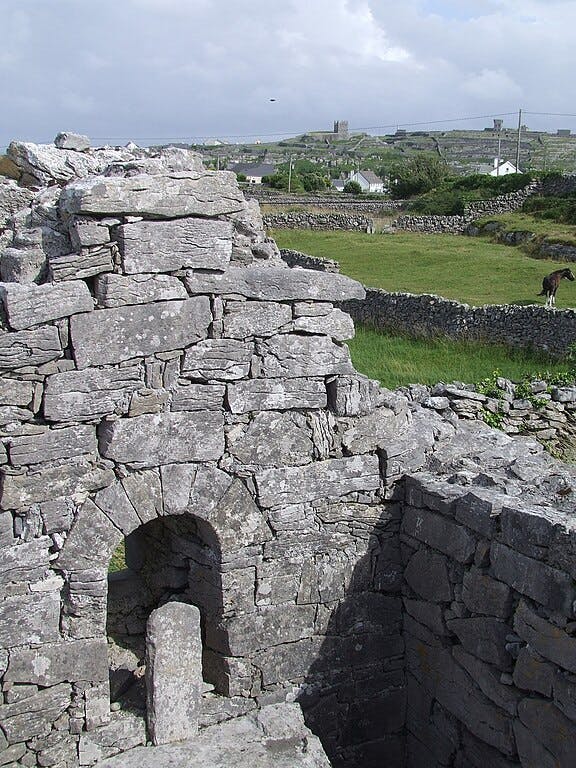
St. Gobnait's Church on the island of Inisheer. The current church dates from the 11th century, but there are claims it was first founded by Gobnait herself, and that it contains the remains of her beehive hut.
She reportedly held such a strong connection with these creatures, that she was able to set them on thieves or would-be assailants, and used their honey for healing the sick. She is credited with saving the people of Ballyvourney from the plague.
Bees in Ireland today
These days beekeeping in Ireland is more popular than it has been in many years and the appetite for local honey has risen too! Initiatives like no-mow May and the National Pollinator Plan are seeing habitats for wild bees coming back and there is a renewed appreciation of these industrious creatures. We're sure our ancient ancestors, and indeed Gobnait would approve.








 Ask Gemma



































I live in Fairfax, Virginia, and while the summer can get very hot here (over 100 degrees Fahrenheit this past first week in July), we are blessed with a variety of bees, hummingbirds, and song birds. A very happy sight.