




Clonmacnoise: Ireland's first city
Written by Ciaran on Sep 03, 2025 | 2 Comments
Clonmacnoise goes by many names including Ireland’s first City, the Athens of Ireland, or St. Ciarán’s City. In it's heyday it was home to 1500 to 2000 people, so a small city to be sure, but a sizeable settlement in those days! To this day, this medieval monastery remains one of Ireland's most significant historical and cultural sites, and was one of our first national monuments, listed in 1877.

Graves and some of the buildings at Clonmacnoise on the banks of the Shannon.
Photo Credit: Bernd Thaller (CC BY 2.0)
Founded by St. Ciarán, the ruins of this once great center of learning and craft remain a huge draw for visitors and pilgrims alike. With St. Ciarán’s Day on September 9th, we thought it was high time we pay this famous Irish site a virtual visit and answer a few FAQ including:
- When and where was Clonmacnoise founded?
- Why was Clonmacnoise important?
- When and why did Clonmacnoise fall into ruin?
- Why are people drawn to Clonmacnoise today?
When and where was Clonmacnoise founded?
Clonmacnoise was founded between 544 and 549 by St. Ciarán, with the backing of the high king of Tara, Diarmait mac Cerbaill, at a bend in the River Shannon in what is present day Co. Offaly.

A carving on the east face of the Cross of the Scriptures depicting Ciarán on the left and Diarmait mac Cerbaill on the right driving in the first stake for the foundation of Clonmacnoise.
Perhaps a more interesting question than when or where is why St. Ciaran chose this location? Viewed with modern eyes, the site at Clonmacnoise can seem a little out of the way! I must admit, when I visited the spot with my family as a somewhat surly teen after what seemed like an interminably long drive, I found it hard to see this beautiful but lonely spot as a bustling hub of invention, scholarship, and craft.

Present day Clonmacnoise seen from the air.
Photo Credit: Natonal Monuments Service
Clearly my namesake was a far more strategic thinker than my teenage self, as there are three very concrete reasons why, for the medieval period, Clonmacnoise was prime real estate, and the ideal location to site a monastery in Ireland.
Royally connected
Firstly, the site was strategically located on the border of two great Irish kingdoms, Connacht to the west, and Mide, Meath ruled by the Uí Néill, to the east, giving the potential for plenty of wealthy patrons! These patrons invested in the monastery over its long tenure, and are responsible for putting up the funds for many of its buildings and treasures, including the round tower and the spectacular high stone crosses.

An tSlí Mhór, The Great Way
Second, this site was also ideally placed on An tSlí Mhór, The Great Way. This ancient road ran from east to west across the island from Dublin to Galway along ridges of sand and gravel left by retreating ice sheets at the end of the last ice age. This high and relatively dry route allowed travellers to pick their way through the mire of bogs and wetlands in the midlands of Ireland and ensured a steady stream of passing traffic and trade options for the newly fledged monastery. It was also the road that accessed another strategic site, the royal palace at Tara!

Meandering elevated deposits left by glaciers, known as eskers, get their name from the old Irish word esker meaning ridge.
Photo Credit: Pearson Scott Foresman (Public Domain)
At a busy intersection
And finally, if another reason for the location was needed, it is the River Shannon itself. In the early medieval period, rivers were the major highways or motorways of their day. Used for moving people and goods. Founding a monastery on the banks of the largest river in Ireland, Ciarán was showing he didn’t just have booksmarts! With the river running North to South, intersecting with the Slí Mór running East West, Clonmacnoise was effectively at a busy medieval crossroads. So an ideal location for Ciarán’s monastery, that ensured it had every chance of growing and prospering.
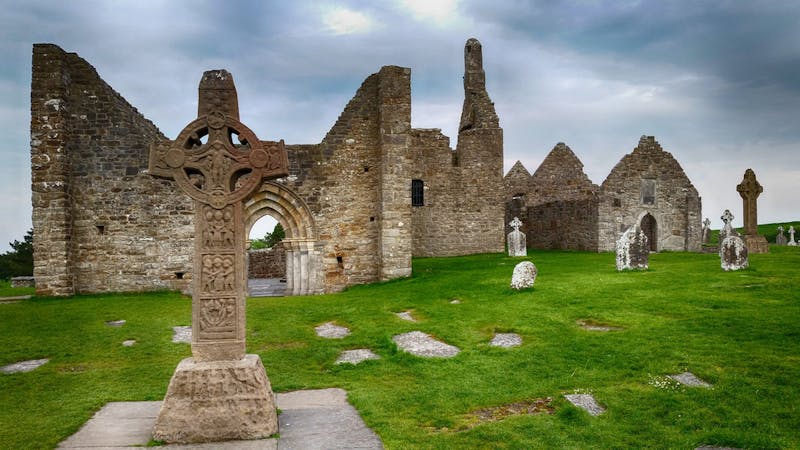
Even in a ruinous state, you can get an idea of how impressive Clonmacnoise grew to be in its heyday.
Photo Credit: Peter Moore (CC BY-SA 2.0)
Indeed, it seems that this site has been coveted real estate for some time! Archeological work at Clonmacnoise has uncovered evidence that the site was inhabited during the Iron Age too, more than 1000 years before St. Ciarán and his followers set up shop at this spot.
Why was Clonmacnoise Important?
Despite Ciarán’s untimely death from the plague a short time after its founding, the monastery at Clonmacnoise flourished and grew to become a prestigious center of learning and worship, where many of the high kings of Tara, the ardrí, Meath, and Connacht were buried. Clonmacnoise was literally a place for the great and the good to be seen dead!

Photo Credit: Bernd Thaller (CC BY 2.0)
Clonmacnoise: A center of learning
By the 9th century it was a sort of prestigious University of its day, attracting scholars and students from all over Ireland and Europe. Clonmacnoise, and sites like it, were particularly important during the so-called “Dark Ages” when much of Europe saw the decline of scholarly activity.

A screenshot of page 2 of one of the most famous manuscripts produced at Clonmacnoise, Leabhar na hUidhre, or the Book of the Dun Cow. The entire manuscript is available at the RIA Irish Script on Screen.
Photo Credit: DIAS Irish Script on Screen Project
Irish Monasteries and Clonmacnoise especially, acted as beacons in this “dark” and are credited with preserving and transmitting classical knowledge and manuscripts. The oldest surviving manuscript written in Irish, Leabhar na hUidhre, the Book of the Dun Cow, was created at Clonmacnoise. There are some stories that say the vellum used for the book was sourced from St. Ciarán’s own cow, a blessed beast credited with producing vast quantities of milk which could feed everyone in the monastery!
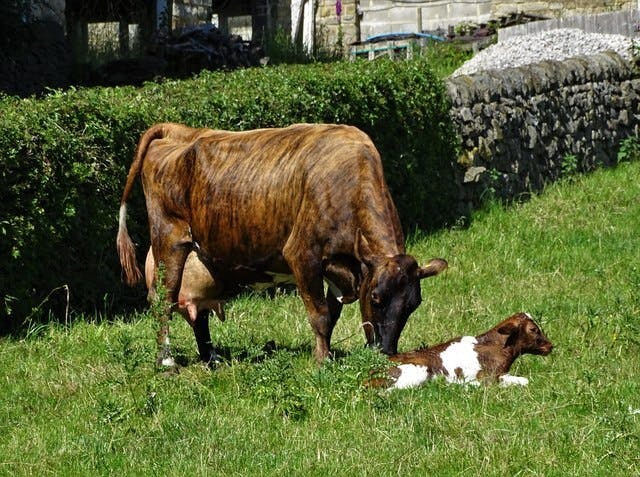
Photo Credit: Neil Theasby (CC-BY-SA-2)
Clonmacnoise: A place of pilgrimage
Much like it is today, Clonmacnoise was also a draw for travellers. In the medieval period these visitors would have been pilgrims, drawn to Clonmacnoise to visit the Temple Ciarán to venerate the relics of the saint and to seek blessings from his shrine.

Temple Ciaran is thought to cover the grave of St Ciaran himself. The building is noticeably sinking as a result of pilgrims removing soil from within the chapel for its alleged curative properties!
Photo Credit: XeresNelro - (CC BY-SA 4.0)
Clonmacnoise: A place of art and craft
With all these people drawn to this spot and royal connections there was also plenty of wealth floating around! Craftspeople sited themselves there to create work for the monastery and also for the visiting pilgrims. There were metalworkers, stonemasons and many more, living onsite, we assume in wooden structures that are no longer preserved. We know this was the case as there are the graveslabs at Clonmacnoise from these workers sited alongside the scholars of the monastery!

A grave slab that reads “OR DOODRAN HAU EOLAIS”. Translated as “Pray for Odhran h-Ua Eolais.” He was a scribe at Clonmacnoise who died in 994.
Photo Credit: Andreas F. Borchert (CC BY-SA 3.0 DE)
These crafts people were no doubt involved in creating some of the most iconic artworks at Clonmacnoise including the spectacular Cross of Scriptures, commissioned by Flann Sinna mac Maelsechnaill, king of Meath and high king of Ireland.
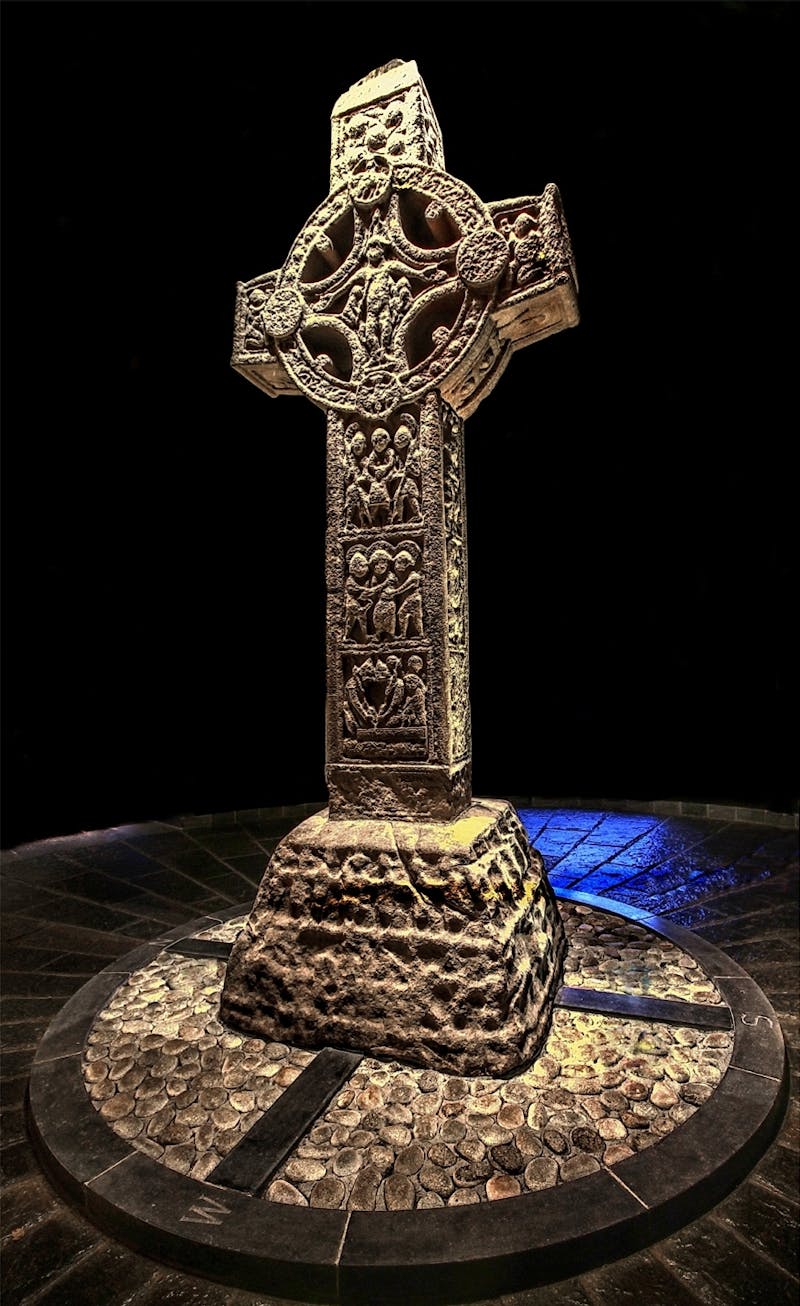
Photo Credit: Martin P. Whyte (CC BY-SA 4.0)
Generations later, the round tower that still stands today was built, this time commissioned by the King of Connacht. This impressive tower would have been one of the highest towers in Ireland and must have been quite the site. Unfortunately a few years after it was finished, the tower was struck by lightning taking the top third of the building off!

Even in a diminished state, the round tower is still a striking presence, depicted here in "The Last Circuit of Pilgrims at Clonmacnoise, County Offaly" painted by George Petrie (1843-46).
Photo Credit: National Gallery of Ireland Collection (CC BY 4.0)
When and why did Clonmacnoise fall into ruin?
Plague took St. Ciaran right at the founding of the Monastery and we know that this disease struck again hundreds of years later in the 7th century, killing off a large number of the residents!
It was a different threat that weakened and eventually ruined Clonmacnoise. As evident by the need for not one but two round towers, Clonmacnoise was regularly raided with more than 70 events recorded! That riverside location that was once a strategic asset had become a bit of a weakness, as raiders would happily sail up the River to access the monastery's considerable riches!

Photo Credit: Rob Hurson (CC BY-SA 4.0)
These raids started in the 8th century with the “Vikings” and continued for some time. They no doubt weakened the monastery but Clonmacnoise wasn’t abandoned. Indeed one of the great artefacts of the site, the Clonmarcnoise Crozier, appears to have been made in “Viking” Dublin and has a curious mixture of Irish and Norse artwork!

Photo Credit: Sailko (CC BY 3.0)
It wasn’t just Vikings that targeted the site, with Irish raids on record as well as Norman and English ones. And it was the increasing control of the English crown that sped the decline of Clonmacnoise, with a restructuring of religious and political affairs taking much of the power and money from this once impressive center. The final nail in the coffin so to speak was an attack in 1552, when English forces based in Athlone reduced the monastery to ruins. Very little was spared in this raid and Clonmacnoise was all but abandoned after 1000 years of activity.

Clonmacnoise Castle, built in 1214 just outside the walls of the monastery heralded the shift in power in the region and marked the beginning of the end for this venerable institution.
Photo Credit: Javier Mediavilla Ezquibela ( CC BY-SA 3.0)
Why visit Clonmacnoise today?
With all the talk of raids and ruins it would be fair to assume that there isn't much to see or do at Clomacnoise today. While it is true that the site is in ruins, it still makes quite the impression and is certainly a site of some activity today.
The old graveyard was still in regular use up to 1954 with exceptions made as recently as 2023 for one Teresa Larkin, buried alongside her husband Joe who had died 72 years prior! A modern church and graveyard are also on the grounds and are used for services.
What remains of “Ireland’s first city” gives a feeling of how impressive Clonmacnoise must have been in its heyday. A visit to the site and its cathedral, nine churches, three high crosses, two round towers, and over 700 Early Christian grave sites, is well worth it if you find yourself in the area!
Celebrating Heritage
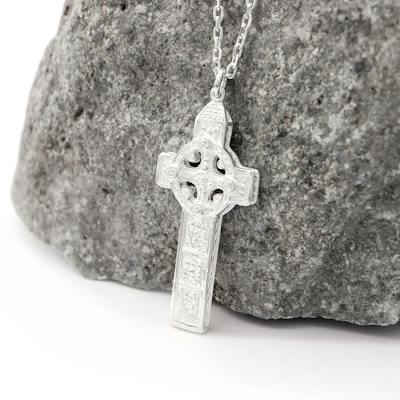
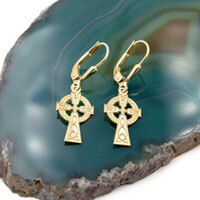
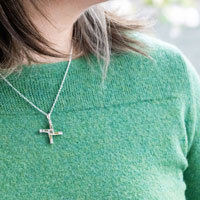
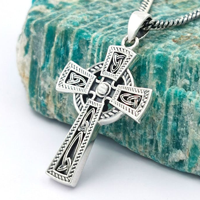
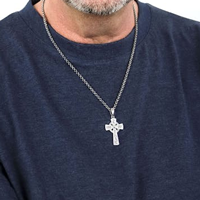
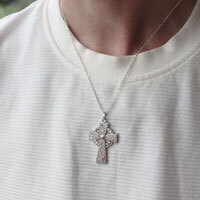
St. Ciarán's City inspired us here at My Irish Jeweler. Our Clonmacnoise cross celebrates the spectacular detail of the original stone "Cross of the scriptures" in miniature. Measuring close to 2 inches high including a polished bale, the intricate illustrations of the original carving have been recreated in minute detail, all expertly finished in sterling silver or solid gold.
Get In Touch
Have a question or something you're not entirely sure about when browsing our pieces? Please reach out. You can send us a note or give us a call—the Dublin workshop is here to make sure that you have a perfect experience from start to finish with My Irish Jeweler.
Follow us on Facebook and Instagram, to see what's new and upcoming. Join our Email list for early offers and special features.

Ciaran
My Irish Jeweler
Born in Co. Antrim and reared in Dublin, I was fascinated with Gaelic culture from an early age. I suppose it's not surprising given my mother inherited a grá for the Irish language from my grandfather, an Irish school headmaster. And that grá continues! My brother and sister are now Gaelic teachers here in Ireland, my niece is an award winning Irish dancer, and I proudly work to share Irish culture through our Irish and Celtic Jewelry at My Irish Jeweler!
I love researching and reading about the history of Irish design. It's at the core of what we do here at My Irish Jeweler. I find much of it so interesting that I have to share what I find. I hope you enjoy it!
Comments

A beautiful and heartfelt historical walk through Ireland. Thanks.



 Ask Gemma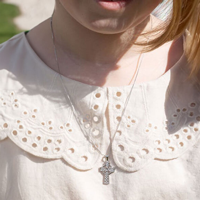












You are most welcome Stephan. Thank you for stopping by!