



Are lab emeralds REAL emeralds?
Written by Jane on Apr. 28, 2025 | 1 Comments
The My Irish Jeweler guide to lab emeralds
Also known as lab-created, lab-grown, man-made, or synthetic, lab emeralds, as the name suggests, originate in a laboratory rather than in the earth like natural emeralds.
But as you will find out in this guide, yes, lab emeralds are REAL emeralds. Read on to learn more about these beautiful gems, which, together with other lab-created stones like diamonds, are shaking up the fine jewelry world.

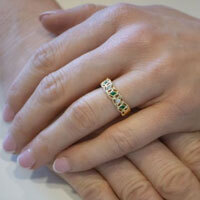
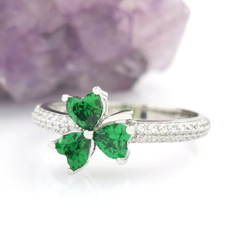
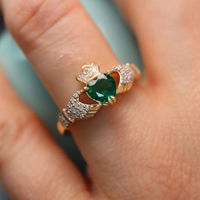
Natural or lab? This ring is natural, but both types of emerald share the same chemical, physical, and optical properties so it can sometimes be difficult to distinguish.
Just like natural emerald, lab emeralds are the product of immense temperature and pressure. Lab emeralds are technological marvels: replicating the effects of primeval forces required to produce natural emeralds in a man-made setting. This process does take time and considerable effort, making them among the most expensive gems to create in a lab.
However, rather than the hundreds of thousands of years needed to grow a natural stone, large lab emeralds can be grown in a controlled setting in just under one year.

A beautiful Trinity knot ring set with a stunning lab emerald and lab diamond.
Believe it or not, it's been possible to grow emeralds in a lab since the mid-1800s—but growing them was more expensive than mining natural emeralds for the next 100 or so years!
In the past few years, the technology to create large, gemstone-quality lab emeralds for fine jewelry has developed rapidly, as has the demand for such stones, making them a viable and exciting option for jewelers and shoppers alike.

Lab Emeralds: A more accessible and sustainable heirloom.
The advances in lab emerald technology have coincided with the search for more sustainable and ethical alternatives, paving the way for lab-grown stones to become increasingly desirable. There is a growing worldwide trend for lab-grown emerald options for jewelry, engagement, and anniversary rings.

Natural emeralds have held a special place in people's hearts since at least ancient Egypt, holding a deserved spot in the traditional “Big Four” gems along with diamonds, rubies, and sapphire. Given the rarity of large stones, natural emeralds command some of the highest prices, upwards of $100,000 a carat or more, depending on size and color, putting large stones out of reach for many buyers.
This leads us to one of the main benefits of lab emeralds over their natural counterparts. Despite being one of the most expensive gemstones to grow, lab emeralds can cost significantly less than their natural counterparts without the significant costs of exploration and extraction. This makes them a savvy and vibrant choice for those looking to get the most bang for their buck!
Lab emerald FAQ
This more accessible price point is certainly appealing to many. But as with any new trend, lab emeralds are likely to bring up a lot of questions for those looking to buy a piece of heirloom jewelry. Many may wonder “Are lab emeralds REAL emeralds?” or “Will a lab emerald last?” and “What really is the difference between lab emerald and natural emeralds?” Read on for our answers to these lab emerald FAQ:
Are Lab emeralds REAL emeralds?
Yes, a lab emerald is most certainly real emerald. Lab emeralds and natural emeralds share the same chemistry and structure, and when cut and polished, they are close to indistinguishable to the untrained eye in how they look and behave.
To even highly trained and experienced jewelers, lab and natural emeralds can be very difficult to distinguish. They can be told apart by the presence or absence of inclusions, as in general, lab-grown emeralds have a higher clarity with fewer inclusions, reflecting their growth under controlled conditions.
Natural emeralds have been formed deep underground for hundreds of thousands of years, and lab emeralds have been made in a controlled, man-made setting for several months - but both are very much real emeralds.

This magnified image of a 1.70-ct lab grown emerald has an inclusion pattern and growth features in the center of the stone that are very similar to those in natural emerald - so even this property can't be relied upon alone to differentiate between lab and natural emerald.
Photo Credit: R.E Kane and R.T Liddicoat, ]r. (GEMS & GEMOLOGY)
We think much of the confusion here lies with the popularity of emeralds alternatives like colored cubic zirconia (CZ). These gemstones may look similar, but unlike lab emerald, they are chemically, optically, and structurally very different to natural emeralds.

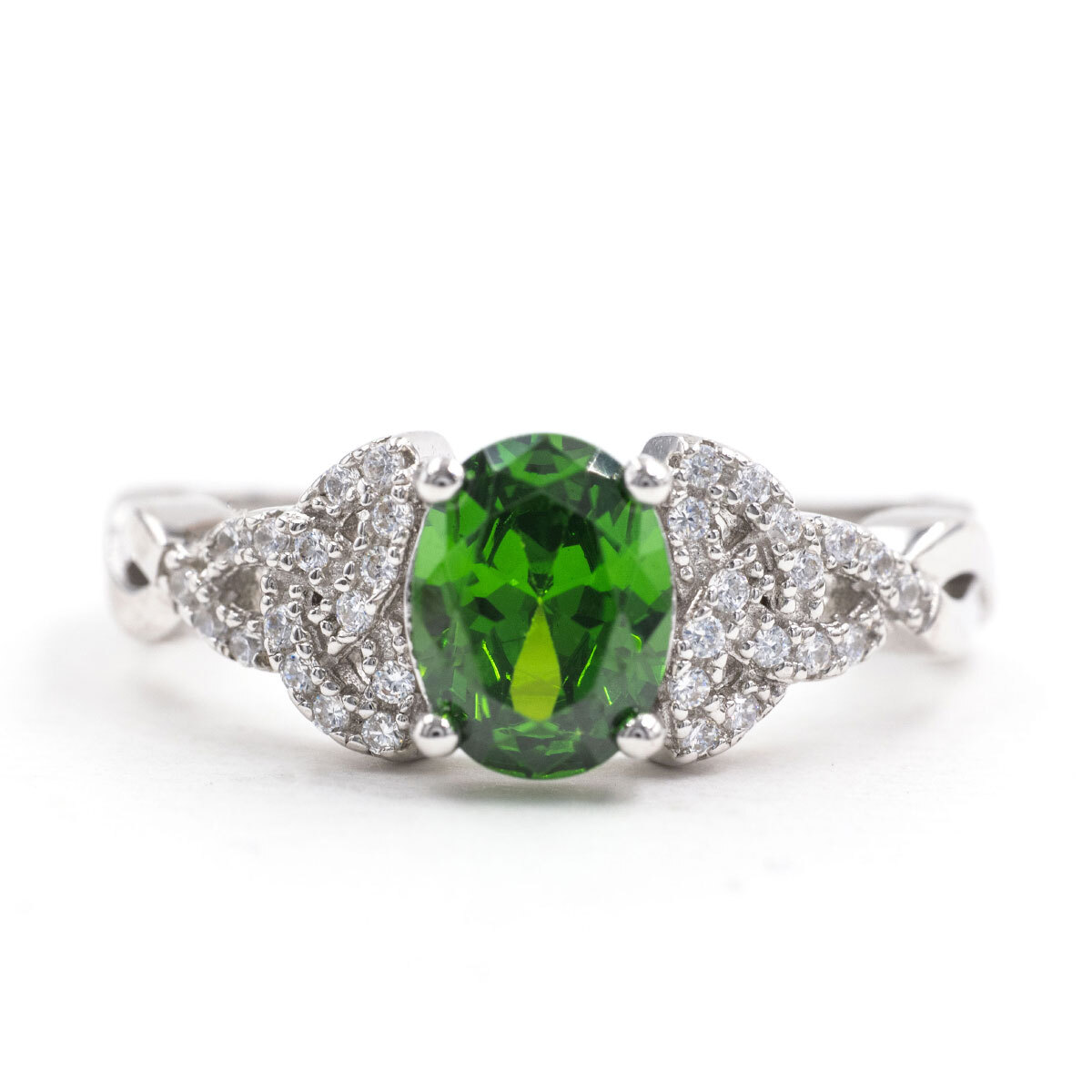
This ring is set with a high grade green cubic zirconia, an emerald substitute that looks similar but has noticeable differences to lab or natural emeralds. CZ has a different hardness and interacts with light differently compared to a lab or natural emerald.
Will a lab emerald last?
The short answer? Yes. A lab-grown emerald is essentially identical to an emerald that is formed naturally and shares all of its vibrant physical properties. Just like natural emerald, lab emeralds are relatively hard gemstones, falling at 8 on the hardness scale, making them a good option for jewelry. Due to fewer inclusions, lab emerald may even outperform natural emerald in terms of durability. Either way, with proper care, a lab emerald - just like a natural emerald- will last throughout your lifetime, delighting you and the generations to come as a cherished heirloom.
What’s the difference between lab emerald and natural emerald?
Even a highly trained eye can find it difficult to differentiate between lab emeralds and natural emeralds. Lab emeralds and natural emeralds reflect and refract light in the same way and have the same hardness and durability.
How they grow
However, professional organizations like the GIA and IGI have testing to distinguish them, which focuses on their one key difference: how and where they grow.
Lab emeralds grow in a lab with different techniques, producing specific growth and inclusion patterns that vary compared to natural emeralds. As we saw already, lab emeralds typically have far fewer inclusions than natural emeralds. Flawless natural emeralds are exceedingly rare, so if a stone has very few inclusions and it's price tag isn't astronomical, there is a good chance you are looking at a lab-created stone.
How much they cost
The difference in how and where they grow also impacts their cost, resulting in a secondary distinguishing factor—price. Lab emeralds typically have a price point significantly lower than that of a corresponding natural emerald, with the difference in price only increasing as stone size and clarity increase. Large gem-quality natural emeralds are very rare, with price per carat often exceeding that of diamonds.
Any other questions?
You are now on your way to becoming an expert in lab emerald, and you can find out all you need to know in natural emeralds in our guide. But if you have any other questions or would like to know more please do let us know. Leave a comment below, give us a call or send us an email.
Get In Touch
Have a question or something you're not entirely sure about when browsing our pieces? Please reach out. You can send us a note or give us a call—the Dublin workshop is here to make sure that you have a perfect experience from start to finish with My Irish Jeweler.
Follow us on Facebook and Instagram, to see what's new and upcoming. Join our Email list for early offers and special features.

Jane
My Irish Jeweler
Born in Dublin but reared in Canada, as a child I had an interest in Ireland that will be familiar to many young emigrants. I was completely fascinated, wanting to know all about the land of my parents and grandparents. Rare month-long family trips back "Home" cemented my love for Ireland. And I wore my Irish heritage with pride, sporting my tiny silver Claddagh gifted to me by my Irish grandparents until my finger grew too large for it!
As a young adult I moved back to Dublin, studying Geology and Mineralogy in university at historic Trinity College Dublin. After living in Denmark and the Netherlands working as a scientist and university mineralogy lecturer, I finally settled back home in Dublin. I joined the growing family at My Irish Jeweler in 2016, bringing my useful knowledge of metals and minerals as well as my perspective as an Irish emigrant with a love for HOME.
Comments






 Ask Gemma







































Encontré una piedra en forma de esmeralda pero no se si es natural o es artificial por qué la imagen e de planetas grietas andas y ceras biferente como tigre como 5 biferente y Agus marina otro efecto