One of the things visitors say when they come to Ireland for the first time is that they love the food here. We hear it a lot! Our meat and dairy products, especially, are consistently praised. This might be why Irish butter is now the highest-selling imported butter and the second highest-selling butter overall in America.
In 2025, Ireland exported more than 101,000 tonnes of dairy products to the US, where demand has tripled since 2016. The difference, as far as anyone can work out, is made by our lovely grass-fed cows.

Green grass and a good view make for better butter!
You can’t live where I live in County Cavan without being aware of the dairy trade. Although the county accounts for only about 2.5% of the Irish dairy herd, it has the largest cattle population in the province of Ulster and is also home to Lakeland Dairies.
This co-operative, based in Cavan, processes milk from 14 counties across Northern Ireland and the Republic of Ireland, amounting to more than 2 billion litres annually. It’s the largest dairy co-op in Ireland, working with 3,200 family-owned farms. Also, some mornings when I wake up or go out to fetch something from my car, I can hear the ladies in the next field over loudly voicing their opinions! Later in the year, when the calves are bigger and more rambunctious, they will come over and allow me to scratch their ears if I go and visit regularly. Their nosiness is a constant delight to me.

The local teenagers.
Photo Credit: V. Lowsley
Munster, though, is the real dairy province. The south-west of Ireland, which includes Cork and Kerry, supplies 31% of all of Ireland’s milk output, and Cork County is home to 25% of Ireland’s cows. All of which is well and good, I hear you mutter, but what does that have to do with anything?
The Butter Museum
Well, look, I’m not a big dairy eater. Butter and milk, especially, give me The Ick. However, despite the rise of veganism and the increase in nut milks and the like in our supermarkets and coffee shops, the Irish are, generally speaking, big fans of anything derived from dairy.

A 99 is a universally adored dairy packed treat in Ireland... especially in summer!
Photo Credit: J. Chadwick
This may be because there is a genetic disposition towards lactose tolerance among the Irish - just 4 to 5% of adults can't stomach it here compared to 60 to 70% globally. Or it may be that dairy has a LONG history in Ireland as we will come to in a moment. Or perhaps, both?
Butter, cream, cheese, ice cream, cottage cheese, cream cheese - they’re all sold by the bucket load, and widely appreciated. And apparently, in Ciarán and Jane’s house, their daughters are BIG fans of butter. They eat it sliced on toast if they are let. To that end, the four of them went to Cork a couple of weeks ago and visited The Butter Museum in Shandon at the kids request!

Ciarán, matching his colors masterfully with hints of orange, on his visit to The Butter Museum!
Photo Credit: J. Chadwick
Why, I hear you ask, is there such a thing as a Butter Museum? Well, my friends, sit back because I’m about to tell you all about it! The first relevant point is that the museum under discussion is in Shandon - from An Seandún, 'the old fort' - on the northern side of the River Lee, at the northernmost edge of the medieval city. The Butter Exchange, established in 1769, stands on the site of a butter market dating back to the early 1700s. At that time, Shandon had the largest Shambles (an open-air butcher’s market) in Ireland, and so the butter market was located close by to allow ease of access for farmers.

A behind-the-scenes view of Shandon.
Photo Credit: Photo credit: psyberartist. CC BY 2.0,
Cork was an international center of trade in the 1700s, and with its bustling dock and throngs of merchants, it was renowned worldwide as a provisions port. When The Butter Exchange was established, it was organized and run by the Committee of Merchants, who were exactly what they sound like: local merchants who wanted to ensure high standards of quality in the produce and services offered by their city. It seems no one knows why they thought butter was the place to start, but since dairy products from Ireland were already well regarded, the idea of maintaining quality was pretty sensible.
You’ll be shocked to hear it, I know, but quality control around food wasn’t really A Thing in the 1700s, and so The Butter Exchange has some serious claim to being the first deliberate attempt at adhering to food standards in the western world. Interestingly, the butter inspectors weren’t allowed to work specific sections of the Exchange; their ‘patch’ was allocated daily by drawing lots, which greatly reduced the risk of bribery and helped ensure consistency in quality.
Butter was usually inspected in firkins, small casks that contained 56 to 70lbs (25-32kg) of butter, and was graded on a scale from 1 to 6, with 1 being the highest quality. Grading was based on a good smell, pleasing color, and no excessive salt or liquid. This unusual care, along with the natural qualities of Munster butter, meant The Butter Exchange’s reputation spread, and its produce commanded higher prices internationally. Irish butter was shipped to England - its biggest market - as well as Africa, Australia, India, and the USA.

Photo Credit: J. Chadwick
Throughout Munster, special roads known as "butter roads" were established to ensure smooth access for farmers. Business was good, and everyone wanted to ensure it stayed that way. A little road maintenance was nothing in comparison to the money being made in Cork!

Farmers came from as far as County Kerry to sell their butter, travelling with their firkins on horse-drawn carts along the "butter roads".
Photo Credit: J. Chadwick
The early 1880s saw the peak of The Butter Exchange, the world's largest butter market at the time. However, as is the way of such things, the end was nigh. Advances in technology in the 1880s enabled the creation of milder butter with lower salt content through improved packaging methods. We know that salt has been used to preserve food since around 6000 BCE, but there are limits, and for most people, a gentler tasting butter was always going to be preferable. The inability to keep pace with changing methods spelt a rapid decline in the Exchange's fortunes, and in 1924, the doors closed on this historic site. Sadly, the market was badly damaged by a fire in 1976, but the imposing entrance, plus the northern and southern facades, remain.

From the facade of the Shandon Craft Center.
Of course, the Irish butter trade didn’t stop there! Prior to the 19th century, butter was produced on a small scale at local farms and in villages. Commercial production didn’t start until the end of the 20th century, so until then, it happened in kitchens and dairies around the countryside.

A photo of a woman at her churn in Galway, 1935
Women and children made butter for the most part, and there were variations in methods and end results. In the north of the country, butter was churned using whole milk, but in the south, the cream alone was churned after its separation from milk. If the butter was made for immediate consumption, it was called fresh butter, and salt was not added. Salted butter was for stockpiling or selling, as we saw at The Butter Exchange above.
These home-made pats of butter were adorned with little decorations. The homes that made butter to sell or share often used stamps to mark the produce as theirs. The Butter Museum has a number of these stamps; you can see models of them online here. They were made of wood and were often carved with floral motifs. Their application turned each butter pat into a little work of art, and in an age where many of the population were illiterate, it functioned as an early form of what we now know as branding.

A marigold butterprint from Dooey, Co. Donegal. Part of the National Museum of Ireland collection.
Speaking of which, you’ll recall we mentioned that improvements in packaging enabled the export of a more palatable form of butter. Well, The Butter Museum highlights the leap forward in branding taken by local co-operatives across Ireland when butter wrappers became common. From sleek and minimalist to some really quite ornate designs, plus the possibilities inherent to the mainstream introduction of color printing, we see wrappers that display the evolution of the humble packet of butter into, again, a valuable commodity, as well as promoting pride in the newly-born Irish Republic. Take a look - the Wolfhound poster is my favorite, though of course every packet of butter was its own advertisement!

So handsome! Even I'd buy butter from this dog!
Photo Credit: J. Chadwick
When Ciarán, Jane, and their daughters visited, some members of the family were very impressed with the opportunity to print their own wrappers. In fact, it was so popular that serious persuasion was required to move everyone along..! Let's hope the ink was easily washed off and was less long-lasting than the type used on the wrappers themselves.

Such concentration!
Photo Credit: J. Chadwick
Bog butter
The Butter Museum has all manner of dairy paraphernalia, from noggins - a small wooden cup for drinking milk - to piggins - a wood and metal pail for milking - to crocks, and several varieties of churn, but one of its less appealing exhibits is a container of approximately 1000 year old bog butter. (And honestly, if I didn't have The Ick yet, I'd be developing it seriously right around now! Just saying...)
Are you ready for this?! Bog butter is a waxy substance that has been found in peat bogs in Ireland and Scotland. Some have tested as dairy-based, and some are from animal fat. We know the Irish finds date to roughly 1 CE, and two major discoveries have been unearthed in counties Meath and Tullamore. In 2011, approximately 110lbs (50kg) was found in a carved wooden vat about 1ft wide by 2ft long, where it had been lying 7.5ft below ground for myriad centuries. Apparently, when it was removed from the bog and opened, it still smelled of dairy.
It's likely that the butter was stored in the bog to keep it fresh. Many discoveries of this substance have similarities in storage: wooden containers with layers of plant fibre or sometimes deerskin to further protect the produce. Recent scientific studies have shown that wrapped meat that's been stored in a bog for two years has pathogen and bacterial counts similar to that stored in a freezer for a similar length of time. The cooler temperatures, low oxygen and high acidity of the bog act as a preservative. Some have also suggested that this process was undertaken to improve the taste or improve the nutritional content. Concentrated flavors tend to lead to smaller portions, and so it's also possible this was intended as a form of household economy.

A much more modern slab of bog butter was found near Enniskillen in County Fermanagh. This dates to the 15th or 16th century and is housed at the Museum of Ulster.
Photo Credit: Bazonka CC BY-SA 3.0
There's also a more surprising - to our modern eyes - possibility: that the butter was hidden for safekeeping. Butter was definitely a luxury in early medieval Ireland, and there were strict rules governing how much each social class could consume. It was also used to pay taxes, rents, and fines. In the same way that beautiful treasures made of precious metals have been dug out of the Irish bogs they were stashed in to hide them from raiders many centuries ago, it's entirely possible that the butter that's been found was buried for much the same reason!
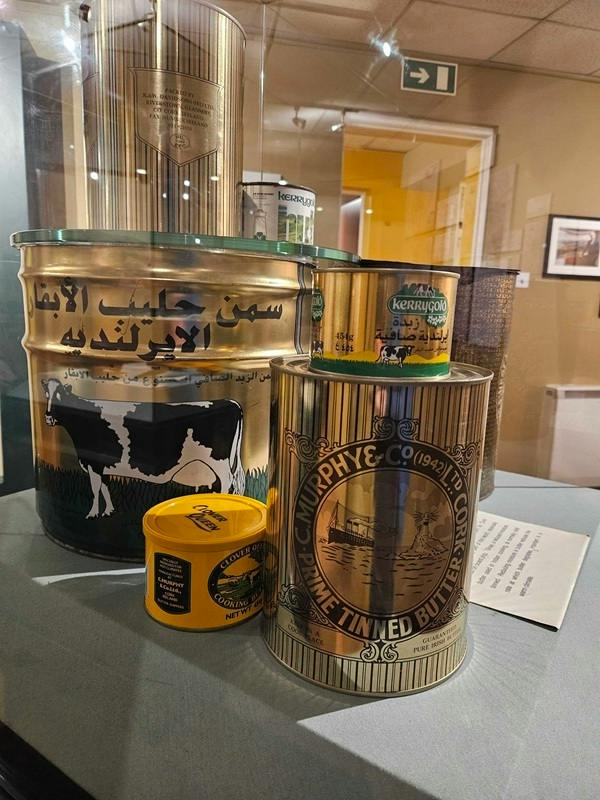
Irish butter is now known worldwide!
Photo Credit: J. Chadwick
A new golden era?
In modern-day Ireland, the international success of Irish butter and dairy is largely due to the efforts of what we once knew as the Irish Dairy Board, now called Ornua. (A previous employer, if I recall correctly, of our Shipping Manager and all-round wonder, Margaret!) This body was established in 1961 to grow exports under the brand Kerrygold. Before it joined the European Economic Community in 1973, Ireland had some difficulty establishing itself as a serious dairy exporter. Our nearest neighbour, the UK, limited the amount of Irish dairy imported by an import quota, and the EEC had its own restrictions. However, there was some success in Asia, the Middle East, and the Gulf States.

Photo Credit: Photo Credit: Nathan Dumlao on Unsplash
When Ireland joined the EEC in 1973, an initial expansion into Germany proved successful. From there, it went from strength to strength. (Today, Kerrygold is the number 1 butter brand in Germany, and there's been a KerrygoldStrasse since 2005!)
In 2015, the Board became Ornua, from the Irish for new gold. The co-operative now employs over 3000 people worldwide, and exports to over 110 countries. How much, do you think, is because of those Kerrygold ads in the 1980s? "Zer iz somesing I can 'elp?" If you don't know what I'm talking about, you need to take a trip down Irish TV history's memory lane. The picture quality is terrible, but then it often was in 1986, so just take that as a little added authenticity!
Final notes on butter
If you've visited our shores, we'd love to hear your thoughts on Irish food in general, not just the butter. You know we've been sharing recipes more and more over the last few years, so we'd love to hear yours, and any food-related memories you've made here.
If you'd like some additional reading on bog butter, there's an excellent article by Ben Reade, in which he details his attempt to make some with the help of a Swedish artisanal butter maker named Patrick Johansen. They use only tools and methods available before the Industrial Revolution, and I found it a fascinating read. You will find it here: Bog butter: a gastronomic perspective.
Another option is "The Role and Function of Butter in the Diet of the Monk and Penitent in Early Medieval Ireland" by Regina Sexton, a paper she gave at the Oxford Symposium on Food and Cooking in 2002. I understand it's not everyone's cup of tea, but it's right up my street! It's interesting to learn how vital butter was considered, especially for the sick and the young, around this time when monasteries were centers of learning and healing.
If you have questions, thoughts on Irish food or cooking, or recipes you'd like to share, please do leave them in the comments below. We always enjoy hearing your thoughts!
Real Irish Gold
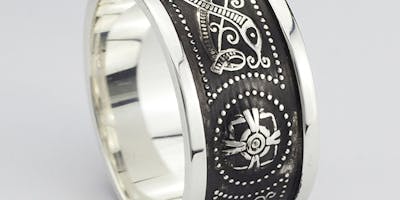
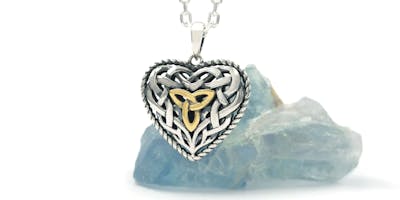
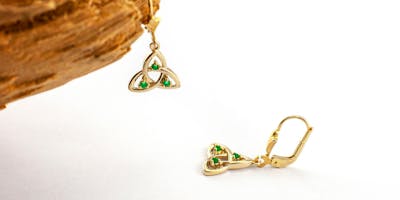
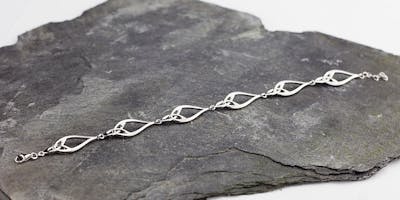
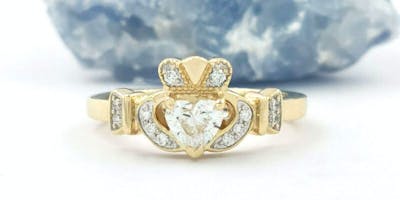
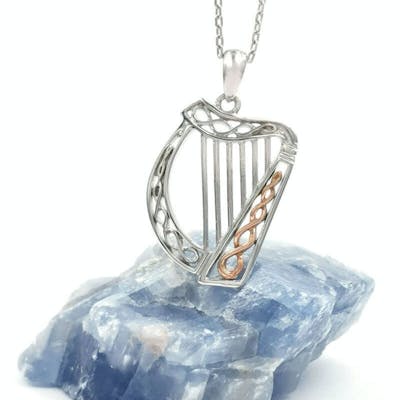
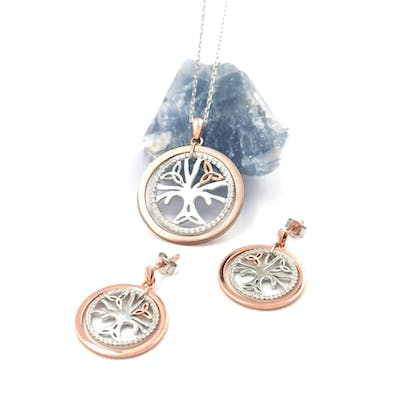
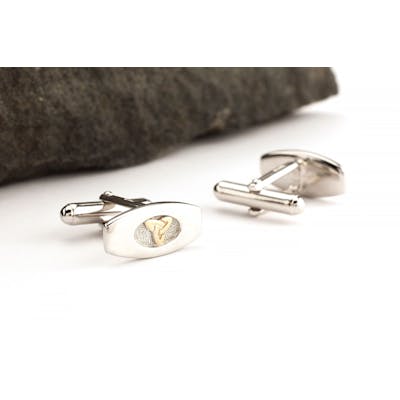
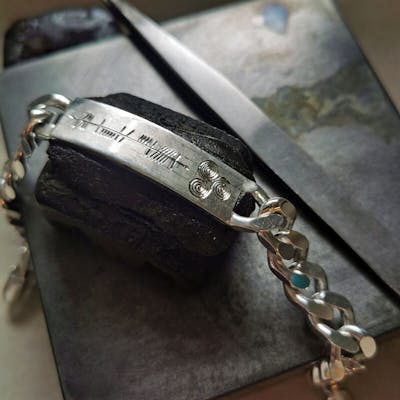
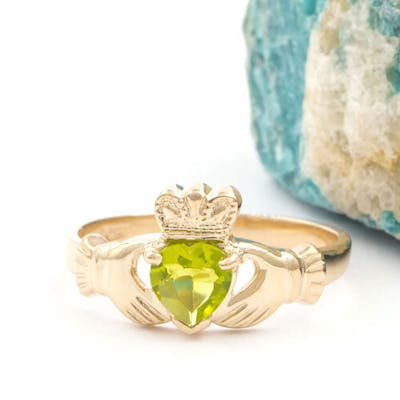
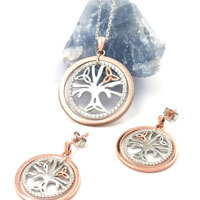
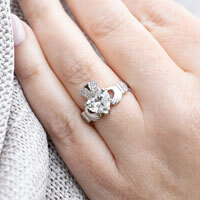
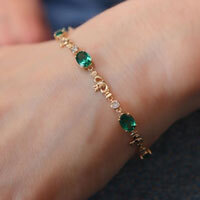
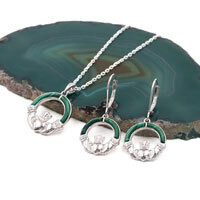
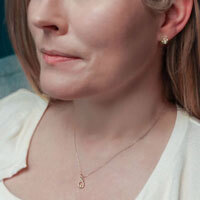
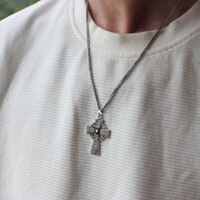
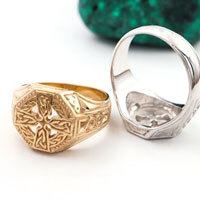
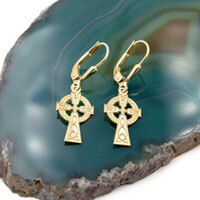
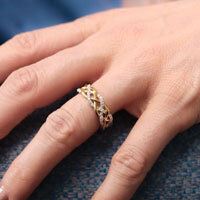
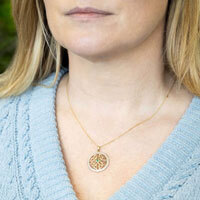
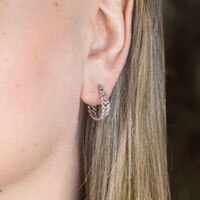
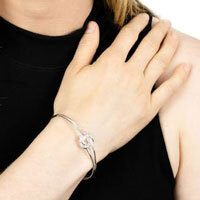
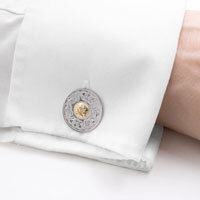
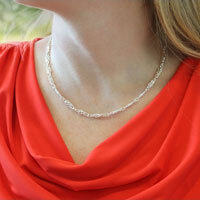
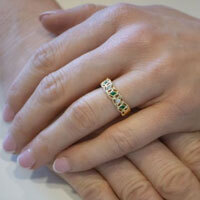
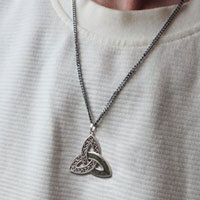
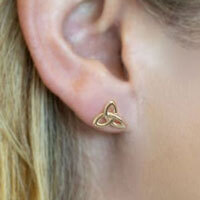
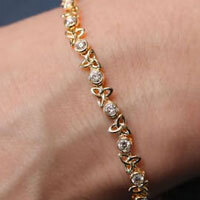
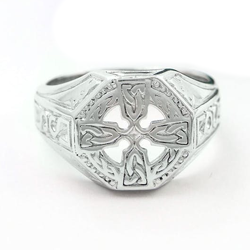
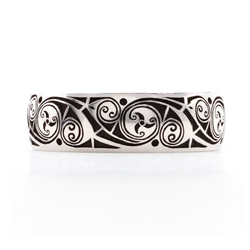
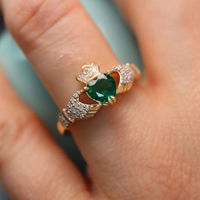
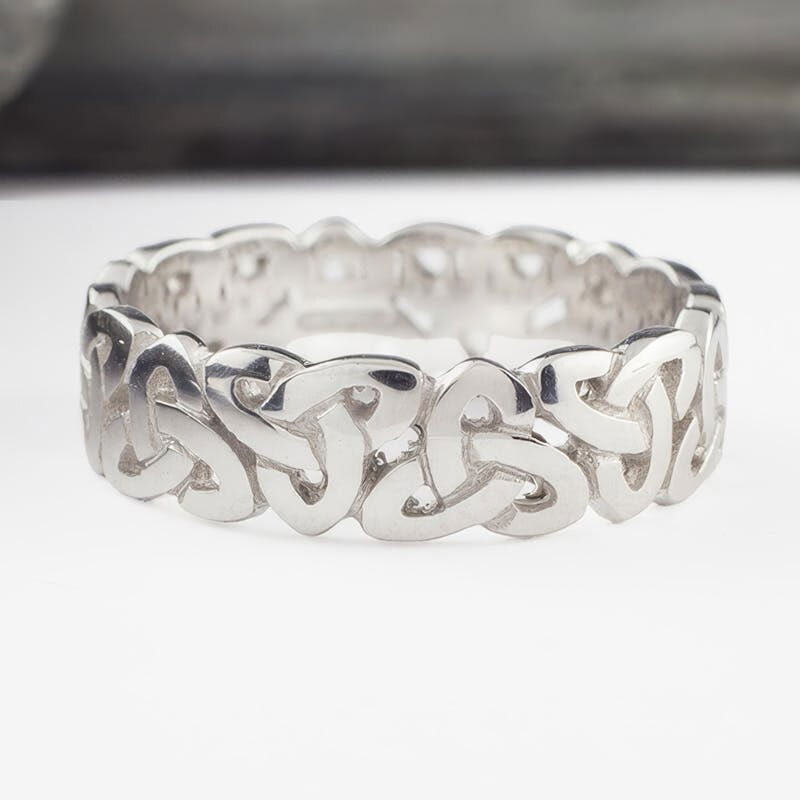
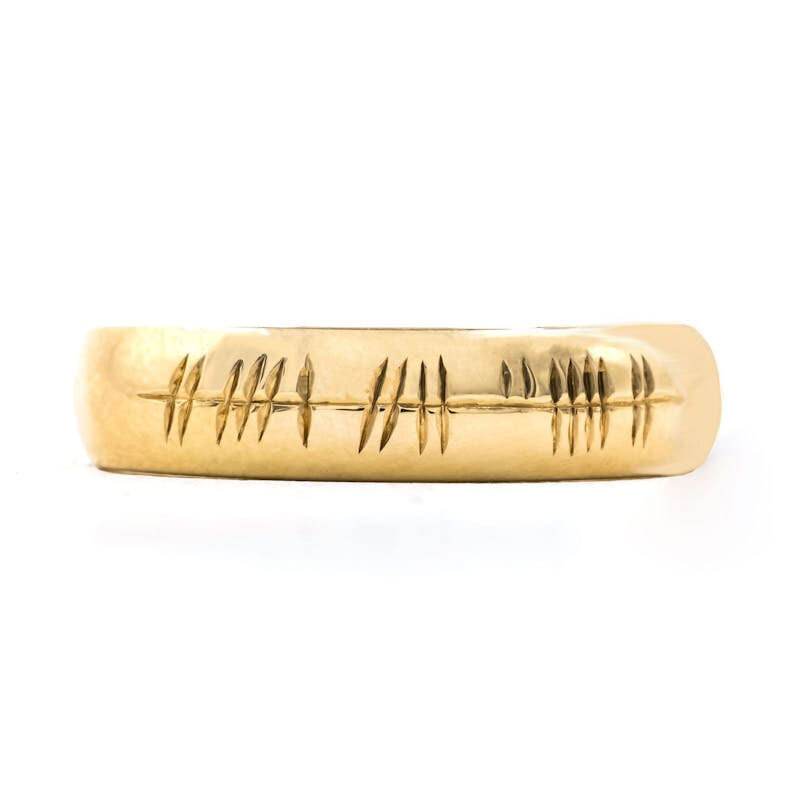
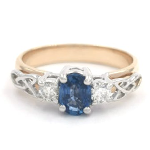
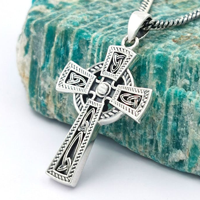
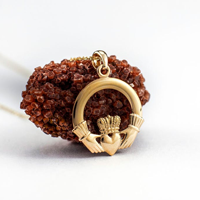
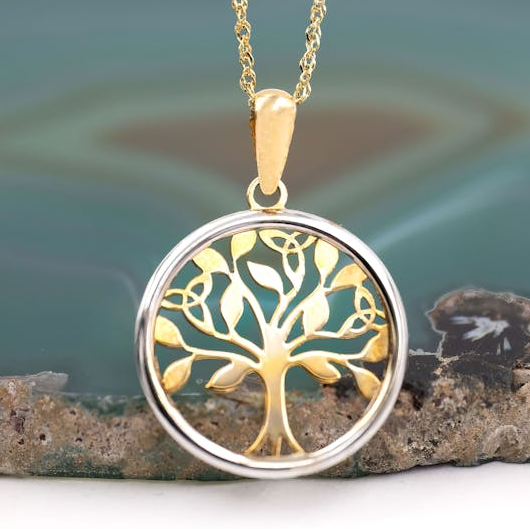
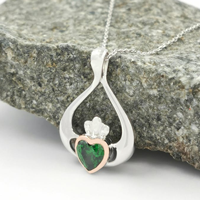
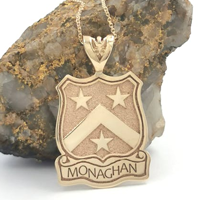
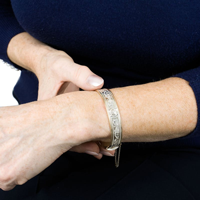
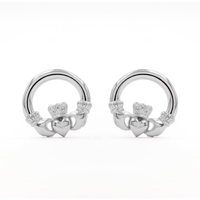
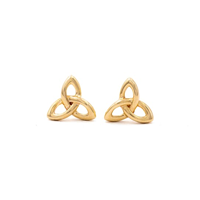
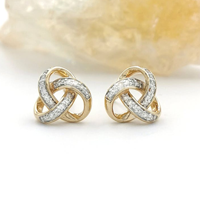
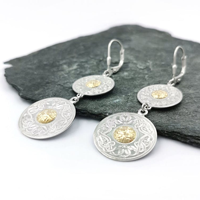
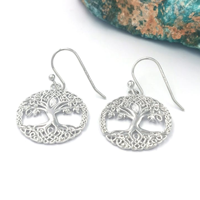
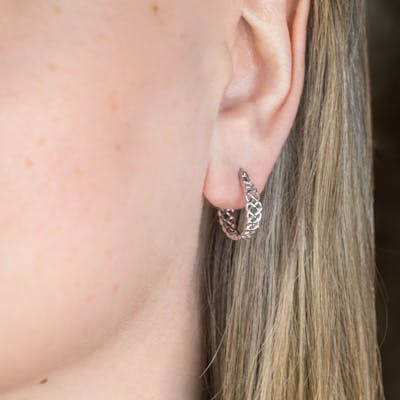
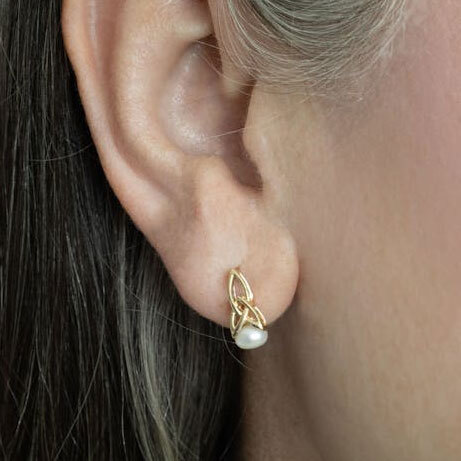
And of course, if you are interetsed in a more conventional type of Irish gold we are happy to help too! Crafted with gold from Co. Tyrone, each of these designs contains your own piece of Ireland to treasure.






 Ask Gemma













Thank you for such an amazing story Vicky. Truly well crafted and very informative. I have been using Kerry Gold since my first visit to Ireland in 2022. I watched butter be hand churned on a tour as well. They said they use Kerry Gold too ????☘️