


St. Patrick's Day Countdown: Warrior Saints?
Written by Ciaran on Mar. 09, 2025 | 0 Comments
We’re counting down the days to March 17th with an offer and some fun facts for you every day until St. Patrick's Day. Check back in with us each day to see what’s up next!
Was St. Patrick a Warrior?
After surviving being captured and kept as a slave in Ireland for six years or so, Patrick’s friends, family, and even a few fellow priests believed he was more than a little off his rocker to want to go back to convert the Irish “barbarians.” This was an entirely understandable view given medieval Ireland, like much of the rest of Europe at the time, was a dangerous enough place, even for the well armed! Never-mind the fact that Patrick had just about escaped Ireland with his life, even with divine assistance.

Photo Credit: Public Domain
For evidence of the difficulty of the mission that Patrick was keen to set out on, one need only look to Patrick’s predecessor, Palladius. Records show Palladius arrived in Ireland in 431 and was sent packing within the year, in some accounts by the king of Leinster. Muirchu, who lived over 200 years later and was relentless cheerleader for Patrick, records in the Book of Armagh that:
"God hindered him (Palladius)...and neither did those fierce and cruel men receive his doctrine readily, nor did he himself wish to spend time in a strange land, but returned to him who sent him."

The Book of Armagh is also known as the Canon of Patrick so perhaps it may not be the most reliable source on his predecessor?
Photo Credit: Public Domain
The view that Patrick was a little mad to go back to such an inhospitable place may have given rise to the many legends and stories that arose about what happened when he arrived in Ireland on his mission to convert the wild Irish. One says he met a powerful King, who promptly tried to kill him. In another account he has a showdown with a powerful druid, sending the pagan holy man flying.
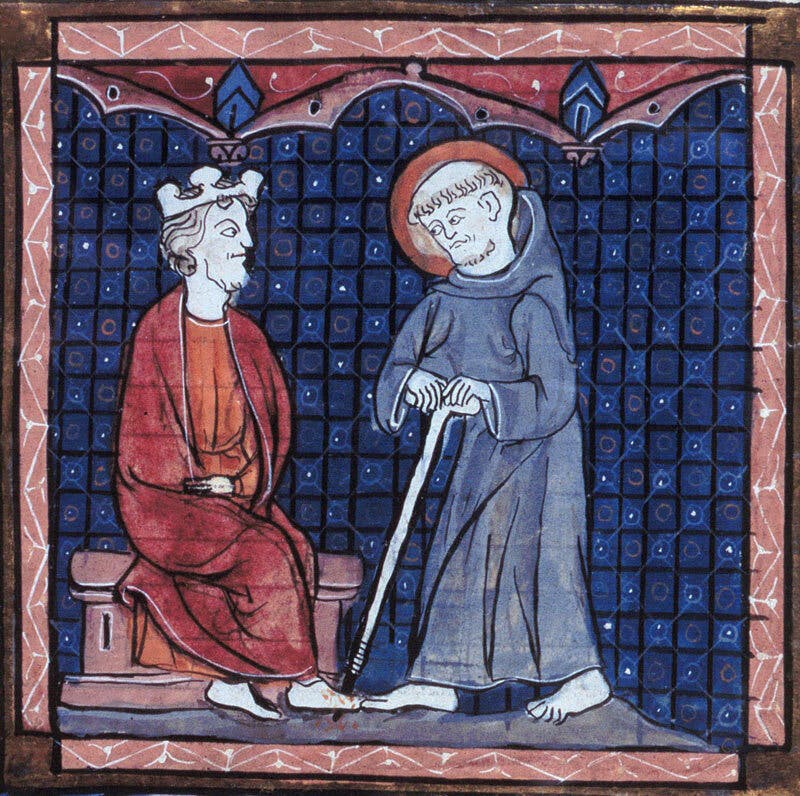
One of the earliest depictions of St. Patrick's shows him "negotiating" rather forcefully with an Irish King.
Photo Credit: Huntington Library, HM 3027 F.40v., California
But Patrick was able not only to survive such encounters, but convert or vanquish powerful adversaries and go on to preach the gospel throughout Ireland. So how did he manage this feat with the intensely tribal and battle-ready Irish?
The 7th C writings of Tírechán and Muirchiu may give a clue. Both claim that as well as being a man of God, Patrick was well able to handle himself. Attacking druids, destroying idols, cursing kings and their kingdoms. He may not have carried a shield, sword or spear like the Celtic Warriors, but it sheds a whole new light on his trusty crozier!
However, given there is no mention of these more dramatic events in Patrick’s own writings, and several of the stories in these later records, like the banishing of snakes are more fiction that fact, this idea smacks more than a little of poetic licence. We would be wary of saying that they confirm Patrick’s warrior status!
What is recorded throughout his own writing and later sources, is how Patrick spoke to his would-be converts in their own language, Irish, and used gifts and diplomacy to turn the heads of many well-connected chiefs and noble women, winning powerful converts.

St. Brigid, in most accounts the daughter of a powerful chieftan, is recorded as one of Patrick's early converts.
Photo Credit: Spideogjasper (CC BY-SA 4.0)
Another strike against the idea that Patrick was particularly pugnacious was his abhorrence at the violence of slavery. In his own writings and letters he extols both high ranking Irish and Britons to give up their slaves. And in Ireland at least the slave trade peters out in the century after his death. Now you could say that this was down to Patrick’s own experience of being a slave, but he does seem to believe more in the power of words than arms in his writings - so read into that what you may!
The fact that St. Patrick lived to a ripe old age of 74, a particularly impressive feat in the 5th century, it seems unlikely that he was picking fights on the regular! He also died of natural causes rather than a martyr, an uncommon fate for Christian missionaries elsewhere. So despite the story of a "Warrior Patrick" being one that would certainly turn the heads of Hollywood producers, it may be just that, a story.
An Real Warrior Saint?
It’s Ireland’s other male patron, Columcille or Columba who is known as a “warrior saint.” So where did this title come from? Columcille is described in several records as an impressive individual of significant stature, with a powerful build and a loud and commanding voice. So at least he has the makings of a good warrior!
It’s not clear if Columcille fought himself in a battle in which many men were killed that allegedly arose out of a disagreement he was involved in around 560 - the battle of Cul Dreimhne. He was certainly an instrumental figure in the events surrounding the battle, and in some records was right in the thick of fighting. Some believe the thousands slain in battle were in no small part the motivation for Columcille’s missions in Scotland, with the saint looking to win back as many souls as lives lost in the bloodshed.

Street art by Fritz in Sligo, depicting the the battle of Cul Dreimhne, known to some as the Battle of the Books - a copyright issue that got out of hand and resulted in thousands of dead if reports are to be believed!
His reputation may also come from the tale recounted by Adomnán, his biographer, that Columcille, now going under the name Columba in Scotland, battled and banished the Loch Ness Monster. The story goes that the saint happened across a group of Picts burying a man killed by this “water-beast.” The monster then reappeared, in some accounts attacking Columba’s disciple, in others a hapless and quite frankly silly swimmer. With that commanding voice of his, Columba banished the beast with a Gandalf-esque:
"Thou shalt go no further, nor touch the man; go back with all speed."

A mural in the Scottish National Portrait Gallery by William Hole (1846–1917)
Photo Credit: Photographer Kim Traynor (CC BY-SA 3.0)
It’s perhaps the culmination of these stories that lead to Columba, a saint like Patrick who died of old age rather than martyrdom or in battle, being revered as a warrior saint, and invoked for protection and victory in battle. His relics were reportedly carried before Scottish armies, with one local legend that in the Battle of Bannockburn in 1314, it was Columba's divine intercession that helped the vastly outnumbered Scots to victory.

The Cumdach (shrine) of the Cathach, a manuscript written by Columba, in the Collections of the National Museum of Ireland, Kildare Street
Photo Credit: Photograph By Sailko (CC BY 3.0)
Columba was called on for such assistance in Ireland too. An Cathach, a book shrine holding a manuscript believed to have been written by Columba himself, was used as a rallying cry and protector in battle by Donegal leaders. Before a battle, a monk or holy-man would wear the book shrine around his neck and then walk three times clockwise in the direction of the sun, around the waiting warriors, to convey the saint’s divine protection over them. Whether this worked or not we are left to wonder!
What do you think?
So the final word, were these Irish saints warriors? It seems both Columcille and Patrick were impressive individuals in their own rights but unlikely that they were especially battle hungry! We will leave it up to you to decide!
What's Next?
Check back in with us tomorrow for Day 10 of our St. Patrick's Day countdown, or open Door Number 9 of our 17 Days of celebratory offers!
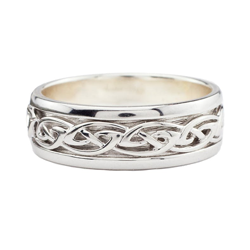
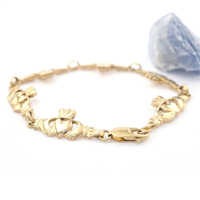
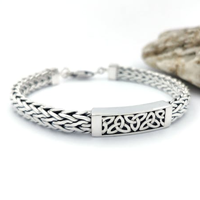
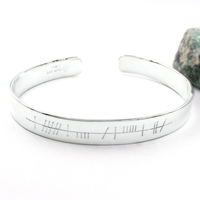
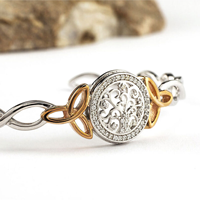
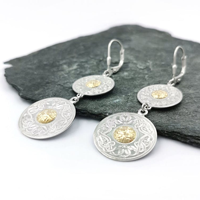
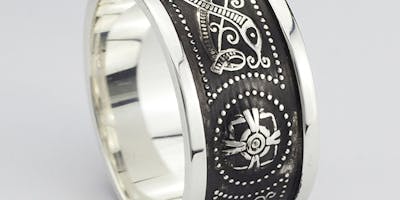
For your inner warrior
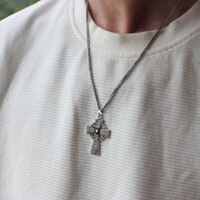
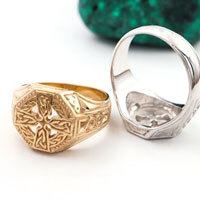
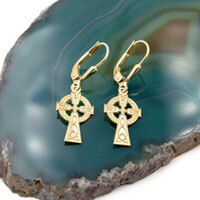
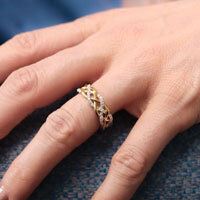
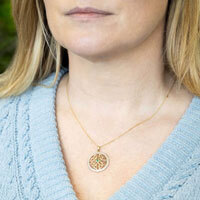
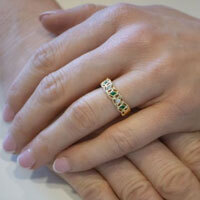
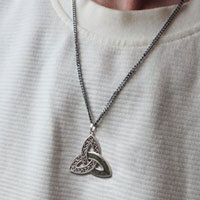
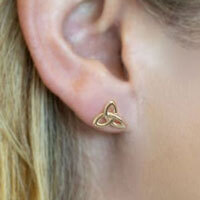
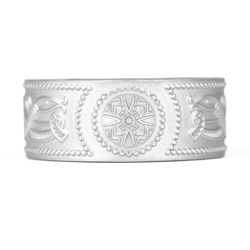
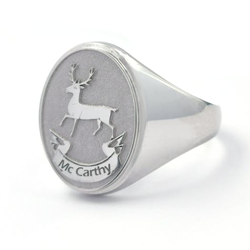
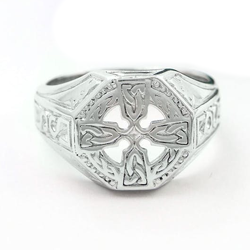
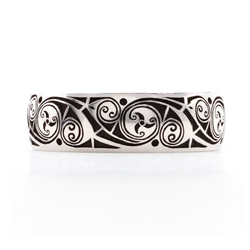
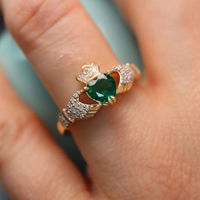
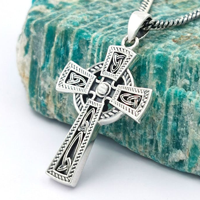
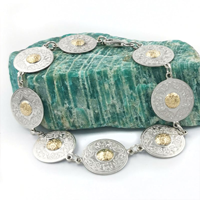
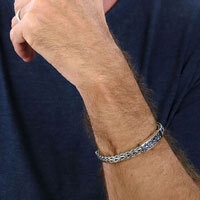
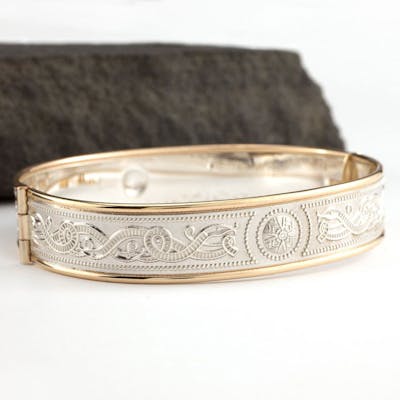
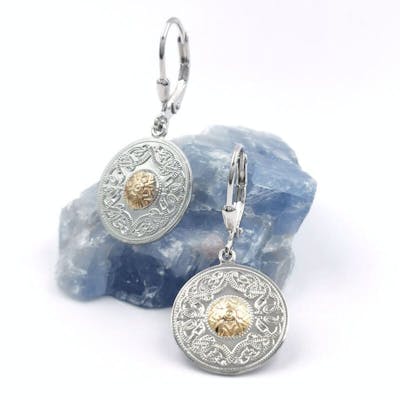
For those with an unconquerable spirit, our Celtic Warrior jewelry is the perfect fit - Inspired by an medieval Christian treasure and the battle armour of our ancient ancestors.
Get In Touch
Have a question or something you're not entirely sure about when browsing our pieces? Please reach out. You can send us a note or give us a call—the Dublin workshop is here to make sure that you have a perfect experience from start to finish with My Irish Jeweler.
Follow us on Facebook and Instagram, to see what's new and upcoming. Join our Email list for early offers and special features.

Ciaran
My Irish Jeweler
Born in Co. Antrim and reared in Dublin, I was fascinated with Gaelic culture from an early age. I suppose it's not surprising given my mother inherited a grá for the Irish language from my grandfather, an Irish school headmaster. And that grá continues! My brother and sister are now Gaelic teachers here in Ireland, my niece is an award winning Irish dancer, and I proudly work to share Irish culture through our Irish and Celtic Jewelry at My Irish Jeweler!
I love researching and reading about the history of Irish design. It's at the core of what we do here at My Irish Jeweler. I find much of it so interesting that I have to share what I find. I hope you enjoy it!
Comments





 Ask Gemma