"I'd like to call back summertime and have her stay for just another month or so,
But she's got the urge for going so I guess she'll have to go.
'Urge for Going' - Joni Mitchell
Making The Most Of The Milder Days.
September is one of the loveliest months to visit Ireland, and despite the rain currently pelting against the windows of My Irish Jeweler HQ at the time of writing, we've been relieved to see some sunshine of late! Although the evenings are already starting to draw in, the end of August and early September have seen lots of the My Irish Jeweler team visiting different parts of the country for holidays, family gatherings, or just days out.
You know how they say that a picture is worth a thousand words? Well, come and see where we've been and what we've been up to over the last few weeks! You'll have a trip around Ireland without ever leaving your chair! (We've added some links so you can read more about the areas if you wish.)
North-east: Mourne.
Ciarán, Jane, Ruth, Gareth and others of their clan headed off for a family get-together in the north-east of the country. Jane reports that it rained steadily. Which was tricky with small children accompanying them but proved an excellent excuse for board games, cards, puzzles, and hot chocolate! On one of the rare occasions it stopped, Ciarán and Gareth decided outdoor games were in order. A good call, because how about that for scenery between plays?
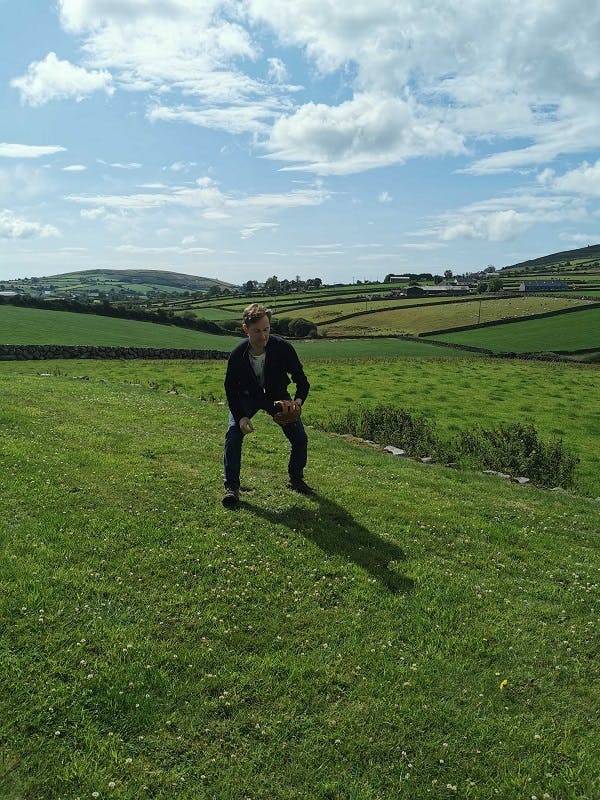
Ciarán taking advantage of a rare blue sky on his trip to Mourne!
Photo Credit: R. Chadwick.
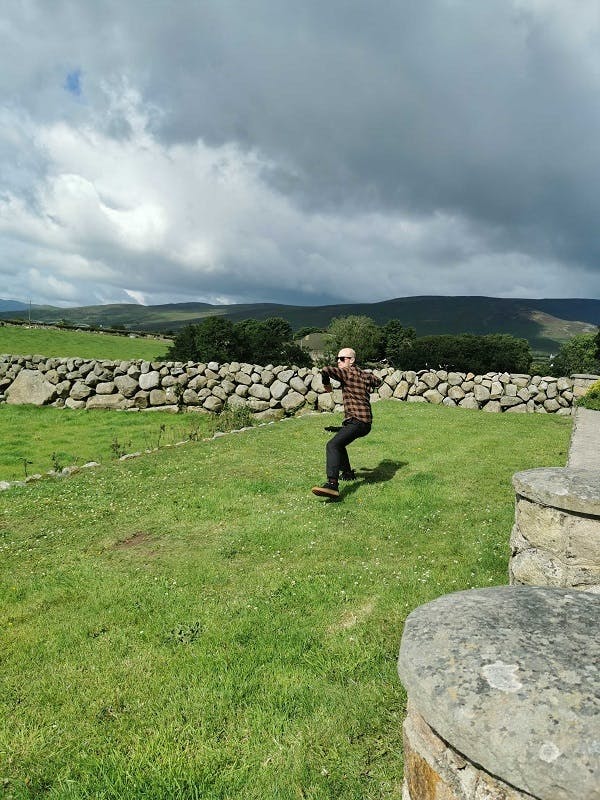
Gareth pitching quickly - the rain was clearly on the way back!
Photo Credit: R. Chadwick
"I have seen landscapes, notably in the Mourne Mountains and southwards which under a particular light made me feel that at any moment a giant might raise his head over the next ridge."
North-west: Donegal.
Gemma and her family headed North-west for a break, spending time around Glencolumcille in county Donegal. They visited Slieve League and the Glengesh Pass, and stayed in a gorgeous thatched cottage!
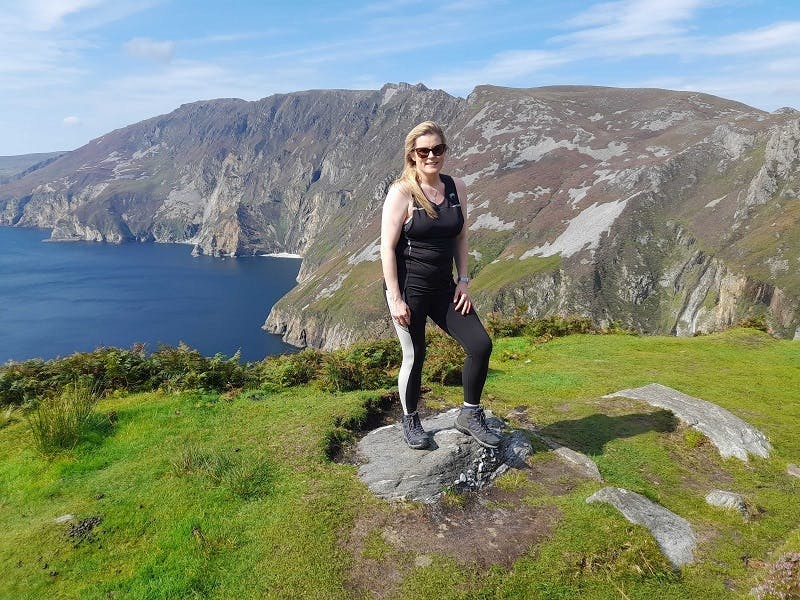
Gemma conquering Slieve League!
Photo Credit: G. Butler
Slieve League (pronounced shleeve leeg, and translated as 'the mountain of stone pillars') is one of the highest cliffs in Europe and the tallest in Ireland; it rises to almost 2000ft / 598m above the sea. (For comparison, the Cliffs of Moher are about a third of that height.) It's always an incredible place to visit - although driving up to the car park can be slightly terrifying! - and regardless of the weather, there's always something new to see as you gaze out over the waves. The sheep that live in the fields that edge the cliff have grown very used to people wandering in their space, and they can certainly contribute to the slightly hair-raising driving conditions.
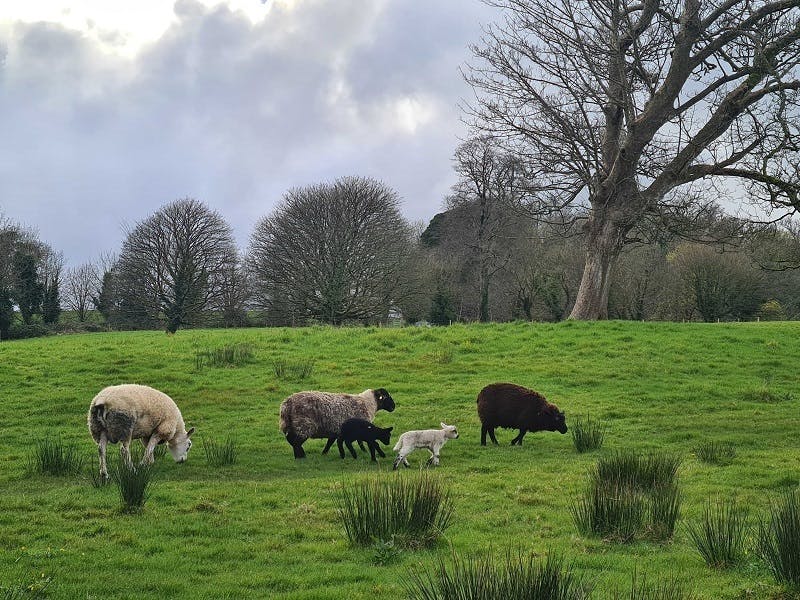
Saying hello to the local sheep is all part of the experience!
The Glengesh Pass is a stunning roadway that runs between Glencolmcille and Ardara. It's about fifteen miles, with a few hairpin bends, that take you through an enchanting landscape. The name Glengesh comes from the Gaelic Gleann Geis, meaning 'glen of the swans.'
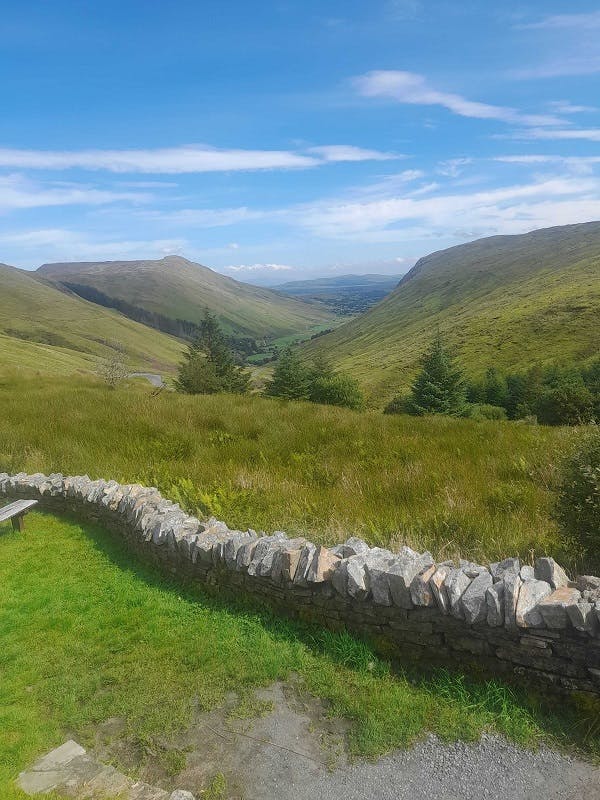
The Glengesh Pass.
Photo Credit: G. Butler.
South-west: Castleisland.
You probably won't be surprised to learn that our resident geologist, Jane, led Ciarán and their daughters on a phenomenal cave adventure when they visited Kerry recently! They went exploring in Crag Cave. First discovered in the 1980s, it's a relatively new addition to the ancient sites to visit in the south-west. Best of all, it's a perfect option for days when the weather isn't so kind.
Honestly, I'm disappointed to learn that party discovered neither gold nor dragons but was entertained to learn that the first people to traverse the system named various areas of it after places in J.R.R. Tolkein's Middle Earth.
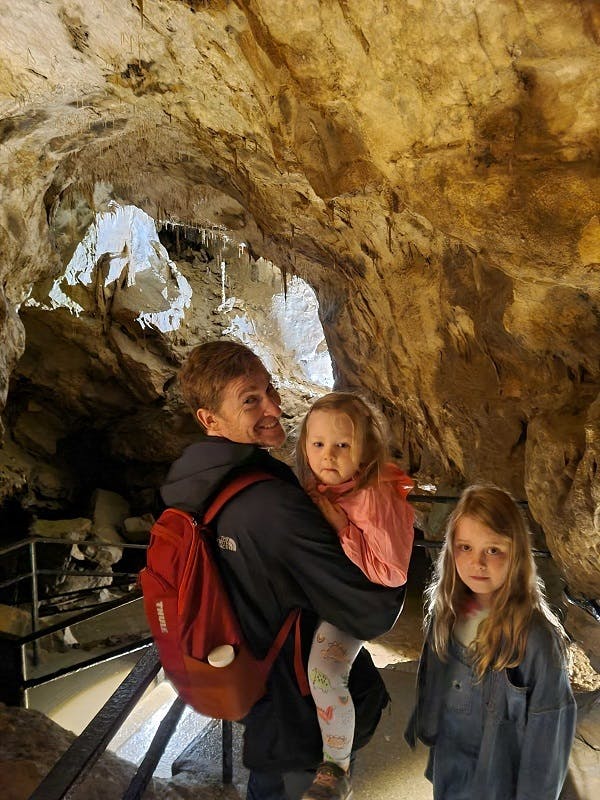
Exploring underground caverns in Co. Kerry.
Photo Credit: J. Chadwick
East: The North Dublin Coastline.
You only need to look at our website to see how talented our photographer, Ruth, is. And when she's not taking images of sparkly things, one of her other passions is the sea. It is convenient, then, that she lives on the east coast in one of the loveliest spots in north county Dublin. She's been enjoying the earlier sunsets and taking magnificent shots of the Malahide estuary.
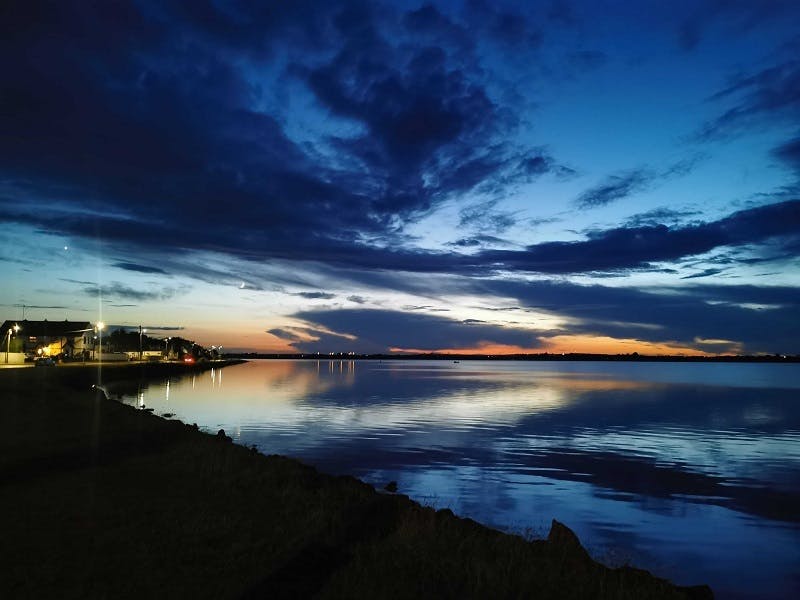
Magical Malahide estuary.
Photo Credit: R. Chadwick.
Ruth also took a trip to Ireland's Eye. The image below is of a Martello Tower built during the Napoleonic Wars. There are about fifty such towers in Ireland - they run mainly along the East coast from Drogheda in North Dublin to Bray in North Wicklow; there are also several along the South coast near Cork.
They were built as watchtowers between 1803 and 1804 when England and Ireland feared that Napoleon would turn his sights towards invading westwards. Each cost roughly £2,000 to build, equivalent to US$317,000 in today's money. It must have been worth the investment because the expected invasion did not occur. Some historians believe that Napoleon's spies sent word of the new towers, and he decided against it, having lost the element of surprise.
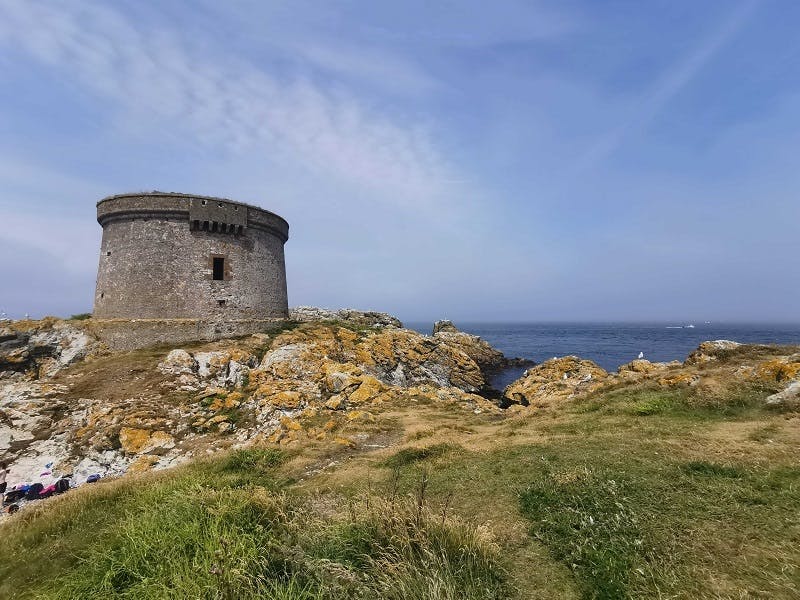
One of Ireland's approximately fifty Martello Towers.
Photo Credit: R. Chadwick
The Martello Tower is the newest building on Ireland's Eye; it was also the site of a monastic settlement between the eighth and thirteenth centuries. This accounts for the island's Gaelic name, Inis Mac Neasáin - the island of the sons of Neasán. According to some mix of history and legend, three brothers founded a settlement on the island. From this location, it is believed, originated The Garland of Howth, a vellum manuscript of the four Gospels. This is currently available for public viewing in Trinity College, Dublin.
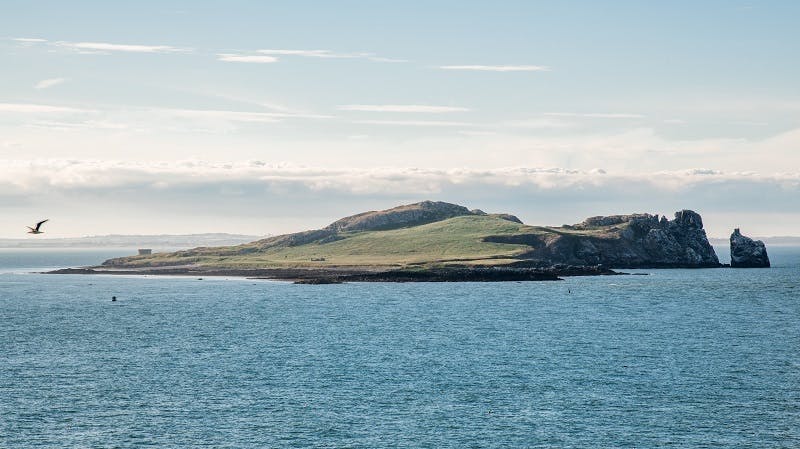
The glorious sweep of Ireland's Eye as seem from Howth.
East: Luggala and Lough Tay.
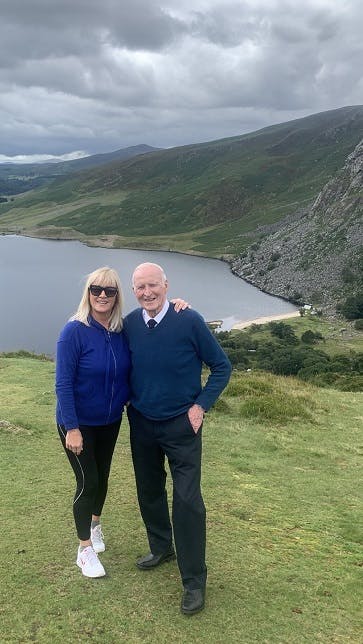
Margaret and her dad, Patrick, taking in the good, clean Wicklow Mountains air.
Photo Credit: M. McPhail.
Margaret and her father, Patrick, took a drive out into the Wicklow Mountains recently, and marked the occasion with this gorgeous photo! Lough Tay, just behind them, is nestled between Djouce and Luggala mountains, part of the well-known Luggala Lodge estate. Named for its similarity in colour to good, strong Irish tea - you can't beat a cupán tae, after all! - Lough Tay and the estate have long been of interest in Ireland and overseas, thanks to its fabulously wealthy owners and their internationally famous friends.
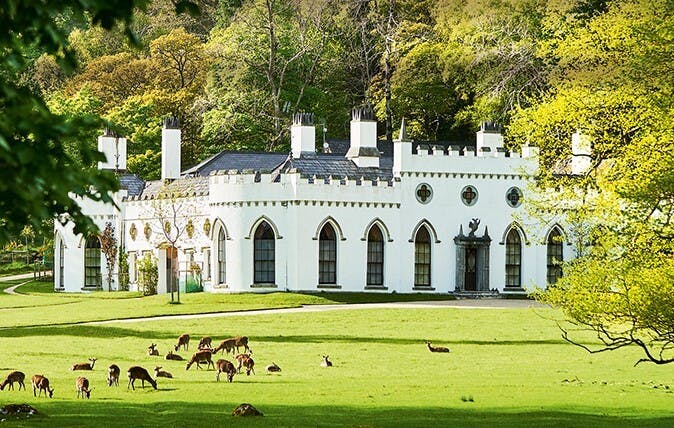
The beautiful Luggala Lodge.
Photo Credit: By Britishfinance - Own work, CC BY-SA 4.0, https://commons.wikimedia.org/w/index.php?curid=80368269
Originally developed by the La Touche family, who are famous for founding Bank of Ireland, the estate was sold to the Guinness family in 1937. It's still known locally as the Guinness Estate despite being sold after the death of Garech Browne in 2018. As the Guinness family were known to be consistent patrons of the arts, visitors to the estate have ranged from U2, Michael Jackson, The Beatles, Bertrand Russell, Angelica Houston, and Marianne Faithfull. The films Excalibur and Braveheart were partially filmed on the estate, as were scenes in the more recent TV series Vikings. The presence of the renowned Ardmore Studios in Bray was undoubtedly helpful to the various producers.
The South-east: Counties Wexford and Waterford.
Counties Wexford and Waterford are known as 'The Sunny South-east' here in Ireland, and we have had some truly glorious days down here.
One of our favourite walks is a loop along the river Slaney in the evenings, especially with the Italianate splendour of St Senan's overlooking the mirror-like water. While we've been used to seeing everything bathed in honey-gold evening sunlight, we have encountered several examples of incredible low-lying mist over the fields at dusk. This has displayed a landscape more suitable for a Victorian Gothic novel, and is eerily beautiful.
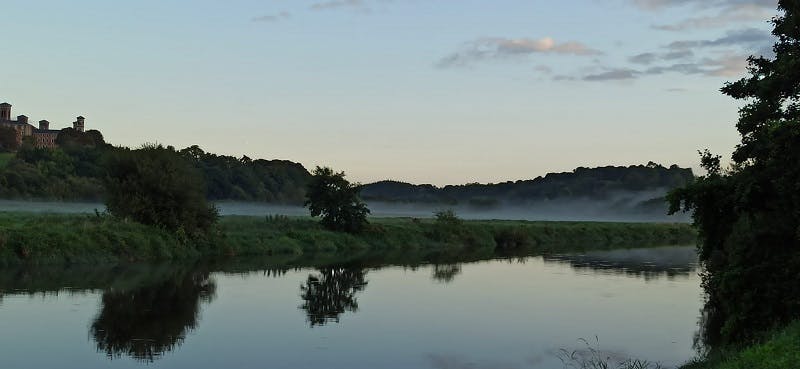
Evening mist on the river Slaney.
Photo Credit: D. O'Connor.
As we often head out after a day's work, our preference for the softer late afternoon light is pretty much ingrained now. Earlier this month, we headed over to Cahore Point to see the sea and enjoy dinner out as a treat. We were met with a little bit of heaven when we got there.
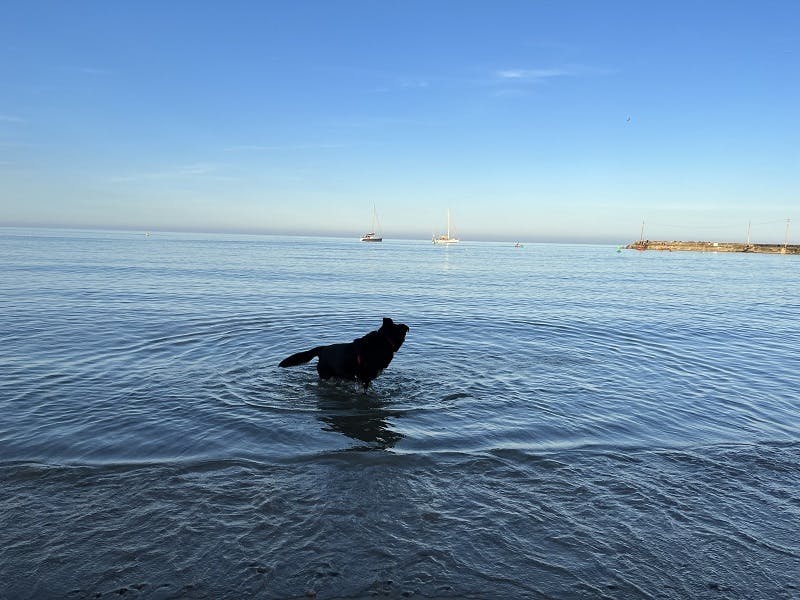
Fudge has discovered a love of water since we've been here!
Photo Credit: V. Lowsley
It was that time of day when everything turns silky blue near the ocean, and you can never quite capture the deep glow that blurs the edges of every sharp line.
Although we were there for the first time, plenty of people knew more than we did evidently! They were out to enjoy the last of the day's sun and warmth. Whether walking along the beach, swimming in the mild sea, canoeing, or paddleboarding - there was something for everyone, whether two or four-legged!
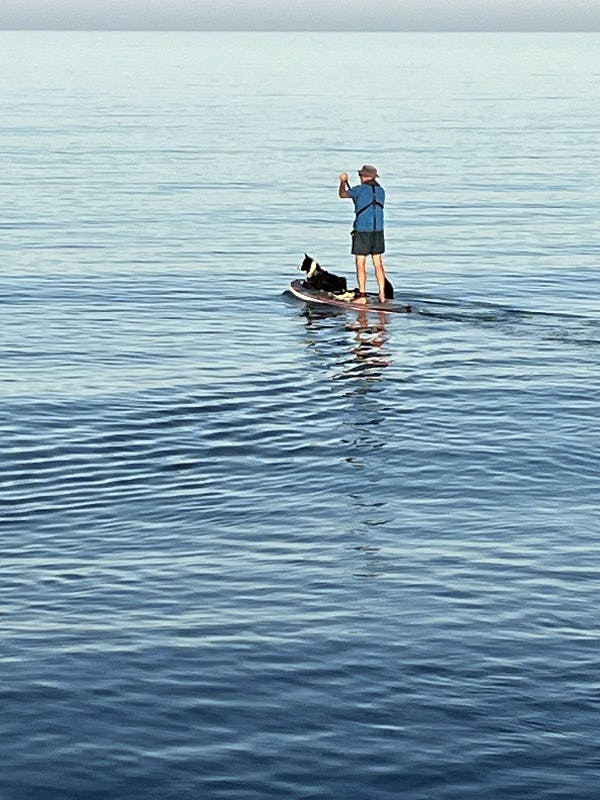
An extremely well-behaved passenger.
Photo Credit: V. Lowsley.
The pier was a hive of activity on this early September evening. too. People of all ages were fishing, and many of the children were excitedly catching crabs that hang out under the pier. Visitors strolled together, stopping for coffee or snacks from the takeaway restaurant on the hill overlooking the bay. Some were more interested in the snacks than the surroundings perhaps...
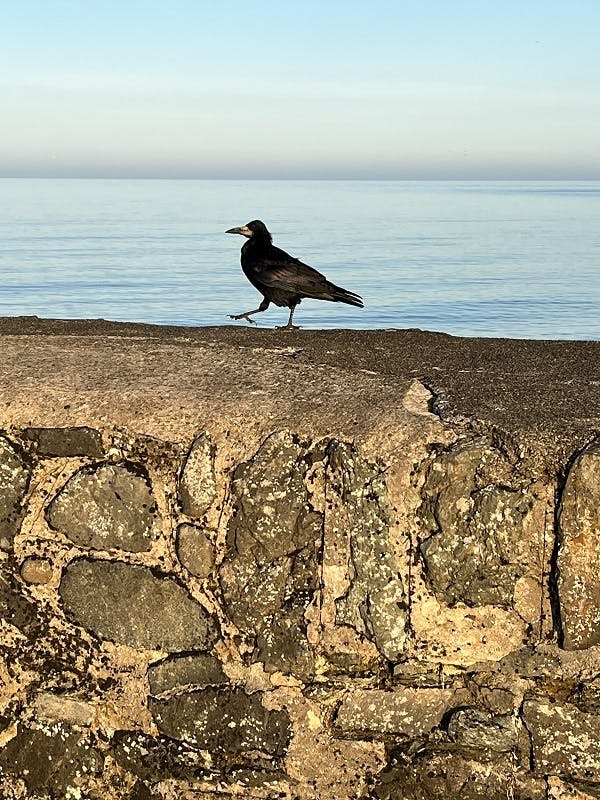
A Rook taking an evening stroll in the fine weather. Could be prevailed upon to assist you in eating snacks if asked nicely!
Photo Credit: V. Lowsley
Cahore Point has its origins as a fishing village, probably unsurprisingly. The pier, which has existed in some form or another for hundreds of years, was extended in the early twentieth century so that schooners could unload coal and salt. This made it easier for larger fishing vessels to unload their catch and increased the importance of the town.
Nowadays, it's clear that many of the local houses have become holiday homes or Airbnb premises. Although trawlers do still unload here occasionally, it's not quite the thriving fishing village that it was. Tourism helps to fill that gap as it does in many similar spots around the coast.
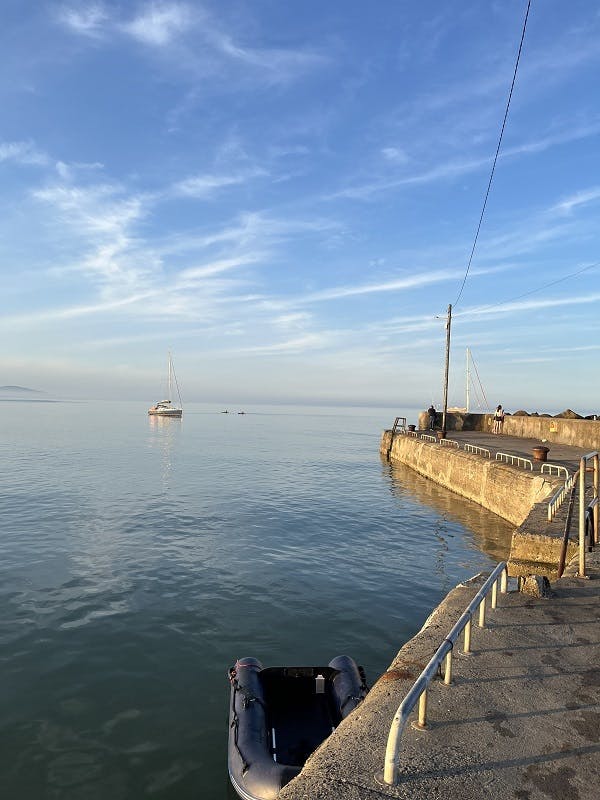
Safe harbour.
Photo Credit: V. Lowsley
In a different direction, however, I must share these with you! While we visit Wexford, the county town, every other week or so, a further forty minutes drive gets us as far as Waterford, another great spot. It's the oldest city in Ireland, so you're never short of things to see there! (Also, full disclosure: it's got one of my favourite bookshops!)
We had been mooching around Christ Church Cathedral on the grounds of the Bishop's Palace, and on the way out, we found these wonderful bronze seats/statues.
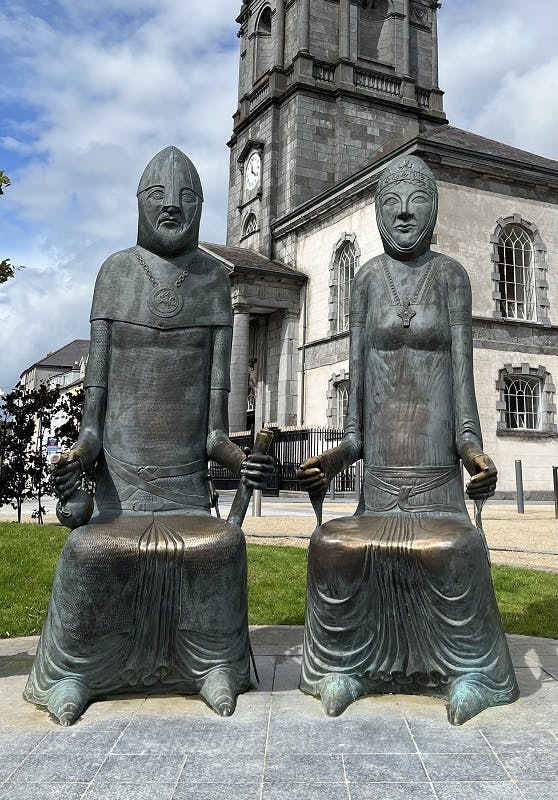
Strongbow and Aoife guarding the Bishop's Palace.
Photo Credit: V. Lowsley
Who are these people? Context may help, I agree!
Strongbow was the nickname of Richard de Clare, an Anglo-Norman knight. He came to Ireland in 1170 to aid Dermot McMurrough - the deposed king of Leinster - to regain his kingdom. (As it happens, he was late to the party, because the initial supporting invasion from England began the year before - talk about making an entrance!)
When he eventually showed up - having directly flouted the orders of his king, Henry II of England, to do so - de Clare attacked Waterford. He laid siege to the town aided by knights and mercenaries for three days, and following his victory and the widespread destruction of the city, he celebrated by marrying McMurrough's daughter, Aoife. Sure, what else would you be doing on a Sunday?
Their wedding on the 26th of August subsequently led to the Norman invasion of Ireland because, as it happens, one cannot ignore the decrees of one's king with impunity. Who knew?! Henry II sent a force to quell the growing power of Strongbow in 1171 and decided that, actually, he liked Ireland so much, he'd keep it.
And that, my friends, is another story.
Your Turn!
So now you've seen some of our ramblings, we would love to hear about your end-of-the-summer trips. Have you visited Ireland in early autumn? Where did you get to, and did you have a good time? What is your preferred time of year for travelling?
We always enjoy hearing your stories and thoughts, so please share your autumnal adventures in the comments section!








 Ask Gemma








I've been in Ireland three times, and every time I was greeted with lambs! Little sweet baby sheep, escaping their pens, wandering alongside the winding Irish roads. The ewes were so smart about guiding their babies back to the fold. We always stopped the car to allow the stragglers to safely cross the road. To me, the young sheep in the spring are part of the charm of Ireland.