


Twelve Days of Irish Recipes: Margo's Apple Jelly
Written by Ciaran on Dec 09, 2025 | 0 Comments
We're sharing one of our own recipes each day as part of our 12 Days of Christmas offers, inspired by that traditional carol and the funny Irish version, Christmas Countdown.
Day 9: Finishing touches
We're all about the finishing touches here at My Irish Jeweler. From our careful packaging to the stories we include on the history and meaning of our designs, we find it’s the little details that really makes something special.

And I think the same approach holds true for Christmas dinner! All that delicious food needs the perfect pairings to really make it special. Gravy will be found on almost every table in Ireland along with a relative newcomer to these shores, cranberry sauce. Bread or white sauce was also a must-have with turkey when I was a kid!
Given that none of those accompaniments are especially tied to Ireland, we thought we would share something that does have deep roots as an Irish foodstuff. It also happens to pair perfectly with our Ham of Day 8 and Teresa’s sausage meat stuffing of Day 7. Our Day 9 recipe is for Margo’s delicious Apple Jelly.
Margo's Apple Jelly

My daughter and our multitalented photographer Ruth out picking apples earlier this year. The fruits of their labour made their way into pies, jellies, and sauces!
Ingredients
- 1.5 kg or 3 lbs of cooking apples - You can use Bramleys or whatever tart apple you can get your hands on, where you are. You can also adjust the recipe quantities based on what you have and how much apple jelly you want to make. 450 g or 1 lb of uncooked apples will give you about 250 ml or 1 cup of strained liquid.
- Cool water to just cover fruit in your pot
- Juice and peeled rind of one lemon
- 1 to 2 cinnamon sticks and 10 or 15 cloves (this is entirely optional, you can add less if you just want a hint of spice. Margo doesn’t always add them, but it is very festive).
- 900g or 2 lbs of jam sugar - you can use another type of fine sugar if you like but jam sugar will help with setting (Margo also tells us this quantity of sugar can and will go up or down according to taste and how much apple juice you manage to collect in step 7 below).
Method
- Wash and chop your apples, removing the stems and any bad bits, especially if they are foraged windfalls like Margo uses! The cores and peels can stay in - hooray for no peeling!
- Put the chopped apples in a large pot with the lemon rind, cinnamon sticks, and a handful of cloves (if using), along with the water. You want the water to come up just below the level of the fruit, with space for simmering in the pot! Don’t add the sugar at this part - that comes later!
- Bring to the boil, then immediately reduce the heat to a low simmer for around 30 to 40 mins.
- Once the apples have begun to soften, rough them up a little with a potato masher or the back of a large spoon to help release the juices. By now, the mixture should be quite pulpy.
- Take the apple mix off the heat and let it cool a little before pouring it into a muslin bag sitting in a large bowl, or even a clean, relatively open-weave pillowcase if you don’t have a special bag!
- Hang the bag (or pillowcase) over the bowl so the liquid can start to drip out and be caught in the bowl. Regular jam makers might have a special rack for this. Before Margo got one of those handy bits of kit, she used a broom handle balanced between two kitchen chairs! Necessity is the mother of invention, as they say!
- Leave the mix to drip overnight so all that lovely, golden, appley liquid will drip through. No matter how tempted you might be, try NOT to squeeze, squash, or otherwise interfere with the bag of apples at this stage. Squeezing out juice will give you cloudy jelly. This isn’t the end of the world, of course. But the clear golden jelly you get if you can restrain yourself is better!
- The following morning, weigh out the precious liquid you got from your apples. The amount you will get will depend on the variety of apple you use. Margo always says every batch she makes is a little different. So this step is important.
- Pour your apple liquid into a pot, and add the juice of the peeled lemon.
- Switch on the heat and slowly add your sugar, stirring constantly so it all dissolves. How much sugar to apple liquid you use is up to you. Margo usually aims for 1 part apple to ¾ part sugar. But she has even gone as low as 1 part apple to ½ sugar for a very tart jelly, which works really well with ham! But feel free to add more sugar up to a 1:1 ratio if you fancy a sweeter jelly.
- Bring the mix to a simmer and stir constantly for around 15 minutes. Margo stressed the stirring continually part to us a few times. If you don’t do it, your jelly can stick and burn.
- After 15 or so minutes, you should be around setting consistency. You can check by putting a small drop of it on a chilled plate from the freezer (if the jelly goes a little firm and wrinkles when you poke it with your finger, you are done). Or again, if you have the kit, measuring temperature with a thermometer (it should be around 104ºC or 220ºF. Margo tells us she is never too worried about these checks. Softer jelly still tastes lovely too!
- When you have the consistency you want, take off the heat and ladle the mix into sterile jars, filling them close to the top.
- Cap with a circle of wax paper before putting on the lid tightly. Store them in a cool, dry place until you are ready to eat them… which is never long in our house! Or you can take Margo’s lead and give them as lovely gifts!

We are looking forward to trying this year's vintage at Christmas dinner! It looks GOOD!
Photo Credit: M. Kelly
History of Apples in Ireland
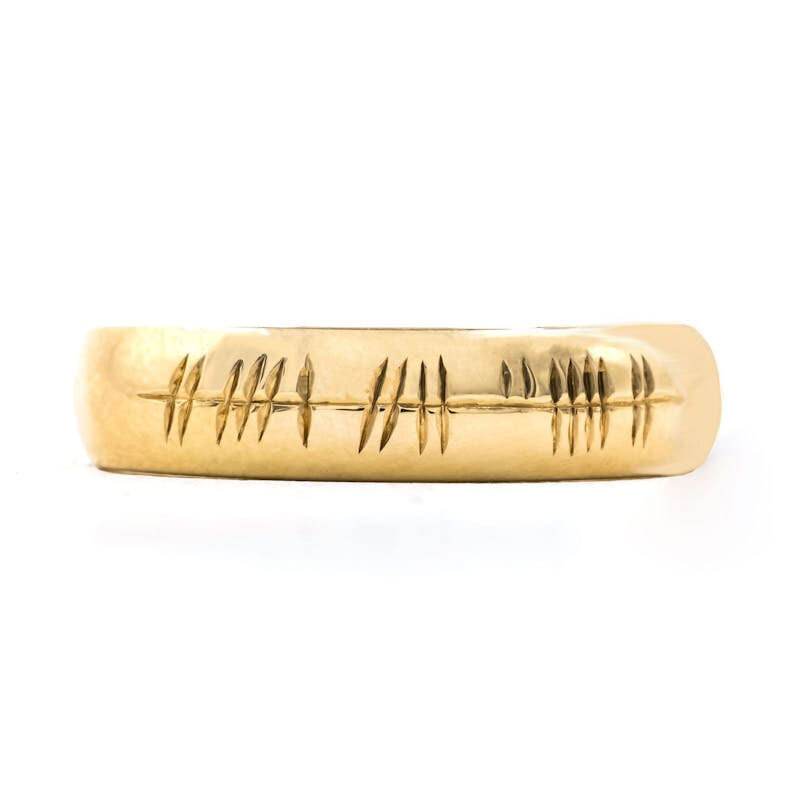
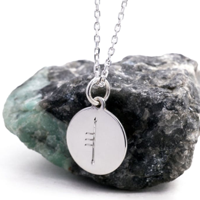
A little historical footnote for those interested. Crab apples are native to Ireland and sweeter varieties have been cultivated in Ireland for at least 3000 years. An apple thought to date from 1000 BC was unearthed at Navan Fort near Armagh. Unsurprisingly, apples crop up in plenty of myths, folklore and legends. The apple tree is even part of the ogham "tree" alphabet; the letter for Q, ceirt, stands for apple

Q in ogham, which also stands for Apple Tree.
The connections don't stop there. It’s said that St. Patrick himself planted apple trees at an ancient settlement in Armagh. Monks ate apples with their meals, and cider crops up in a 12th-century historical document from Ulster praising the high quality of a chieftain’s cider!
So apples have been important in Ireland for millennia. It's only fitting then that they be represented in one of the most important meals of the year!

What's Next?
Check back in with us tomorrow for Day 10 of our Twelve Days of Irish Christmas, or open door number 9 of our 12 Days of Christmas offers! And, of course, if you need any help selecting a gift for yourself or a loved one, please do get in touch.

Get In Touch
Have a question or something you're not entirely sure about when browsing our pieces? Please reach out. You can send us a note or give us a call—the Dublin workshop is here to make sure that you have a perfect experience from start to finish with My Irish Jeweler.
Follow us on Facebook and Instagram, to see what's new and upcoming. Join our Email list for early offers and special features.

Ciaran
My Irish Jeweler
Born in Co. Antrim and reared in Dublin, I was fascinated with Gaelic culture from an early age. I suppose it's not surprising given my mother inherited a grá for the Irish language from my grandfather, an Irish school headmaster. And that grá continues! My brother and sister are now Gaelic teachers here in Ireland, my niece is an award winning Irish dancer, and I proudly work to share Irish culture through our Irish and Celtic Jewelry at My Irish Jeweler!
I love researching and reading about the history of Irish design. It's at the core of what we do here at My Irish Jeweler. I find much of it so interesting that I have to share what I find. I hope you enjoy it!
Comments




 Ask Gemma