




St. Patrick's Day Countdown: Potato bread take two
Written by Ciaran on Mar 11, 2026 | 0 Comments
There's less than one week to go until St. Patrick's Day! We’re counting down the days to March 17th with an offer and a potato-stuffed recipe for you every day! Check back in with us each day to see what’s up next!
Whether you choose our potato soup from Day 3, the chowder from Day 4, Coddle from Day 6 or our Stew from Day 7, you will need bread to serve alongside. It's an essential when you want to mop up all that potato-y goodness!
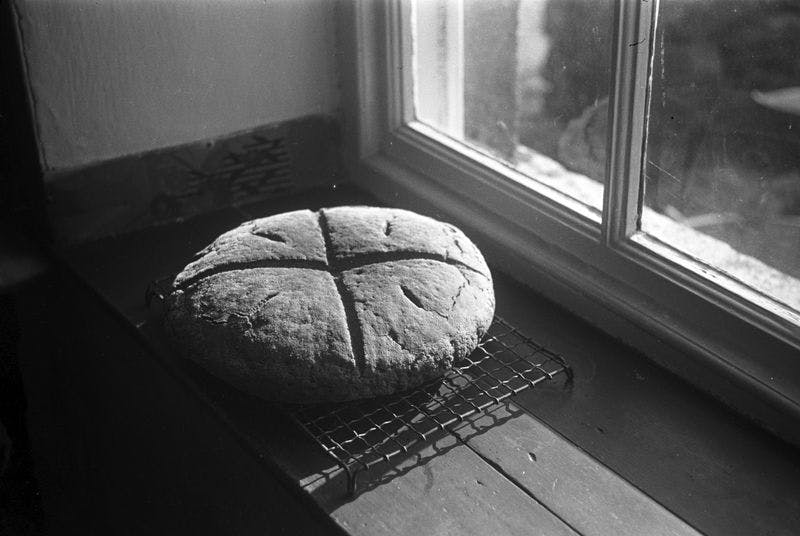
The traditional Irish soda bread is a great choice. You can almost smell this loaf cooling on the rack from a photo taken in 1947!
Photo Credit: Image and data © National Folklore Collection, UCD.
Now, a traditional brown or soda bread will certainly do the trick, and it is probably what most will go for, particularly on St. Patrick’s Day. Brown bread is certainly one of my own favourites and eating it brings back very fond memories of visits to my grandparents. If that is what you are after, you can follow our recipe or, easier still, bake along with this excellent video by Peter Ward, from the fabulous Country Choice in Nenagh, where my wife, Jane, has family ties.
If you really want to up the potato quotient of your dish, though, you might want to try a potato bread. Those who have been paying attention will remember we already gave you a potato bread recipe, way back on Day 1 of our countdown. But that unleavened version isn’t the best aide for mopping up; something lighter is required.

My wife Jane's potato bread/farls/cakes - delicious but not the thing to serve along side a chowder, soup, or stew!
This is a very different recipe that uses a good deal more wheat flour, with yeast rather than soda for rising, so it's certainly not as traditional. Yeast-leavened bread made with wheat would have been the preserve of only the very well off in Ireland, right up until the early 20th century.

Some beautifully leavened, soft and delicious potato bread would have been the food stuff of dreams for many people living in Ireland over the centuries.
But this type of loaf is one that my family and I enjoyed when our local bakery, Bread Naturally, whipped up a shamrock-shaped batch for St. Patrick’s Day! And several of the My Irish Jeweler team enjoy a slice or two of this alongside the hearty and healthy fare at Dublin’s Cornucopia. This recipe is a version of their potato bread from their weighty cookbook, Cornucopia at Home.

Cornucopia is a go-to in Dublin for healthy, hearty fare since it opened in 1986, tucked away on Wicklow Street.
Photo Credit: Ian S (CC BY-SA 2.0)
Ingredients
- 375 g strong white flour
- 125 g fine wholemeal flour
- 1 heaped tsp salt
- 70 ml sunflower oil
- 1½ tsp active dried yeast
- 240 ml of body temp water
- 1 large potato (baked, peeled and mashed) and a handful of chives
- 100 g baby spinach blanched in boiling water, then rinsed in cool water. Squeeze out the water, then puree to add a green hue to your bread that is a little reminiscent of the gemstone of Ireland, Connemara Marble! If you want to go really traditional, you could always substitute nettles here instead… You can gather just the new leaves at the tops of these plants EVERYWHERE here at this time of year. They will give your bread an even more vibrant green and are packed with vitamin C… Win-win! Just be sure to wear gloves when you are picking them! Any child in Ireland will tell you they give a nasty sting. But they are tamed once they are blanched in boiling water for 30 seconds to a minute.
- A handful of finely chopped chives if you fancy a little more flavour, and of course, even more green!
- 2lbs loaf tin or baking sheet
Method
- Add the yeast to the warm water in a small bowl, then gently stir once before leaving it in a warm spot for 15 minutes, until a bubbly layer forms on the surface.
- While the yeast mixture is warming up, sift the two flours together in a large bowl and mix in the salt.
- Stir in the oil until it is evenly mixed.
- Add in your mashed potato, blanched spinach or nettle puree, and/or your chives. Gently mix through
- Make a small well in the middle of this now-green mixture, and pour in the yeast when it is ready.
- Take off your rings and bracelets! Then use clean, dry hands to mix the dough into the yeast. Keep mixing until you have a malleable soft - but not sticky - ball. If it is dry, add a little more water. If it’s sticky, add a little extra flour.
- Turn the dough out onto a floured surface and get kneading. This is your workout for the day! 10 minutes should be enough.
- Return the dough to the mixing bowl, cover with a damp cloth and leave it to sit in a warm spot for 1 ½ hrs at least while you get on with your day - it should double in size.
- Now is the time to take out any anger you might have! Get punching to knock the dough back to its original size.
- Preheat your oven to 350°F or 180°C.
- If you are making a loaf, arrange it in a well-oiled tin and leave it to sit again in a warm spot for another ½ hr. If you are making your own free-form shape (perhaps a shamrock?), shape the loaf on an oiled baking sheet and leave it to sit for ½ an hour.
- Once your oven is up to temperature and the ½ hour has elapsed, place your bread in the oven and bake for 50 to 60 mins until browned. You know it is ready when you turn it out and hear a nice hollow sound.
- Cool on a wire rack (this is the hardest part), then slice and serve with Irish butter alongside whatever dish you fancy!
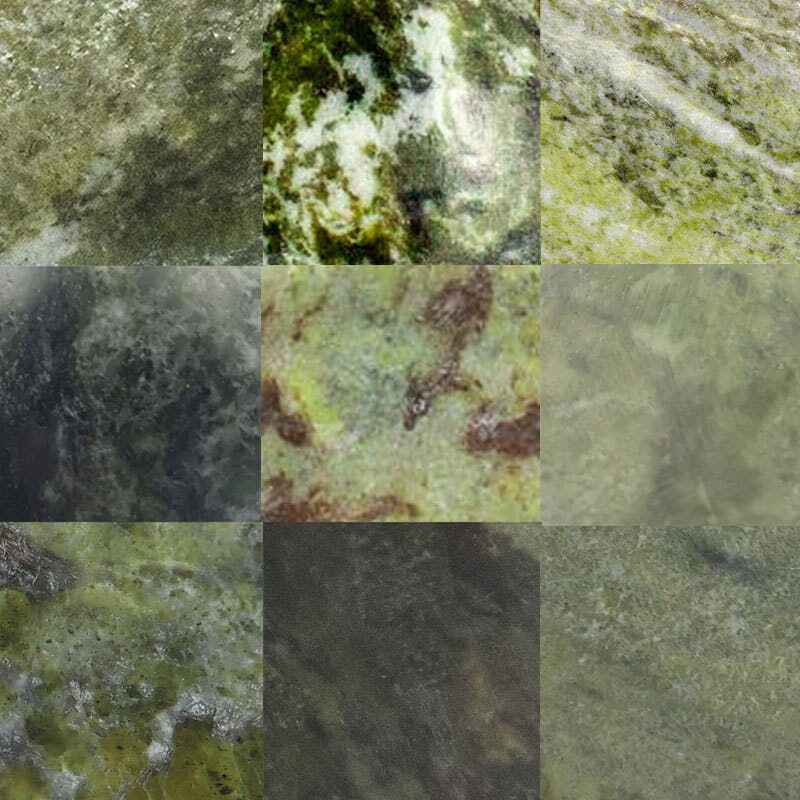
Not quite 40 shades of green! But Connemara marble certainly covers almost every tone from dark and moody, nearly black, through to almost white with just a whisper of green. Depending on what you add to your loaf, you should get something that is very reminiscent of the lighter tones here.
Photo Credit: J. Chadwick
What's next?
Check back in with us tomorrow for Day 12 of our St. Patrick's Day countdown, or open Door Number 11 of our 17 Days of celebratory offers!
One-of-a-Kind Connemara Marble
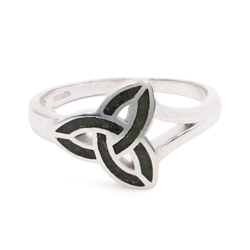
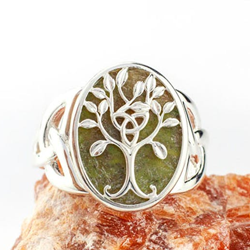
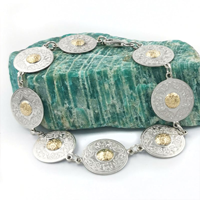
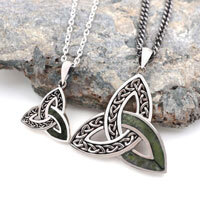
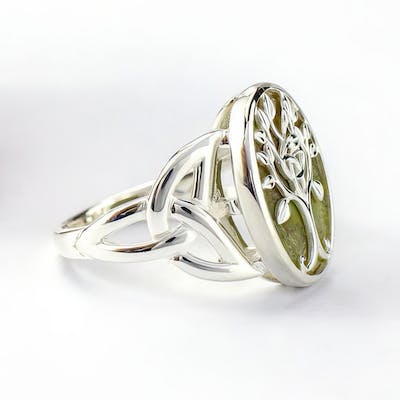
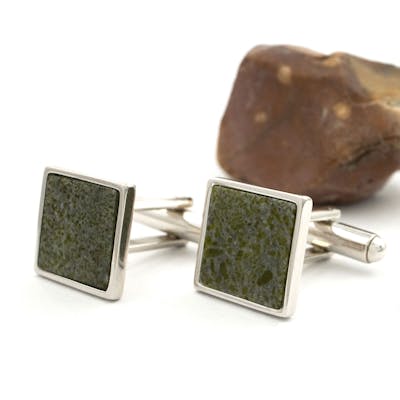
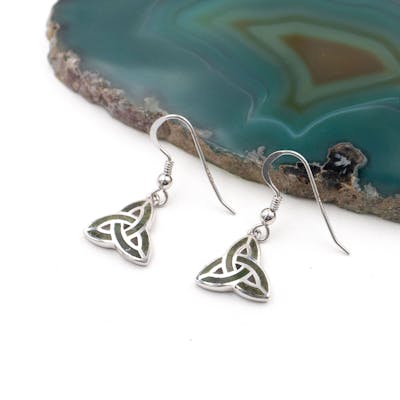
If you don't fancy the spinach or the nettles and want some Connemara green instead, we have you covered. Every piece of Connemara marble is different, making it a unique gift and ideal for anyone proud of their Irish roots.
Get In Touch
Have a question or something you're not entirely sure about when browsing our pieces? Please reach out. You can send us a note or give us a call—the Dublin workshop is here to make sure that you have a perfect experience from start to finish with My Irish Jeweler.
Follow us on Facebook and Instagram, to see what's new and upcoming. Join our Email list for early offers and special features.

Ciaran
My Irish Jeweler
Born in Co. Antrim and reared in Dublin, I was fascinated with Irish culture from an early age. I suppose it's not surprising given my mother inherited a grá for the Irish language from my grandfather, an Irish school headmaster. And that grá continues! My brother and sister are now Irish teachers, my niece is an award winning Irish dancer, and I proudly work to share Irish culture through our Irish and Celtic Jewelry at My Irish Jeweler!
I love researching and reading about the history of Irish design. It's at the core of what we do here at My Irish Jeweler. I find much of it so interesting that I have to share what I find. I hope you enjoy it!
Comments


 Ask Gemma