It is a bright and sunny day here in Dublin and you can feel the hint of spring in the air. St. Brigid's day, or Imbolc on February 1st, is fast approaching - the start of Celtic spring.
In many homes in Ireland, people will make a traditional cross from fresh-cut rushes on the eve of St. Brigid's Day for protection throughout the year. It was the 1500th anniversary of the death of St. Brigid last year, so this is an ancient tradition. Would you like to join in? Watch our video tutorial below and read on to find out important details like:
- What you will need to make a St. Brigid's cross
- When to make your St. Brigid's cross
- How to make your St. Brigid's cross
- Where to hang your finished St. Brigid's cross
What materials are needed to make a St. Brigid's Cross?
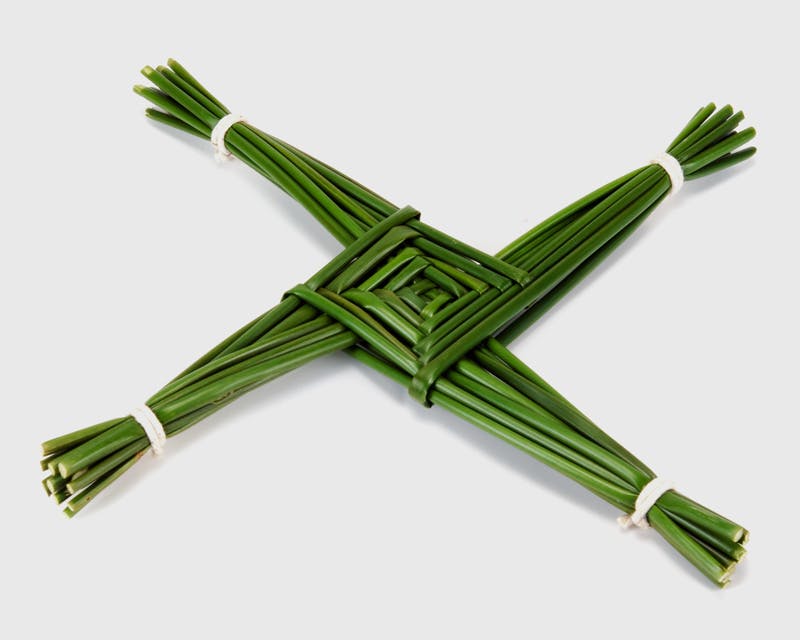
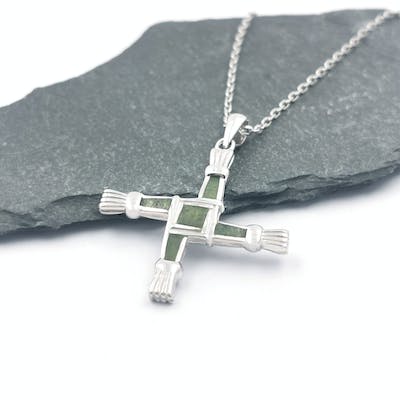
Although our Brigid's crosses are expertly crafted from sterling silver and gold, traditionally a St. Brigid's cross is made from freshly cut rushes or reeds. Rushes are a plant with thin but strong hollow leaves that are found growing in marshy, wet, and boggy spots all over Ireland. Plenty of those here!
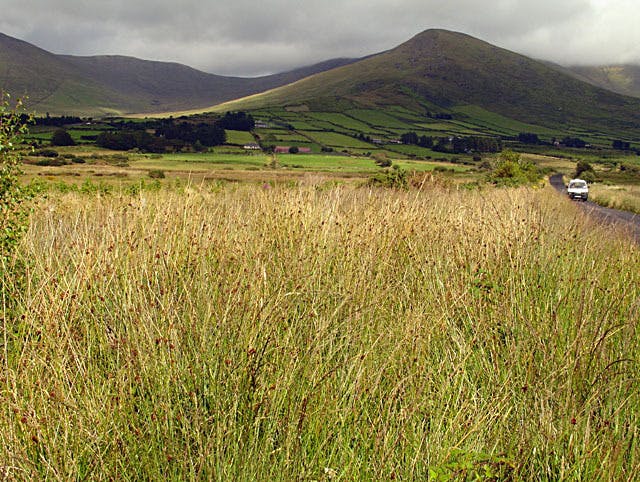
A field of rushes near Toom, Co. Cork.
Traditionally, rushes would be pulled from the ground and brought into the house on the eve of St. Brigid's Day. The family would gather to make crosses to protect their home for the coming year using just these plants.
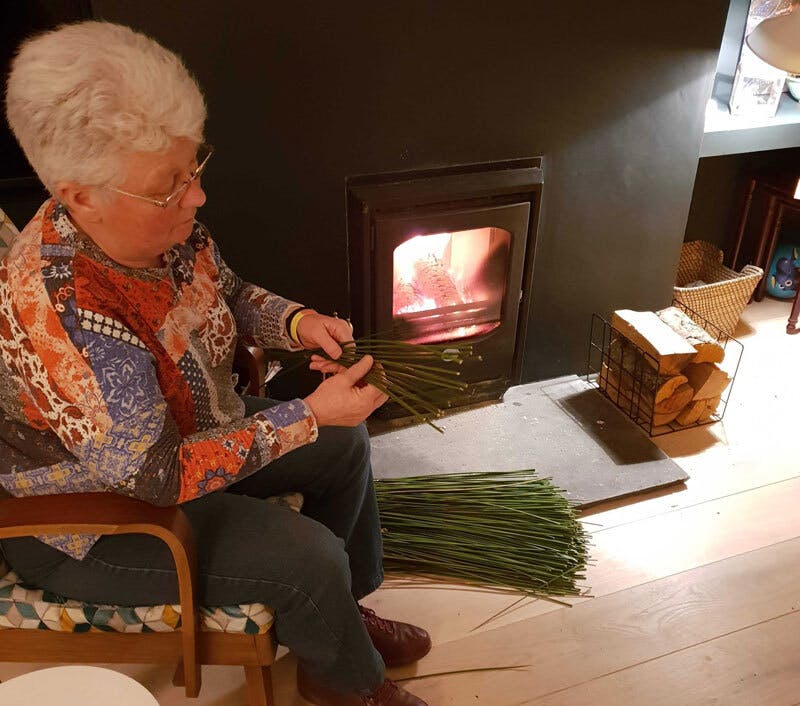
Weaving Brigid's Crosses in front of the fire.
Photo Credit: ©Jane Chadwick
Materials to make a Brigid's Cross
We appreciate rushes may not be a common plant wherever you are in the world! Not everyone can walk out their door and come back in with an armload ready to make a cross!
So here is our materials list, complete with more accessible alternatives below.
Materials for making a St. Brigid's Cross
1) 16 x Rushes - 2/3 to the full length of a standard ruler. Be sure to have some spare rushes in case a few break or aren't suitable.
Alternative: You can substitute straw, OR pipe cleaners, OR paper drinking straws, OR thin rolled up tubes made from newspaper or magazines. All of the same 2/3 ruler to full ruler length. Really any material that is thin, somewhat strong (so the cross doesn't fall over on itself) and flexible (so it can be woven).
2) 4 x pieces of material to secure the "arms" of your cross. These can be the traditional rushes themselves tied in a knot.
Alternative: String OR elastic bands are much easier to work with, so this is what we suggest. We typically use elastic bands even when working with rushes. It is not at all traditional, but it holds the cross together well, even after it shrinks a little when the rushes dry out.
3) Time and good company
St. Brigid's crosses are often made with company here in Ireland. People gather together in their homes, schools, churches, or sacred wells if the weather allows, to weave their crosses. It is the perfect task to attempt with others. It can take a little while, and a friendly chat makes the work much more fun.
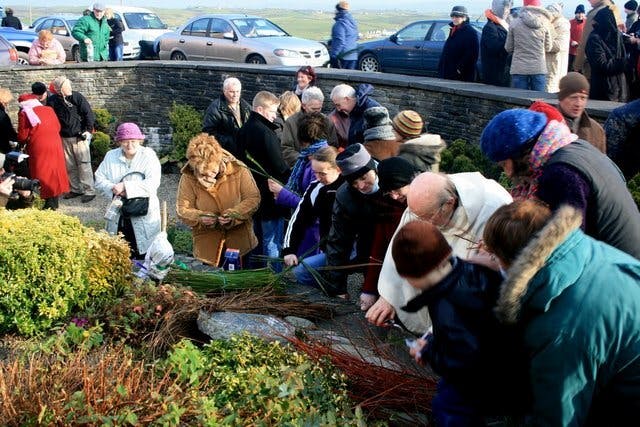
People muffled up for the cold, making crosses with rushes at St. Brigid's well.
When to make your St. Brigid's cross
St. Brigid's crosses are traditionally woven from rushes pulled from the ground on January 31st, the eve of St. Brigid’s day. They should be finished and ready that evening to be hung Febuary 1st, on St. Brigids Day. So if you can, make your cross on the evening of January 31st.
How to make your St. Brigid's Cross
The most common cross is a woven design, with a layered square or diamond shape at the center and four arms radiating out, each one tied at the ends.
Learn how to make your own cross using our handy video tutorial. Or you can learn with the My Irish Jeweler team, when folklorist and storyteller, Margo showed them the ropes. Myself, Gemma and Peter make valiant attempts while Margo expertly tells us all about the tradition of St. Brigid.
Where to hang your St. Brigid's cross?
Once you've finished your cross, you may like to give it this traditional blessing:
“May the blessing of God and the Trinity be on this cross and where it rests and on everyone who looks at it.”
You can then find a suitable spot in your home. Traditionally they were hung by the door to ward off evil or in the rafters or near the chimney to protect the home from fire. Crosses were also hung where any animals of the house were kept to keep them safe too! You might choose to follow this tradition or choose a spot that feels special to you.
A St. Brigid's cross to treasure forever
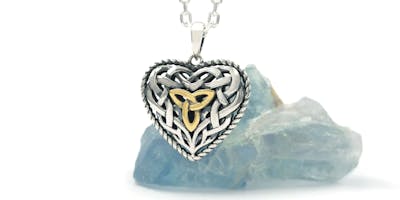
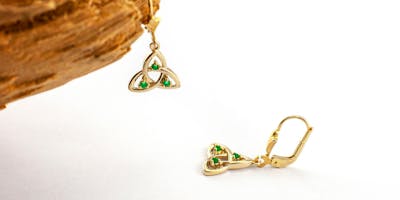
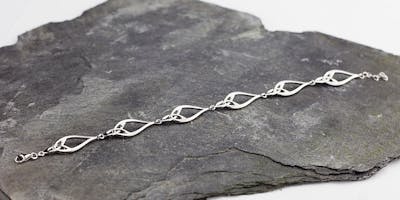
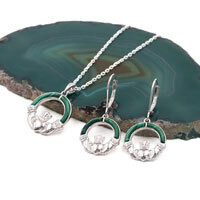
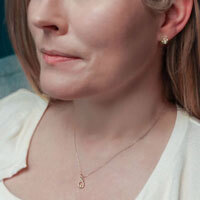
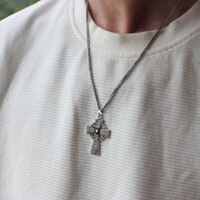
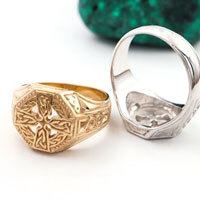
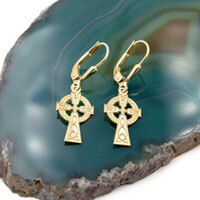
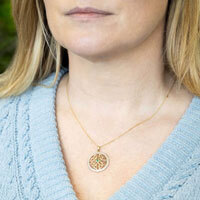
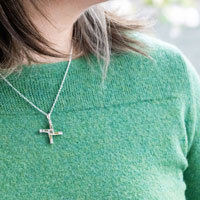
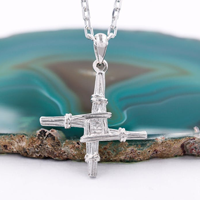
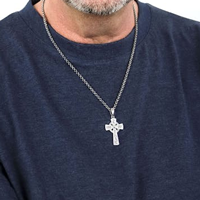
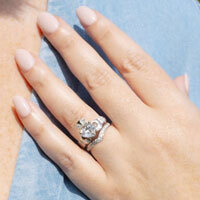
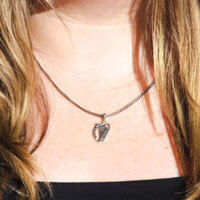
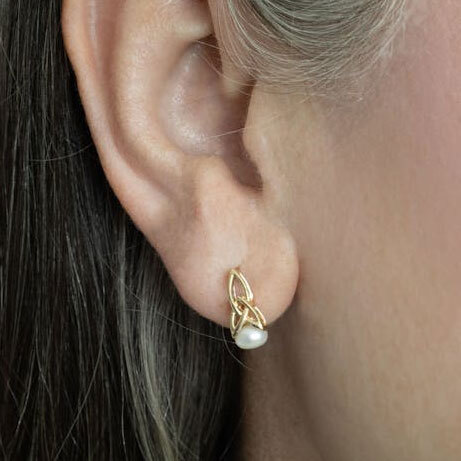
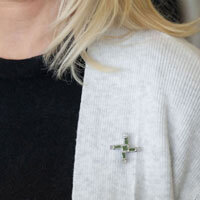
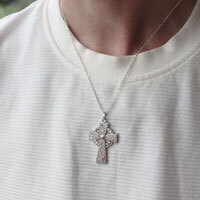
Not a natural crafter? Browse our selection of St. Brigid's Cross necklaces and brooches for a piece you can treasure forever and wear year round. Get in touch with us and we would be delighted to help you identify the right choice for you.
Stylish St. Brigid's Crosses












 Ask Gemma












Why should you not make them alone? I do not have anyone to make them with this year. Is it trouble to make them alone?