



Irish Myth and Folklore: How Cú Chulainn got his Name
Written by Ciaran on Feb 28, 2025 | 0 Comments
An iconic hero of Irish folklore, star of Táin Bó Cúailnge, The Táin or The Cattle Raid of Cooley, Cú Chulainn was known to fight entire armies singlehandedly, the fiercest of warriors, a demi-god and son of the Celtic God Lugh.

"Cuchulain in Battle", an illustration by J. C. Leyendecker in T. W. Rolleston's Myths & Legends of the Celtic Race, 1911.
Photo Credit: Public Domain
Like many Irish stories, there are as many versions of the tale of how Cú Chulainn got his name as there are days in the year! Each person makes it their own, but though the details might differ, the broad strokes are the same.
Long before the hero Cú Chulainn, there was a baby named Setanta, son to Deichtine, sister of King Conchobar mac Nessa. Setanta, means "young warrior" or "protector" in English. True to his name, the young Setanta was obsessed with becoming a warrior and wanted nothing more than to join his uncle at Emain Macha, the royal seat in Armagh, to train to be one of the King’s boy warriors.

What remains of Emain Macha, Navan fort, in Co. Armagh, reportedly home of the Kings of Ulster.
Photo Credit: Giuseppe Milo (CC BY 2.0)
After some fairly persistent pestering, Setanta's mother eventually relented and let her young son travel to Emain Macha. On arriving, keen eyed Setanta spotted a group playing hurling, and excitedly raced onto the field to join them. The boys, not knowing whether this person was a friend or foe, immediately turned on Setanta.
Now you might expect that such a mismatch would mean Setanta would be sent back home to his mother in bits, but the young warrior beat all comers single-handedly. Only the King stepping in spared the boys from Setanta, and the royal was suitably impressed by his young nephew's skills.

An illustration of Setanta by Stephen Reid in Eleanor Hull, The Boys' Cuchulain.
Photo Credit: Public Domain
As a reward for his bravery and skill, the King invited the young Setanta to join him at a banquet at the house of Culainn, a talented smith and maker of weapons. Ever the eager student, Setanta agreed to follow his uncle once he had finished his training for the day.
King Conchobar travelled on ahead, arriving at the banquet so hungry for the feast that he forgot all about his plan with his young nephew. With all the guests seated, the host Culainn unchained his huge hound to guard the hall and home while everyone feasted inside. Standing as tall as a pony with eyes that burned red gold, the hound had been trained to attack and kill anyone who came near the home. You see Cuhulain lived far from the protection of Emain Macha and needed to be careful of raiders keen to stock up on weapons, or wolves that would take his cattle.

Although imposing, any Irish Wolfhounds I have ever had the pleasure to meet have been gentle giants. I still wouldn't want to meet a cranky one though! They are enormous and still quite diminutive in comparison to the hound in our story!
Photo Credit: Suzanne Mischyshyn CC BY-SA 2.0
Unaware of the danger that lay in wait for him ahead at the hall, Sétanta arrived at Culainn’s home, spotting the enormous dog just as it made a growling leap toward him to tear him to shreds. Inside the hall all in attendance heard the dog, and rushed outside expecting to see an savaged invader, with the horrified King Conchobar remembering his young nephew too late!
The King needn't have worried. With just his hurling stick and ball to defend himself, Sétanta struck the ball, straight and true straight down the ferocious beast's throat, killing it stone dead.

Another illustration by Stephen Reid in Eleanor Hull, The Boys' Cuchulain.
Photo Credit: Public Domain
The guests, the King, and Culainn were all amazed to see Setanta not only not dead, but entirely unharmed, standing over the slain hound. Culainn was understandably distraught at the sight of his fallen dog and valuable protector. On seeing the man’s clear distress, Setanta honorably vowed to take the place of the dog, protecting Culainn’s home and the pass into Ulster, training a new guard-dog to take his place in time.
And so Sétanta became the hound of Culainn or Cú Cuhulain, (pronounced ‘Koo cul-lynn’). For a year he dutifully carried out his responsibilities, and though his four- legged, furry replacement was eventually trained and took his place as guard dog, the name stuck, and Setanta was forever after called Cú Cuhulain.

An Inspiration
This tale of bravery and honor inspired our Cú Chulainn brooch. The circular design depicts a young Cú Chulainn, the hound of Culainn, racing along side an Irish wolfhound. Armed with a spear and shield, the expert craft captures beautiful movement, with Cú Chulainn’s cloak and hair swirling behind him as leaps. This wonderful legend makes this brooch a fitting and aspirational gift for a young person, or any fan of Irish stories.
Myth and Folklore Collection
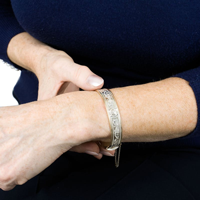
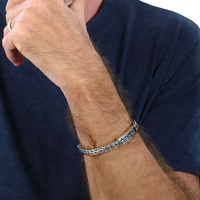
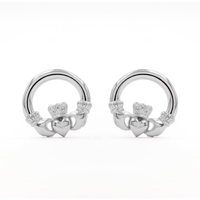
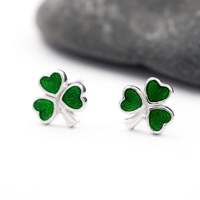
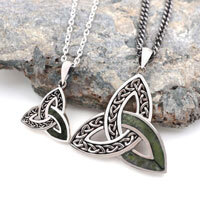
And for the fan of Irish myth and folklore we have several designs inspired by great stories.
Get In Touch
Have a question or something you're not entirely sure about when browsing our pieces? Please reach out. You can send us a note or give us a call—the Dublin workshop is here to make sure that you have a perfect experience from start to finish with My Irish Jeweler.
Follow us on Facebook and Instagram, to see what's new and upcoming. Join our Email list for early offers and special features.

Ciaran
My Irish Jeweler
Born in Co. Antrim and reared in Dublin, I was fascinated with Gaelic culture from an early age. I suppose it's not surprising given my mother inherited a grá for the Irish language from my grandfather, an Irish school headmaster. And that grá continues! My brother and sister are now Gaelic teachers here in Ireland, my niece is an award winning Irish dancer, and I proudly work to share Irish culture through our Irish and Celtic Jewelry at My Irish Jeweler!
I love researching and reading about the history of Irish design. It's at the core of what we do here at My Irish Jeweler. I find much of it so interesting that I have to share what I find. I hope you enjoy it!
Comments



 Ask Gemma