Frequently asked questions about Ogham.
And of course, if you are keen to become an ogham fanatic too, below are fifteen FAQs about ogham for you to study up!
1. What Is Ogham?
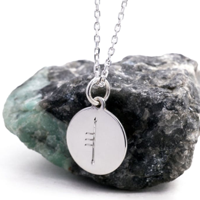
Ogham is an entirely unique writing system that is at least 1500 years old. It was designed and made purposely for the Irish language, where each letter is represented by a single or a group of lines that cut across or run along a central vertical “stem.” The letters are read vertically “up the stem” from the bottom to the top.
2. The Irish Tree Alphabet? What is that all about?
The equivalent for the “A B C’s” of the Latin alphabet, collectively the letters in the ogham alphabet are known as the Beith - luis - nin, where Beith means Birch tree in Irish. Indeed, many of the individual letters in Ogham are the names of Irish trees or shrubs. E.g. D is dair, the Irish for oak, and S is sail, the Irish for Willow.
In later versions of Ogham, there are associations with trees or shrubs for every letter, which led some to call Ogham the Irish Tree alphabet, even though not every letter was originally named for a tree. We should also say that there are many other versions of ogham with letters associated with different things. There is a bird ogham, a river ogham and even a pig ogham!
Given how important trees were to the Irish long ago, when they were sacred and protected by law, and the unique vertical nature of how Ogham is written with letters branching out, it’s perhaps not surprising that the idea of the Tree alphabet really took root, so to speak!
3. Is Ogham a language?
You may see “Ogham translators” on the internet, which gives the impression that ogham is a language. But no, it's a writing system that was developed for Irish but can also be used to write in other languages too!
Historically, Ogham was used for writing in Irish, but there are instances of it being used to write other languages, including Latin and English. It is also found alongside inscriptions in different alphabets, including Norse. The 11th-century Thorgrimr Stone in Killaloe, County Clare, has both Ogham and Norse runic inscriptions. This 11th-century cross fragment is the only known example in Ireland with this dual script.
4. How do you read or write ogham?
Reading ogham on stone monuments like the Knickeen stone can be tricky! On many ogham stones, the marks are worn down by hundreds of years of wind, rain, and exposure to the elements. They can often be covered in lichen and moss.
If you can make the marks out, you read Ogham from the bottom to the top, along a centre “stem line” which usually runs along an edge of a stone. So you read vertically and in 3D! Which is cool, and each character in Ogham is made by a line or group of lines.
5. When was ogham first made? How old is it?
The short answer? No one knows exactly! The oldest records we have for ogham come from stones that date to the 4th century. So, Ogham is at least 1500 years old and was in use on stones from the late 300s onward. But it is possibly a good deal older!
Some ogham scholars believe that ogham must have been developed at least a few hundred years earlier. Many of the sounds represented by ogham characters that are found on the earliest stones were falling out of use and were decidedly old-fashioned by the early 400s.
This suggests the ogham characters were made for an even earlier form of Irish. Some speculate that ogham could be closer to 2000 years old. The thinking is that ogham may have been designed as a writing system that was carved on sticks. This would mean the first uses of this alphabet wouldn’t be preserved. All we can see now are the ogham engravings carved into stone, like the Knickeen stone, as more permanent markers.
6. Where did ogham originate? Is it Irish?
No one knows for sure where ogham originated, as the oldest records we have are most probably not the first use of the alphabet. It’s also very hard to accurately date the stones we do have!
We do know that Ogham stones have been found across Ireland and parts of the UK. And given the huge volume found in Ireland, and that it was uniquely designed for the Irish language, many are confident saying that ogham originated in Ireland.
Some will even go further and say that it was developed in the south of Ireland given that 60% of all the known ogham stones discovered were found in Cork and Kerry. A few people even suggest it was the invention of one lone genius, given the uniformity of this remarkable system.
So yes, most people agree that Ogham is Irish. Ogham is on the Irish passport and has been used continuously here for over 1500 years. And though not every Irish person knows it these days, it was developed for the unique sounds of the Irish language.
The discovery of ogham stones outside the island of Ireland has led some to question whether ogham originated in Ireland or if it was developed elsewhere. However, there is no evidence from history, archaeology, mythology, or folklore that this is the case, and the wealth of ties to Ireland makes this a tough argument to make. Especially given that the ogham stones found in the UK are typically found in areas where there was a strong Irish influence, suggesting that ogham travelled with the Irish to these places rather than Ogham being introduced to Ireland.
7. How many ogham stones are there?
There are over 400 examples of ogham stones or fragments like the Knickeen stone that have been discovered to date, and this number is growing all the time! Each new ogham discovery adds to our knowledge and gives us a glimpse into the distant past - each with a unique biography or story. So keep your eyes open if you are out walking in the wilds of Ireland and spot a stone with strange markings on it.
8. Why was ogham made?
Another question that nobody knows the answer to! Ogham is nothing if not mysterious! Some think it was devised in response to the Latin alphabet, but built to accommodate the unique sounds of the Irish language.
Others suggest it was an adaptation devised from tally sticks and symbols, while still others have suggested it was adapted from an older manual gesture alphabet - a sort of proto-charades!
A medieval record known as the “Lebor Ogaim “ or the “Ogham tract” documented that it was Ogma, a god, who first devised this enigmatic alphabet:
‘Now Ogma, a man well skilled in speech and poetry, invented the Ogham. The cause of its invention, as a proof of his ingenuity, and that this speech should belong to the learned apart, to the exclusion of rustics and herdsmen.’
We may never know the true origins of Ogham, but it is fun to speculate!
9. What makes ogham unique?
We are clearly very biased, but Ogham is widely regarded as a remarkable and really quite special ancient writing system. Here are our top five reasons why ogham is so special:
- It’s one of the most abstract and pared back writing systems in the world. Letters are represented with simple parallel lines grouped along a central vertical “stem.” It probably made it easier to carve - but it does make it quite enigmatic. It can be tricky to recognise letters on old, worn engravings where bits have been chipped off.
- It is traditionally read vertically “up the tree” so to speak, branch by branch, which is VERY unusual!
- Often, the “stem” is the edge of a stone, making it an alphabet that was written and read in 3D! As far as we know, this is wholly unique!
- It is also one of the few ancient writing systems that has survived unbroken through to the present day without ever being “lost” or abandoned. People have used it for over 1500 years and possibly even 2000 years.
- It is still being used to this day.
Now tell me what is not to love about that!?
10. What was ogham used for?
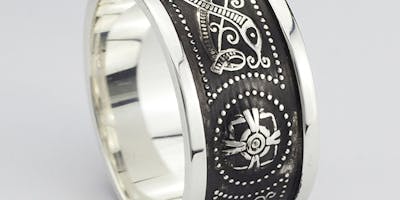
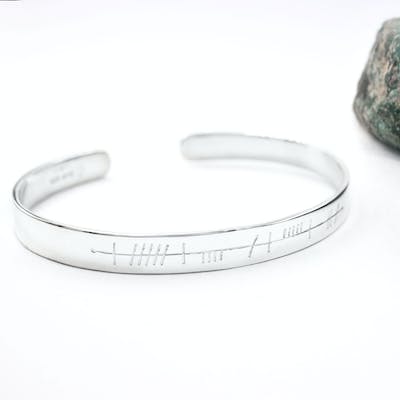
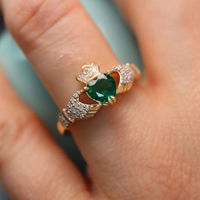
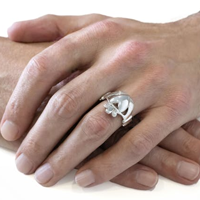
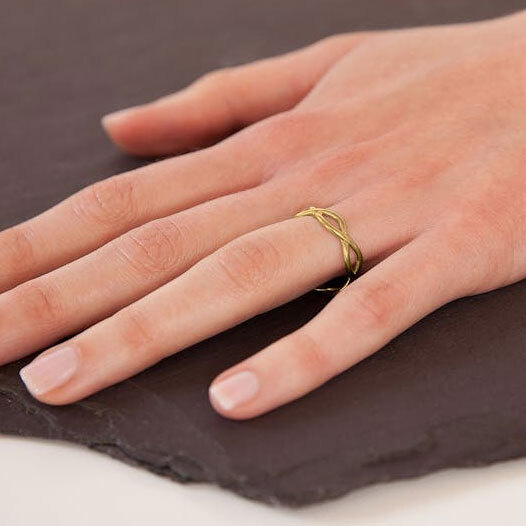
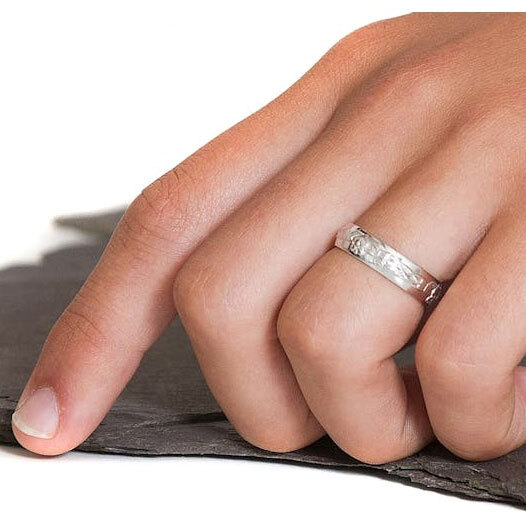
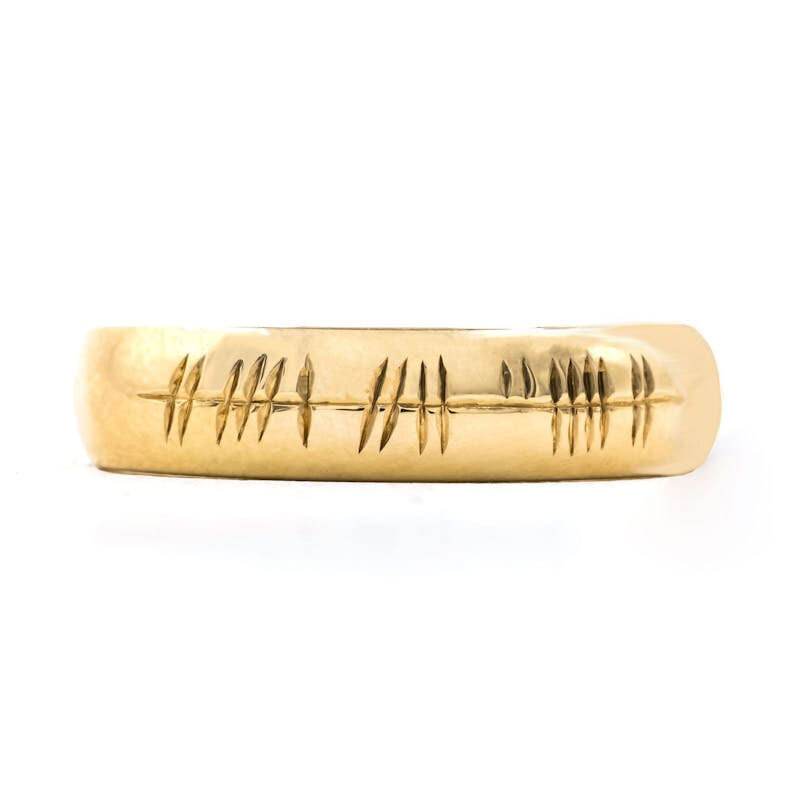
It seems ogham was used in ancient Ireland much like we use it today in our jewellery. Namely, for commemoration with inscriptions of short notes or names on stone as markers or monuments. Sometimes these were epitaphs or memorials, and some may have staked a claim to ownership of the land.
There are references in more recent records to characters writing ogham on sticks, using it to send messages, record information, or even to do magic! In the Lebor Ogaim, the Ogham tracts, there are over 100 different versions of ogham for various uses, including “shield ogham”
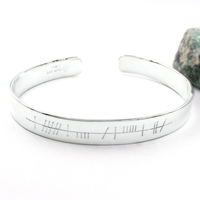
There are also ancient examples of ogham engravings found on jewellery. These may have been to denote ownership or perhaps for the same reason we have names engraved today: to make a piece special for one person.
For a period, ogham was also used in written form in medieval manuscripts where it was read left to right horizontally. There are even jokes in ogham found written in the margins of some manuscripts.
Given its unique form, ogham is a tricky alphabet for writing longer pieces of text; it can get very, very long! This is why we always recommend short and sweet engravings, just like the carvings on ancient ogham stones!
11. How do you say the word ogham? Why is it “ogam” in some places?
As a modern Irish or English speaker, you would say the word ogham as something like “OH-um” or “OH-im.”
But when ogham was first developed, the language of Ireland was not the modern Irish language of today but a form known as primitive Irish. So the word ogham looked and sounded a little different. In old Irish, it would be spelt ogham and should sound more like “og-um” with a bit of a guttural sound on that G! So either ogham or ogam, oh-um or og-um, both are correct in their own way.
12. Ogham or Ogam, where does the name come from?
Yet another question that no one knows the answer to. If you believe that Ogham was the invention of a Celtic God, well then, it was named for Ogma. Some others believe it stems from the Proto-celtic term Ogmo, which means furrow. This neatly links in with the mechanics of writing in ogham, with narrow grooves etched into wood and stone, making “furrows” of a sort..
Unfortunately, we might never know for sure, given the many years since it was first developed, but it is fun to speculate!
13. How many letters does the ogham alphabet have?
Well, that depends on what type of ogham you are talking about! When Ogham was first developed, it had 20 characters. This version of ogham, known as monumental or classical ogham, was carved on stone along that vertical stem.
There were five later additions to the alphabet when ogham was being used in manuscripts. This manuscript ogham was written horizontally and read from left to right, and needed more characters to fit with the Irish of this later period from around the seventh century onward. For example, the character P was added, as there was originally no P in Irish! This was an essential addition, given that a certain famous patron saint went by the name Patrick.
14. Are there letters “missing” in the ogham alphabet?
Even with the extra added letters in manuscript ogham, there is still a mismatch with the 26 characters of the Latin alphabet. So some people say that ogham is “missing” letters! But of course, Ogham has all the letters needed for Irish, though this mismatch can make using this system to write English words or names a little tricky!
Fortunately, there are many ways to address this problem. Some choose to substitute in the ogham character that would sound similar to the sound in the Latin alphabet. Others have invented their own “missing” characters. And some choose to first translate the name or text into Irish before transcribing it in ogham. There are no right or wrong ways to approach solving these problems. As we saw from the evolution of monumental ogham to manuscript ogham, the people using the system have always adapted it to suit their needs. So it’s entirely appropriate that we should continue this approach and do the same!
15. Are there any numbers in the ogham alphabet?
Finally, to finish, a question with a straight answer - no, there isn’t! Tally sticks may have played a part in the formation of the ogham alphabet, but there are no numerals in ogham! So this means we can’t engrave numbers easily in ogham, only letters! So if you fancy an engraving featuring a date of importance, the Latin alphabet is your go-to for that!










 Ask Gemma




















I enjoy the generous sharing of the history and culture of your Ireland. There is something so genuine in your presentation that is captivating. I look forward to your future posts.
PS - I remember picking blackberries with my Grandma in the hills of Tennessee.
Some of my fondest memories…