



Ogham's secrets: Eleven answers about the Ancient Irish Tree Alphabet
Written by Ciaran on May 20, 2024 | 0 Comments
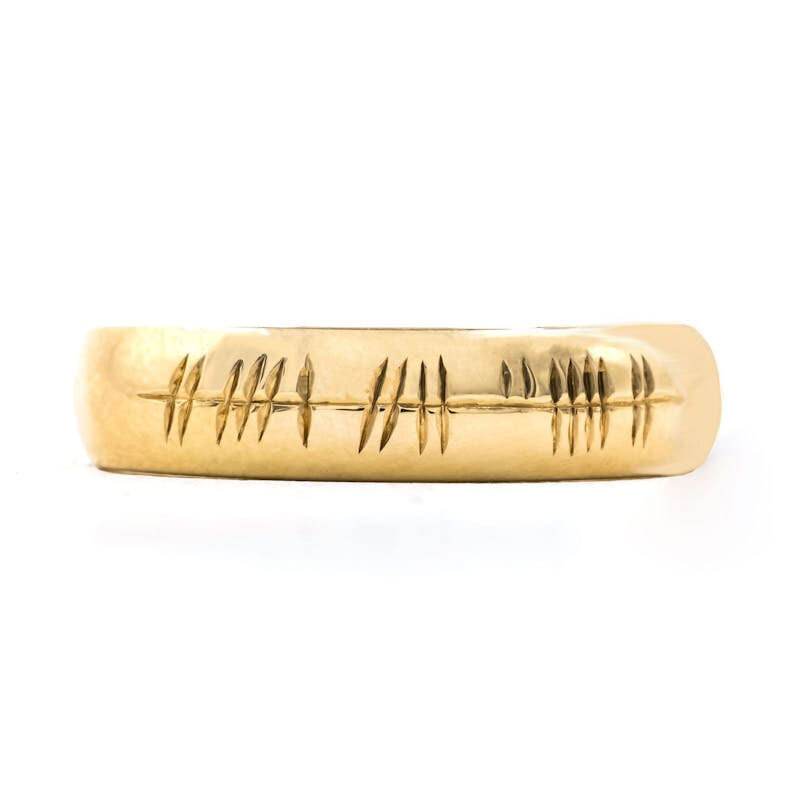
Fans of My Irish Jeweler will know that we love Ogham. It features in our logo, is showcased in our custom designs, and we even built an Ogham transliterator, so people can write in this ancient script themselves. Here we’re sharing Ogham's secrets and answering eleven frequently asked questions about this unique Irish script. Questions like:
What is Ogham exactly? Is Ogham a language? When was Ogham first made? Where did Ogham originate? Are there any numbers in Ogham? And why is Ogham so special?
Read on to find answers to these questions and more!

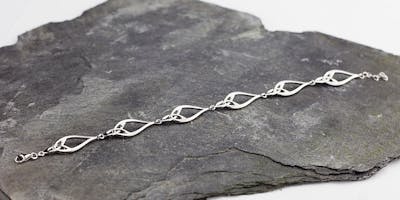
Our initial pendants feature Ogham script on one side, and Gaelic script on the other.
1) What Is Ogham - is it a language?
First up, what is Ogham? We might start with what it isn't. Ogham isn’t a language. Ogham is a writing system designed and made purposely for the Irish language. That’s why our new tool is called a transliterator rather than a translator. When the piece of jewellery is engraved, we transfer the name or word you give us into Ogham, letter by letter.

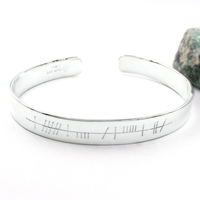
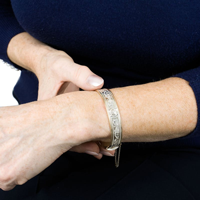
Our “transliterator” in action rendering the phrase “what is ogham” on the product page for one of our lovely hand-engraved Ogham torc bangles.
Ogham is known to some as “the Irish alphabet.” But it has been used to represent languages, including Latin and English too, as well as several forms of Irish. Each letter is represented by a single line or groups of parallel lines along a central vertical “stem.” The letters are read vertically “up the stem” from the bottom to the top in the classical, monumental form.
Each letter in this alphabet has a name, many of which are the names of trees. For example, O, B, and D are called onn, beith, and dair, the Irish words for ash, birch, and oak. This feature, and the vertical nature of the script have also led many to refer to Ogham as “the Irish tree alphabet.”

The letter D in ogham shares it's name with the mighty Irish oak, the national tree of Ireland. Known in Irish as dair, this beautiful oak in the grounds at Malahide castle is believed to be over 300 years old.
2) Is Ogham an alphabet?
Yes, Ogham has characters representing individual letters in the Irish language, so many people are happy to call it an alphabet.
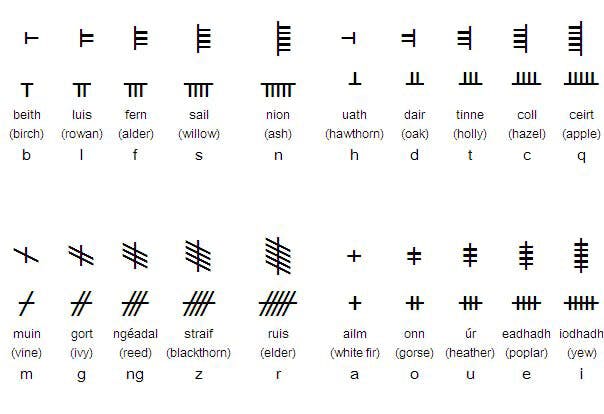
Each letter in the Ogham alphabet written in vertical and horizontal forms with names in Irish and English
3) When was Ogham first made?
This one isn't so simple to answer, as no one knows exactly! The oldest records we have for Ogham come from stones dating to the 4th century. So Ogham is at least 1500 years old and probably quite a bit older than that.
Some believe that Ogham must have been developed at least a century or more before the fourth century. They think that Ogham may have been initially designed as a writing system carved on sticks. This means that the initial use would not have been preserved through the centuries. What we can see now are Ogham engravings carved into stones that acted as more permanent markers.

Unlike the sterling silver in this Ogham name pendant, or Ogham stones, sticks made of wood very easily break down with time, leaving no trace in years to come.
4) Where did Ogham originate?
Another question there is no solid answer for. It turns out we don’t really know where Ogham originated, as the oldest records we have are probably not the first use of the alphabet. Plus, it is very hard to date the stones we do have accurately!
We do know that Ogham stones have been found across the UK and Ireland. But given the huge volume of Ogham stones found in Ireland and that they were uniquely designed for the Irish language, many agree that Ogham most likely originated in Ireland and quite possibly in the south of Ireland, given the extreme concentration of examples to be found there.
Some even suggest it was the invention of one lone genius, given the uniformity of this remarkable system. If so, it would be an amazing feat.
As for how or why Ogham was developed, there is no definitive answer there either! Some think it was devised in response to the Latin alphabet but built to accommodate unique sounds of the Irish language. Others suggest it was an evolution devised from tally sticks and symbols representing numerals. Still, others have suggested it was adapted from an older manually gestured alphabet - an early form of sign language. If so, it's a very useful one for charades!
Medieval records known as the Lebor Ogaim, also known as the Ogham tract, document that it was Ogma, who some refer to as a god, that first devised this enigmatic alphabet:
‘Now Ogma, a man well skilled in speech and poetry, invented the Ogham. The cause of its invention, as a proof of his ingenuity, and that this speech should belong to the learned apart, to the exclusion of rustics and herdsmen.’
We may never know the true origins of Ogham, but it is fun to try to figure it out!

Albrecht Dürer's rendition of Ogmios, the Celtic god of eloquence that some relate to the Ogma referenced in Lebor Ogaim.
Photo Credit: Public Domain
5) What makes Ogham unique?
We’ve said it many times: we are big fans of Ogham here at My Irish Jeweler. But we are not the only ones! Ogham is widely regarded as a remarkable and really quite special ancient writing system. Here are several factors that make Ogham unique:
- Ogham is one of the most abstract and stripped-back writing systems in the world. As we said, letters are represented with simple parallel lines grouped along a central vertical “stem.” This probably made it easier to carve, but it does make it quite enigmatic. It can be tricky to recognise letters on old worn engravings.
- It is traditionally read vertically “up the tree”, so to speak, branch by branch, which is also very unusual.
- Often, the “stem” is the edge of a stone, making it an alphabet that was written and read in 3D! Entirely unique.
- It is also one of the few ancient writing systems that has survived unbroken through to the present day without ever being “lost” or abandoned. People have used it for over 1500 years!
- It's still being used to this day.
6) What was Ogham used for?
It seems that Ogham was used in ancient Ireland much like we use it today in our jewellery—for inscriptions of short notes or names. It was also used on stone as markers or monuments. Sometimes, these were epitaphs or memorials, and they may have even been used when someone staked a claim to ownership of the land.

The Arraglen Ogham Stone dated at 550–600 AD with the Ogham inscription “of the priest [cruimther] Rónán son of Comgán" in primitive Irish. Found in a spectacular setting near Mt. Brandon in Co. Kerry.
Photo Credit: Kevin Higgins (CC BY-SA 2.0)
More recent records refer to characters writing Ogham on sticks and using it to send messages, record important information, or even do magic!
In the Lebor Ogaim, there are over 100 different versions of Ogham for different uses, including “shield Ogham” and, intriguingly, "secret warrior Ogham." We may need to take these stories and records with a grain of salt, though, as they are much later records.

Part of the Lebor Ogaim contained within the Book of Ballymote, outlining some of the many forms of Ogham including “shield Ogham.”
Photo Credit: Public Domain
There are also ancient examples of Ogham engravings found on jewellery, again perhaps to denote ownership or perhaps for the same reason we engrave names today - to make a piece uniquely personal.

The reverse of the Ballyspellan Brooch, a stunning silver piece made between the 9th and 10th century and discovered in Co. Kilkenny. There are four names written in Ogham on the back (‘Cnáimsech, Cellach’, ‘Mín odor the noble’, ‘Máel Maire’, and ‘Máel Úadaig (son of) Máel Maire’. These are thought to be the names of the former owners of the brooch.
Photo Credit: The National Museum of Ireland
From around the eighth century onward, Ogham was also used in written form in medieval manuscripts, where it was adapted to be read left to right horizontally. Jokes in Ogham are found written in the margins of some manuscripts, and even an admission of "excessive drunkenness" in one early record! A recent find in Scotland of an Irish text called the Minchin Manuscript, from 1849, contained medical charms written entirely in Ogham.
All that aside, given its form, Ogham is a tricky alphabet for writing longer pieces of text; given its structure, it can get very, very long! This is why we typically recommend short and sweet engravings!
7) How do you say the word Ogham? And why is it written as “Ogam” in some places?
This isn’t as easy a question to answer as you might think, and it depends on who you are asking. As a modern Irish or English speaker, you would say the word Ogham as something like “OH-um” or “OH-im.”
But when Ogham was first developed, Ireland's language was not the modern Irish language of today but a form known as primitive Irish. So this would have meant the word Ogham looked and sounded a little different. In old Irish, it would be spelled Ogam and should sound more like “og-um,” with a bit of a gargly sound on that G!
8) How many letters does the Ogham alphabet have?
Another question with a less than straightforward answer! When Ogham was first developed, it had 20 characters.

The 20 original characters of the Ogham alphabet
Photo Credit: Adapted from Runologe (CC BY-SA 4.0 DEED)
Five later additions to the alphabet were made when Ogham was being used in manuscripts. For example, the character P was added, as there was originally no P in Irish! This was an important addition, given that a certain famous patron saint went by the name Patrick.
But even with the extra added letters, there is still a mismatch with the 26 characters of the Latin alphabet. This leads some people to say that Ogham is “missing” letters! But of course, Ogham has all the letters needed for Irish. Even if it can make writing English words or names in Ogham a little tricky! There are lots of ways to get around this problem - some choose to substitute the Ogham character that would sound similar to the sound in the Latin alphabet. While others have invented their own “missing” characters.
There is no "right" way to use Ogham for English. Just like the medieval scribes who adapted Ogham in the 8th century for writing on vellum horizontally rather than carving vertically in stone, this system is still evolving today and being adapted to suit modern uses.
9) Are there any numbers in the Ogham alphabet?
We get asked this one a lot, and unfortunately, no, there aren't! Although tally sticks may have played a part in the formation of the Ogham alphabet, there are no numerals in Ogham. This means we only engrave letters in Ogham.
10) Where are Ogham stones found?
Ogham stones have been discovered all over Ireland. Sometimes, they have been repurposed and used in the lintel of a building or a stone wall, while others were found in what might have been in their original setting. The majority of them are in the southern counties of Ireland: Kerry, Cork and Waterford. There are 60 Ogham stones on the Dingle peninsula in Co. Kerry alone!
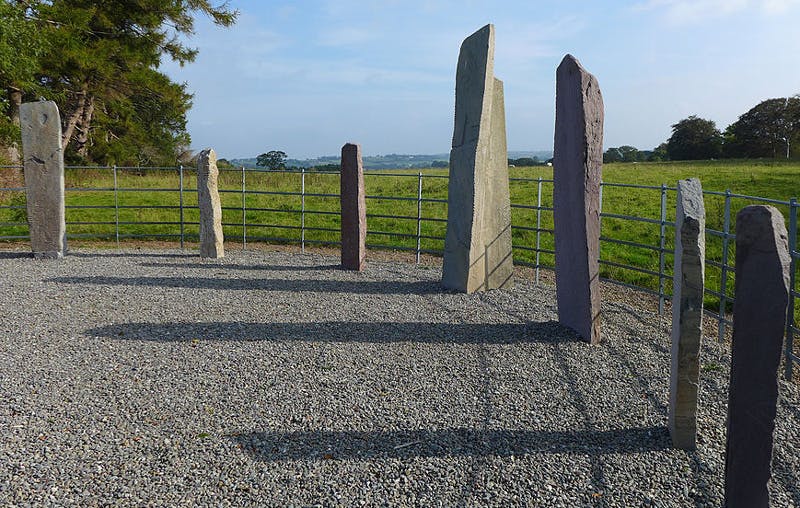
A collection of Ogham stones at Dunloe in Co. Kerry.
Photo Credit: Berthold Strucken (CC BY-SA 4.0)
They have also been found across England, Scotland, the Isle of Man, and Wales. Some of these stones discovered outside Ireland also have Ogham inscriptions in other languages like Old Welsh or Latin.
11) How many Ogham stones are there?
To date, over 400 examples of Ogham stones or fragments have been discovered across Ireland, Scotland, England, Wales, and the Isle of Man. And this number is growing all the time. We were excited to read about a very surprised Geography teacher who recently unearthed an ancient Ogham stone in his garden in Coventry.
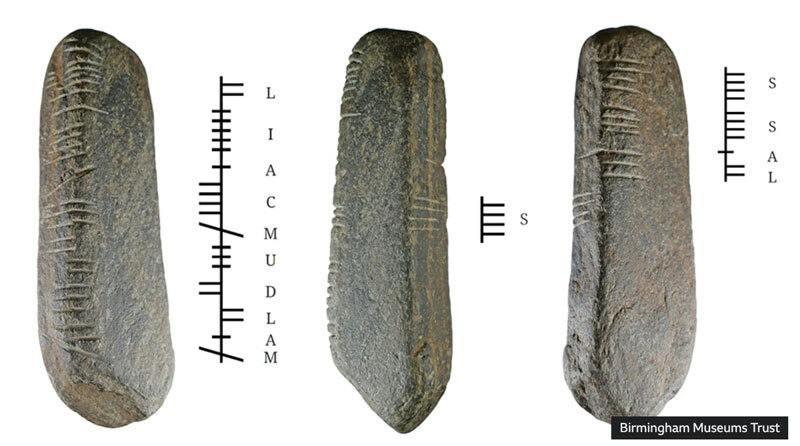
The most recent Ogham stone discovery. Dug up while doing the weeding! The first part of the inscription includes the name Mael Dumcail. The other marks, S / LASS, have yet to be figured out.
Photo Credit: Birmingham Museums Trust
This was miles from any previous Ogham discoveries, which are typically near the coast of the UK. So it's a mystery how it came to be there. But with each new Ogham discovery, we add to our knowledge. Each one gives us a glimpse into the distant past - with a unique biography or story.
Want to tell your own Ogham story?
We are delighted to share this wonderful enigmatic script with our friends around the globe through our lovely Ogham jewellery and, of course, in our logo, the word "HOME" in Ogham. Want to tell your own Ogham story? We have beautifully hand-engraved pieces that celebrate this ancient alphabet.
Get In Touch
Have a question or something you're not entirely sure about when browsing our pieces? Please reach out. You can send us a note or give us a call—the Dublin workshop is here to make sure that you have a perfect experience from start to finish with My Irish Jeweler.
Follow us on Facebook and Instagram, to see what's new and upcoming. Join our Email list for early offers and special features.

Ciaran
My Irish Jeweler
Born in Co. Antrim and reared in Dublin, I was fascinated with Gaelic culture from an early age. I suppose it's not surprising given my mother inherited a grá for the Irish language from my grandfather, an Irish school headmaster. And that grá continues! My brother and sister are now Gaelic teachers here in Ireland, my niece is an award winning Irish dancer, and I proudly work to share Irish culture through our Irish and Celtic Jewelry at My Irish Jeweler!
I love researching and reading about the history of Irish design. It's at the core of what we do here at My Irish Jeweler. I find much of it so interesting that I have to share what I find. I hope you enjoy it!
Comments





 Ask Gemma