




St. Patrick's Day Countdown: Irish Dancing 101
Written by Ciaran on Mar 12, 2025 | 0 Comments
With just a few days left in our countdown to March 17, we have an offer and some fun facts for you! Check back with us each day to see what’s coming next.
Irish Dancing
One thing you can be sure of on March 17th — there will be dancing! Riverdance brought it to a global audience, but dancing has held a special place in Irish people's hearts long before that first spectacular performance of the iconic show in 1994.
Here at My Irish Jeweler we are lucky enough to have Danny, a former professional Irish dancer in our midst, to introduce us to Irish dancing, its history and give an insider's view of this global Irish cultural phenomenon. Last St. Patrick's Day, he even taught Gemma and me a few steps!
What is Irish dancing?
First thing’s first, what is Irish dancing? Unsurprisingly given the name, it is a traditional form of dance from Ireland. But that word "dance" hides a multitude as there are many different types.
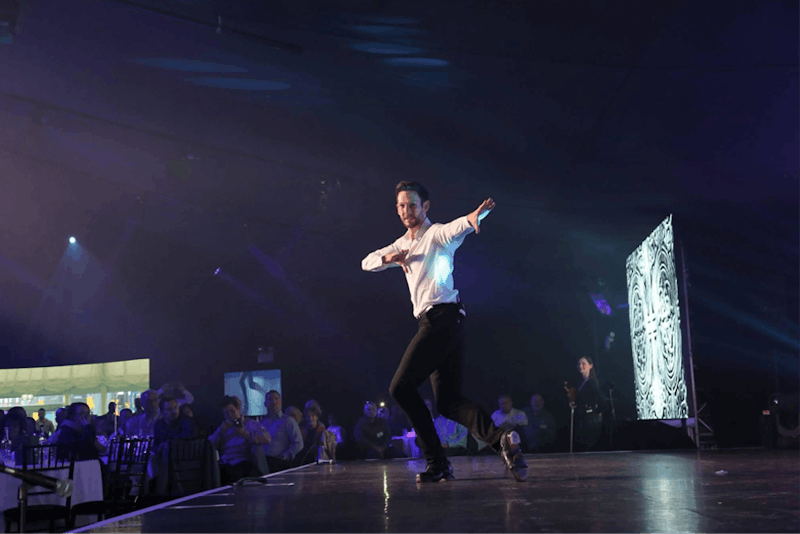
Types of Irish Dancing
You can split Irish dancing up in many different ways. Based on the number of participants, there is solo dancing, pair dancing, and group dancing, both large and small, as seen in céilí and set dancing. The world record for the longest Riverdance line was set in 2013 in Dublin city centre, on a bridge over the River Liffey, with an impressive 1,693 participants!
It can be done for fun, as performance either traditional or modern, or in formal competitions, known as feiseanna. There are also different dance types for different footwear too. In soft shoe dances (e.g., jigs and reels) dancers wear lace-up pumps, resembling ballet shoes, to aid with intricate footwork and lightness on the feet.

Photo Credit: Danceworld
Hard shoe dances include what most people associate with 'Irish dance' or 'step dancing,' as well as sean-nós, a traditional dance style. In heavy jigs and hornpipes, dancers wear a leather shoe with a hard toe and heel which helps generate the sharp percussive sound when feet hit the floor. “Hard shoe” dances have become a globally popular form.

Photo Credit: Andreas Schepers (CC BY-NC-SA 2.0)
With so many different styles, what makes them all 'Irish dance'? They all feature intricate footwork and a relatively still—sometimes even rigid—upper body, with limited arm movement.
Why don't Irish dancers move their arms?
One of the questions we hear a lot is why don't Irish dancers move their arms? Which is understandable - the most well known type of Irish dancing is pretty unusual for the lack of upper body movement! And even in the older, more casual sean-nós dance style, there isn’t a huge amount going on above the waist! This stillness has been the source of both pride and some mirth in Ireland and abroad, and used to great effect in one famous TV advert.
So where does this unusual form originate? Some propose it is due to the firm hand of the Catholic church ensuring contact between dancers would be limited. This doesn’t seem to fit with the timeline for the origins of Irish dancing, nor with the fact that many traditional group dances allow for plenty of contact.
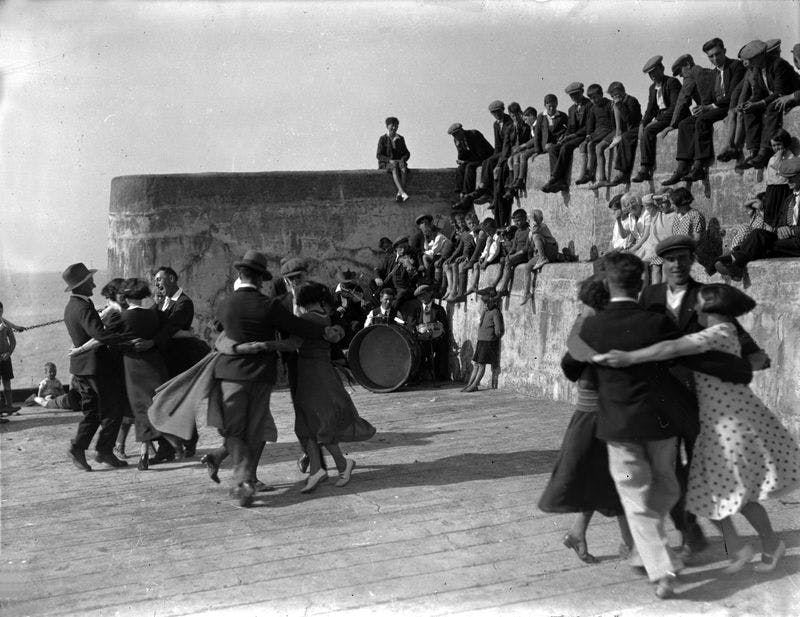
Dancing at Clogherhead, 1935
Others hypothesize that it was to keep dancing out of the sight of colonial forces when Irish culture was being actively suppressed. If all of the dancing was in the feet, someone passing by a window mightn’t realize people were practicing. Again this seems a little fantastical to us but perhaps it has a grain of truth.
More plausibly, again because Irish culture was suppressed, many dances were held in small spaces, in people’s homes. Dancers would have to get up on top of a table or barrel to show off their fancy footwork to all in attendance. This precarious dance floor wouldn’t have allowed for much or any lateral movement or rash gestures. The rigidity might have helped with balance!
It’s also very difficult to do such an athletic, powerful, and aerobically challenging dance without drawing on your upper body. As a result, in competition, dancers are rewarded high points for pulling off athletic kicks and leaps while keeping their upper body still, reinforcing this form.
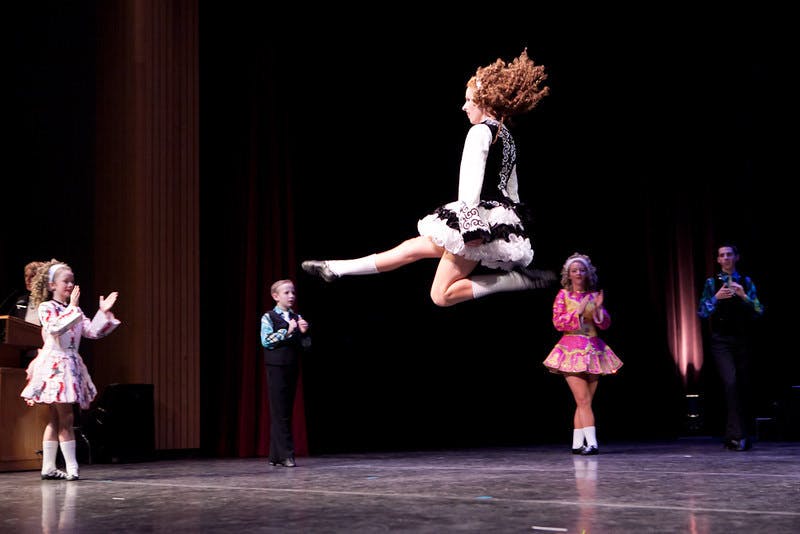
Photo Credit: Jim Larson (CC BY-NC-SA 2.0)
When did Irish Dancing start?
Irish dancing has had several waves of popularity over its long history. We know numbers surged in the 1800s with the Celtic revival and the founding of the Gaelic League. Then again in the 20th century with the founding of the Irish state. And of course the explosion of interest after Riverdance in the 1990’s. But when did it all start?
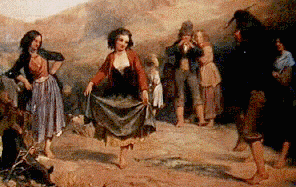
Painting by Trevor Thomas Fowler C 1835. 'Children dancing at the crossroads' in the collection at National Gallery of Ireland. Dublin, Ireland.
Photo Credit: Public Domain
Celtic roots
This is trickier to answer than you might think. Ancient Ireland had an oral culture, so written records of traditions and history are thin on the ground and what we do know often comes from commentary from visitors. The first documented evidence of Irish dance dates to 1413. But it is probably quite a bit older than that and potentially has its roots in pre-Christian Ireland, with Celtic ceremonies that celebrated nature and spirits.

Photo Credit: Annie Spratt on Unplash
A Royal fan club
From records dating to the 1600s it is clear that Irish dance was popular across the island even then. A letter written to Queen Elizabeth I in 1569 states that Irish dancers in Galway "...are very beautiful, magnificently dressed and first class dancers." The writer continued describing the dancers' formed two straight lines, suggesting a style that we would recognize today.
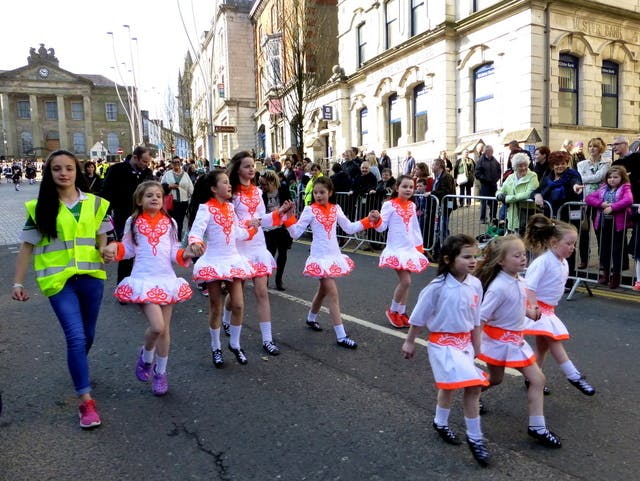
Photo Credit: Kenneth Allen (CC BY-SA 2.0)
How did Irish dancing become a global phenomenon?
Records from the 1600s show that traditional dance was an integral part of Irish culture and community across the island. Each region had its own unique approach, steps, and sets.

Woman doing damhsa an scuab, the brush dance in Augher, Co. Tyrone.
Dance masters and the Gaelic League
Dance masters in the 1800s spread the tradition and started informal competitions between local dancers. But a pivotal moment for Irish dance was the establishment of the Gaelic League in 1893. They set about codifying and preserving many forms of Irish dance. This lead to the loss of some dances, but the development and spread of others through formal competitions, the feiseanna.

The Dancing Master / Arrival of the Village Fiddler by H. Helmick (1876-1901)
Photo Credit: Collection of Maggie Land Blanck
This was mirrored in the UK and USA where Irish immigrants had settled with dancing schools that were set up in the 1890’s in Boston, Chicago, New York, and San Francisco. In the early 20th century, formal and very popular feiseanna were held in these cities. A champion dancer of the time even stated that America was leading Ireland in Irish dancing.
Riverdance
Irish dance was already a global movement, thanks to the active Irish diaspora, long before Riverdance. But the influence of Riverdance can’t be overstated.

Photo Credit: Tor Lindstrand (CC BY-SA 2.0)
Just two years after Riverdance debuted, participation in the World Irish Dancing Competition increased by 20%. In the years that followed Irish dancing federations were set up around the world from South America, to South Africa and the show that started it all circled the globe multiple times.
This may also explain why Irish dance spread so quickly worldwide. One assumes its the same reason dances were held in cottages hundreds of years ago. Irish dancing is exhilarating. Both dancing the steps and watching the intricate movements can set the pulse racing.
Closer to home, Riverdance is what first inspired our own Danny to start dancing. He saw the show when it first appeared in 1994 as the interval act of the Eurovision Song Contest, and knew he wanted to be on that stage.
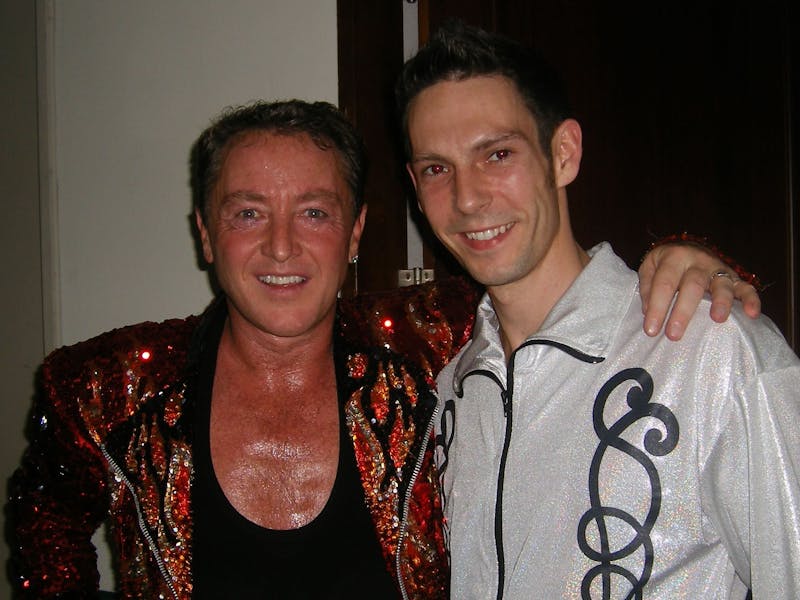
He taught himself the steps and after a few years of lessons and competition, he got to share the stage with The Lord of the Dance himself, Michael Flatley! His dancing career lasted for over a decade and took him to all corners of the globe, before Danny landed in Dublin and joined the My Irish Jeweler team.

Photo Credit: 360ENTERTAINMENT
Get started with Irish Dancing!
So now you have your grounding in Irish dance, perhaps you might be inspired to follow in Danny's highly trained footsteps and try a few steps yourself? Every Irish school child learns, or at least tries to learn the 1-2-3. It may look easy but as Gemma and I found, it does take some practice!
If you keep at it who knows, you may end up like our fantastically talented Danny! Watch him in full flight below with his fellow dancers in the spectacular group, Slide Step. Be sure to watch with the sound on for full effect.
Tell your story
Do you have your own Irish dance story to tell? We would love to hear it. Drop a comment below or send us an email. We love to hear stories from our community worldwide.
What's Next?
Check back in with us tomorrow for Day 13 of our St. Patrick's Day countdown, or open Door Number 12 of our 17 Days of celebratory offers!
Jewellery inspired by Irish Dance
If you or someone you know has a love of Irish dance, one of our finely crafted pieces featuring a dancer, dancing shoes, or a dancing stone is a perfect fit.
Get In Touch
Have a question or something you're not entirely sure about when browsing our pieces? Please reach out. You can send us a note or give us a call—the Dublin workshop is here to make sure that you have a perfect experience from start to finish with My Irish Jeweler.
Follow us on Facebook and Instagram, to see what's new and upcoming. Join our Email list for early offers and special features.

Ciaran
My Irish Jeweler
Born in Co. Antrim and reared in Dublin, I was fascinated with Gaelic culture from an early age. I suppose it's not surprising given my mother inherited a grá for the Irish language from my grandfather, an Irish school headmaster. And that grá continues! My brother and sister are now Gaelic teachers here in Ireland, my niece is an award winning Irish dancer, and I proudly work to share Irish culture through our Irish and Celtic Jewelry at My Irish Jeweler!
I love researching and reading about the history of Irish design. It's at the core of what we do here at My Irish Jeweler. I find much of it so interesting that I have to share what I find. I hope you enjoy it!
Comments



 Ask Gemma