


Ah thank you Hollye - so pleased you enjoyed the blog and my own story. Hope you and yours have a wonderful St. Patrick's Day wherever it finds you! Slán from the team here in Dublin!
Written by Jane on Mar 08, 2025 | 2 Comments
We’re counting down the days to March 17th with an offer and some fun facts for you every day until St. Patrick's Day. Check back in with us each day to see what’s up next!
Confusingly, there are quite a few Gormlaiths (pronounced Gorm-lah) on the record books in Ireland; it seems to have been a popular name in medieval Ireland. We are focusing on Gormlaith, who died around 1030 AD, and is known to some as THE Queen of Ireland. The story goes that this Gormlaith was “the fairest of all women,” a Leinster princess who allegedly had a knack for marrying well, perhaps as she was also noted to be very clever. Staying one step ahead throughout her long life, her story reads a little like a medieval soap opera or a season of Game of Thrones, complete with power plays, betrayal, and inter-family warfare!

Gormlaith’s first marriage, in the late 960s, was to the “Viking” or Norse king of Dublin, Óláf Cuarán. Earning her another title as the Mother of Kings, Gormlaith’s son with Óláf, Sitric Silkbeard, went on to become a later king of Dublin, the first person in Irish history to have his name and image on coinage, and a founder of Christ Church Cathedral.

But back to Gormlaith! The records are fuzzy on this, but it’s believed that in the late 980s she again married, this time taking a big step up in the world by joining forces with the famous High King, Brian Bóru. Their son, Donnchad, was yet another king of Ireland and caretaker of the now powerful Uí Briain legacy after the Battle of Clontarf.
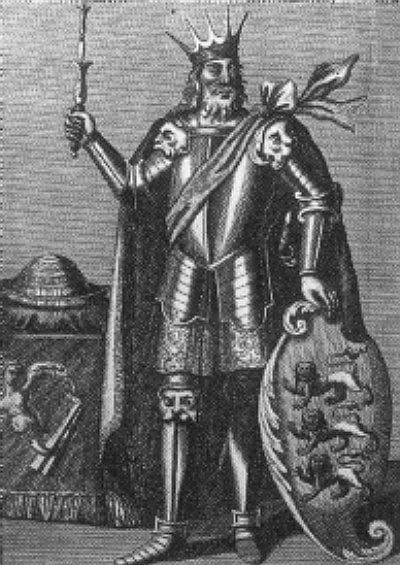
There are also mentions of a third marriage to Máel-Sechnaill, king of Tara, with yet another son, Conchobar, but the records for this marriage are shaky. The first mention of it, in the Book of Leinster, dates from 1150 to 1201, more than 100 years after her death. Earlier records that make no mention of such a union.
Either way, Gormlaith is perhaps most famous - or should that be infamous? - for instigating the Battle of Clontarf. It seems pretty likely that queens like Gormlaith would have involved themselves in backroom politics, but it is rare for them to be mentioned in records. Thus, it seems Gormlaith was powerfully strong-willed and independent for her time, with several medieval records in both Irish and Norse alleging that she turned her son Sitric and her brother against her (ex?) husband Brian and her other son Donnchad. It's said that she even recruited “foreign” Viking forces for a rebellion, culminating in the bloody 1014 Battle of Clontarf.
Whatever the truth of the tale, and her role in this pivotal point in Irish history, it seems Gormlaith had the last laugh. She outlived all three of her alleged husbands, perhaps at the court of her son Sitric, and died an older woman in her 70s around 1030.
When people think of female writers in the early 19th century, they inevitably think of Jane Austen and, slightly later, the Brontë sisters. Few people now have heard of Maria Edgeworth, but this Anglo-Irish woman was the most successful and lauded living writer of her day in Ireland, England, and much of Europe between 1800 and 1817.

Born in Oxfordshire, England, in 1768, Maria was the second child of Richard Lovell Edgeworth and his first wife, Anna Marie Elers. The Edgeworth family had lived between England and Ireland for centuries, having first come to Ireland in the 1580s.
Maria was educated in a succession of girls' schools in England until the age of fourteen. In 1781, she returned to the family home in Edgeworthstown (also known as Mostrim) in county Longford. An eye infection had almost caused her to lose her sight, and her father was keen to have her back in the family fold. He was by then married to his third wife - who happened to be the sister of his second - and he felt that Maria would be an invaluable assistant to himself and his ever-growing family.

However, to his credit, he had no intention of her being a glorified unpaid servant. While she certainly helped look after and teach her younger siblings, he taught her law, Irish economics and politics, literature, and science. In turn, she became his secretary and life-long collaborator in academic studies and running the estate where the family lived. He considered her his partner in the business of improving the world!
Maria is notable for many reasons. Not only was she an acclaimed author in her day who could claim the respect and attention of Jane Austen and Sir Walter Scott. She was also the co-author of the 1798 title Practical Education, which was years ahead of its time. She wrote the book with her father, laying out a precise and optimal structure for children's education, and emphasized the importance of retaining their interest in their lessons and engaging their minds without over-tiring them. A rare concern for a teacher of the time - her pupils must have loved her dearly.

When she was not working with her father on educational reforms or inventions, she wrote letters, short stories, and novels at an astonishing rate. (In fact, her father decreed that she only be allowed to write letters for four hours a day as her missives were often twenty pages long!) Between 1800 and 1848, Maria published over twelve full-length novels and many collections of stories, which were frequently translated into French by her friend, Louise Swanton Belloc.

The Edgeworthstown Estate was always welcoming to those with enquiring minds. Maria’s father was a core member of the notable Lunar Society, and many of its members were visitors to the county Longford house. Nor, it should be said, was Maria guilty of hanging on her father’s coattails. She seems to have revelled in the ongoing exchanges of ideas, corresponding with many of the great minds of her age. Charles Babbage, Francis Beaufort (an uncle and also nephew-in-law by marriage!), Sir William Rowan Hamilton, Daniel O’Connell, and Humphry Davy were all known to acknowledge her keen intelligence and avid curiosity about the world around her.

Having been taught to observe the world around her objectively, Maria paid close attention to the different levels of society she interacted with daily, from her family to merchants, her tenants, and servants. She had strong views about absentee Anglo-Irish landlords using their estates to fill their pockets, enabling them to live comfortably in London while their tenants battled poverty and despair. Her most famous novel, Castle Rackrent, published in 1800, was about the mismanagement of estates at this pivotal time in Ireland’s history with England. (W.B. Yeats called it “one of the most inspired chronicles written in English".) She followed further on this theme in The Absentee, which was published in 1812. Thirty-five years later, the Great Famine would prove the truth of her concerns.

She was absorbed by the lyricism of the Irish people she lived alongside and found their language enthralling. In writing about what she saw daily and using the local vernacular, she inadvertently wrote the first regional novel and historical fiction. Some consider Castle Rackrent to be the first Anglo-Irish novel.
In 1801, she caused controversy with her second novel, Belinda. The first and second editions of the story include a white farm girl marrying a Black servant and a marriage proposal from a West Indian Creole gentleman to the white central character. This was considered so outré that the storylines were changed from the third printing onwards!

When her father died in 1817, Maria spent several years battling ill health and working on completing his memoirs. From 1820 onwards, she continued her own writing and the management of the estate. We are incredibly fortunate to have a first-hand account of her care for the local people of Edgeworthstown during the Great Famine from her maid, Biddy Macken. Maria remained unmarried by choice but was well-loved by her friends and family until she died in 1849.
Born Mary King in 1827 in county Offaly, the young Mary received an education that was quite unusual for girls of the time. Coming from a renowned scientific family, Mary’s interest in nature was fostered from very early, and by the tender age of three, she was already building an insect collection!

Mary’s scientific career really began when, on seeing one of her drawings of insects made using just a handheld magnifying glass, a family friend and noted astronomer James South suggested that her father should get her a microscope! With this new piece of equipment, Mary’s genius was unleashed, and she quickly set about becoming an expert, reading all she could and teaching herself. She was soon producing her own slides and specimens, with other scientists using Mary’s slides and illustrations in their own publications.

After some encouragement from friends, Mary self-published her first book, Sketches With the Microscope, in 1857. Just 250 copies were printed, in he belief there would be little interest in it given Mary's gender and lack of formal academic credentials. Unsurprisingly, given her exceptional drawings, the first printing sold out in a matter of weeks, with a London publisher taking note and contracting Mary for future publication. This first book was reprinted eight times between 1858 and 1880 under the title A World of Wonders Revealed by the Microscope. Her books can be challenging to track down today, with a new full-color edition of her first book published in September 2019 by the Offaly Historical and Archaeological Society - sadly sold out!

Mary wrote and published five more successful books, illustrating them all herself, while continuing to provide illustrations for many books and papers by other noted scientists of the day. An indication of her standing in the scientific community of the day is shown by the fact that she was one of only three women on the mailing list for the Royal Astronomical Society - the two others being Queen Victoria and Mary Somerville, the first “scientist.” A sidenote - the word scientist was coined to refer to the inter-disciplinary Somerville when the title “man of science” didn’t quite fit!
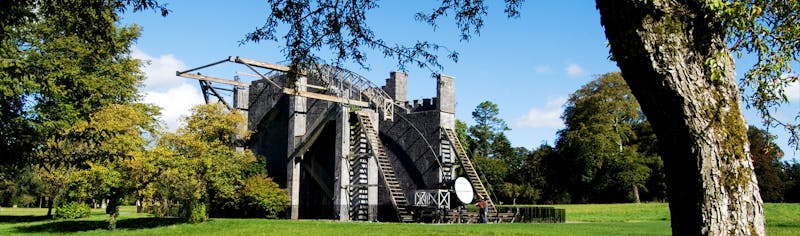
Like Somerville, Mary Ward had several strings to her scientific bow. She was also a keen amateur astronomer, sharing her interest with her cousin William Parsons, 3rd Earl of Rosse. William built the largest telescope of its day, the Leviathan of Parsonstown, at Birr Castle, with Mary producing sketches of each stage of the process. These sketches, along with photographs made by Parson's wife, yet another Mary, were invaluable in the recent restoration of the “Leviathan,” which can be seen to this day at Birr Castle Observatory.
Unfortunately, Mary Ward's story has a tragic ending, as she is also widely known, in Ireland at least, as the first person ever to have their death attributed to an automobile accident in 1869. Two of her first cousins once removed (William's sons) had built a steam-powered car. Mary and her husband, Henry, were taking a test ride in it with the two lads and their tutor when she was thrown from the vehicle on a bend in the road in Birr - no seatbelts back then. Despite a doctor who lived near the scene arriving right after the accident, Mary had fallen under its wheels, and it’s thought she died almost instantly. The traumatized family reportedly destroyed the car after the crash, and Mary holds the unfortunate distinction of being the first person in the world to be killed in an automobile accident.
At the time of her death in 1945, Hanna Sheehy Skeffington’s obituary called her “the ablest woman in Ireland.” To this day she stands out as one of Ireland’s most prominent and pioneering women in the early 20th century, her legacy cemented through her activism, political involvement, and staunch commitment to social justice.
Born in 1877 in Cork, a young Hanna was one of the first women in Ireland to attend university, overcoming a bout with Tuberculosis. Female students were not allowed to attend the same lectures as men—despite having to sit the same exams—but despite this, Hanna duly graduated from the Royal University of Ireland with a Master's in French and German. It was at this time that she met her future husband, Frank, through their mutual friend, James Joyce.

Frank was a fellow pacifist and feminist who was very active in Irish politics. The pair were a perfect match, marrying in 1903 wearing their graduation gowns as a substitute for traditional wedding attire! In a move that marked them out as ahead of their time in their commitment to equality, they both changed their last names, combining them to form Sheehy Skeffington.
Together, they formed the Irish Women’s Franchise League to campaign for Irish women’s rights. In 1912, Hanna was arrested and jailed for the first, but not the last, time for breaking windows at Dublin’s Custom House, the GPO, and Dublin Castle with fellow suffragettes. But their activism extended beyond Women’s rights and suffrage, also pushing the cause of the working class and the oppressed, taking a very modern and inclusive approach to national liberation.

During the 1913 Dublin lockout, Hanna was one of the people who set up the Dublin soup kitchen, feeding both strikers and their families by the hundreds, saving them from starvation. She was also one of the founding members of the Irish Women Workers Union that formed in response to the fact that there were no female union members allowed in the organizations of the day.

As noted pacifists, the Sheehy-Skeffingtons were not directly involved in the fighting of 1916. However, Frank was taken into police custody and was murdered while in custody by British forces in the aftermath of the Easter Rising. The authorities ransacked the Sheehy-Skeffingtons' house after his killing in a vain search for treasonous materials. Hanna was offered compensation from the authorities, which she refused, angered that the inquiry into her husband's death was utterly inadequate. The trauma of losing her partner and husband in such a manner galvanized rather than broke Hanna, and she set out on a wildly successful lecture tour of the USA, highlighting the injustice of her husband's murder and the cause of Irish women and Irish independence everywhere she went.
Hanna's uncompromising stance on political and social issues made her a powerful and often controversial figure, and she was repeatedly imprisoned throughout her life, suffering greatly for various causes as she continued to challenge the rules and structures she believed unjust within Irish society.

Historians today emphasize her role as a trailblazer in the fight for gender equality and national independence. Sadly, at the end of her life, Hanna felt that the Irish State had failed the women of Ireland, and she opposed the Irish constitution. With no pension, she continued to support herself and her son, Owen, through journalism and part-time teaching but fell ill in 1945, dying of heart failure in April 1946. She was buried beside her husband Frank in Dublin’s Glasnevin cemetery on Easter Saturday, exactly 30 years after his death.
We hope these small snapshots might inspire you to learn more about influential women in your area and, of course, to celebrate and cherish the fantastic women in your life wherever you are this International Women's Day. We hear incredible things from our customers about the astonishing resilience, creativity, and love of the women in their lives—we are always deeply honored when you share your stories with us.
If you are a regular reader of our newsletter or blog or follow us on social media, you will know that we would flounder without the magnificent women of MIJ. Their dedication to ensuring that each customer has an exceptional experience is the backbone of our business.
If you are feeling inspired and would like to learn more about incredible Irish women, we also have blogs about Celtic Warriors and famous female characters from mythology and history.
Check back in with us tomorrow for Day 9 of our St. Patrick's Day countdown, or open Door Number 8 of our 17 Days of celebratory offers!
Have a question or something you're not entirely sure about when browsing our pieces? Please reach out. You can send us a note or give us a call—the Dublin workshop is here to make sure that you have a perfect experience from start to finish with My Irish Jeweler.
Follow us on Facebook and Instagram, to see what's new and upcoming. Join our Email list for early offers and special features.

Jane
My Irish Jeweler
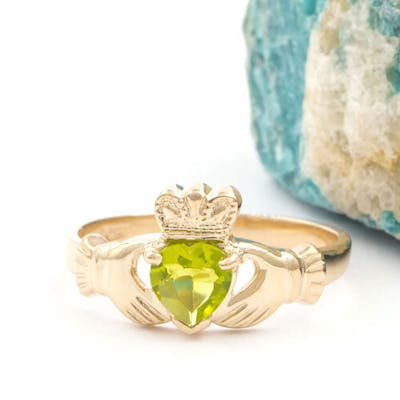
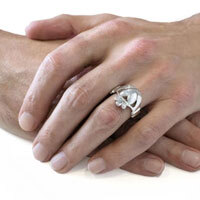
Born in Dublin but reared in Canada, as a child I had an interest in Ireland that will be familiar to many young emigrants. I was completely fascinated, wanting to know all about the land of my parents and grandparents. Rare month-long family trips back "Home" cemented my love for Ireland. And I wore my Irish heritage with pride, sporting my tiny silver Claddagh gifted to me by my Irish grandparents until my finger grew too large for it!
As a young adult I moved back to Dublin, studying Geology and Mineralogy in university at historic Trinity College Dublin. After living in Denmark and the Netherlands working as a scientist and university mineralogy lecturer, I finally settled back home in Dublin. I joined the growing family at My Irish Jeweler in 2016, bringing my useful knowledge of metals and minerals as well as my perspective as an Irish emigrant with a love for HOME.
Ah thank you Hollye - so pleased you enjoyed the blog and my own story. Hope you and yours have a wonderful St. Patrick's Day wherever it finds you! Slán from the team here in Dublin!

 Irish Gold
Mined in Co. Tyrone
Irish Gold
Mined in Co. Tyrone
 Claddagh Rings
 Claddagh Earrings
 Claddagh Necklaces
 Claddagh Bracelets & Bangles
 Claddagh Jewelry Gift Sets
Buy them together. Save 20%
Claddagh Jewelry Gift Sets
Buy them together. Save 20%
 Mens Claddagh Jewelry
 Womens Claddagh Jewelry
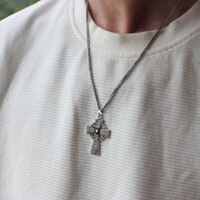 Celtic Cross Necklaces
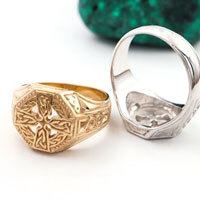 Celtic Cross Rings
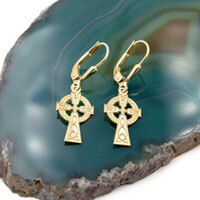 Celtic Cross Earrings
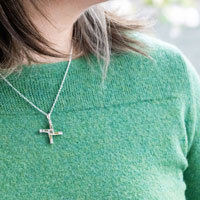 St Brigid's Cross Necklaces
 Anniversary
 Women
Women
 Men
Men
 Couples
Save 10% when you buy together
Couples
Save 10% when you buy together
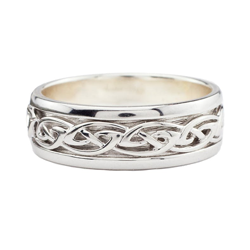 Celtic Knot
No beginning. No end.
Celtic Knot
No beginning. No end.
 Personalized Ogham
Ireland's Ancient Alphabet
Personalized Ogham
Ireland's Ancient Alphabet
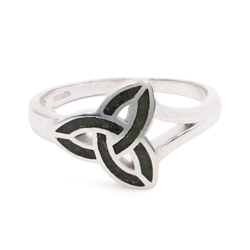 Trinity Knot
Eternity
Trinity Knot
Eternity
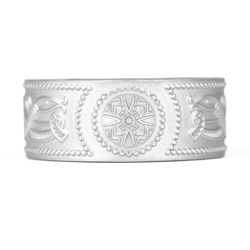 Celtic Warrior
Inspired by the Ardagh Chalice
Celtic Warrior
Inspired by the Ardagh Chalice
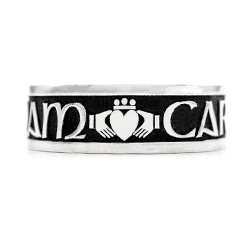 Mo Anam Cara
My Soul Mate
Mo Anam Cara
My Soul Mate
 Shamrock
Ireland's best-loved symbol
Shamrock
Ireland's best-loved symbol
 Tree of Life
Cherish your Irish roots
Tree of Life
Cherish your Irish roots
 Family Crest
With your Coat of Arms
Family Crest
With your Coat of Arms
 Celtic Cross
Christian & Pagan symbolism
Celtic Cross
Christian & Pagan symbolism
 Triskele
Mystical pre-Christian symbol
Triskele
Mystical pre-Christian symbol
 50% off Clearance Rings
 Get a Free Ring Sizer
 Womens
 Mens
Mens
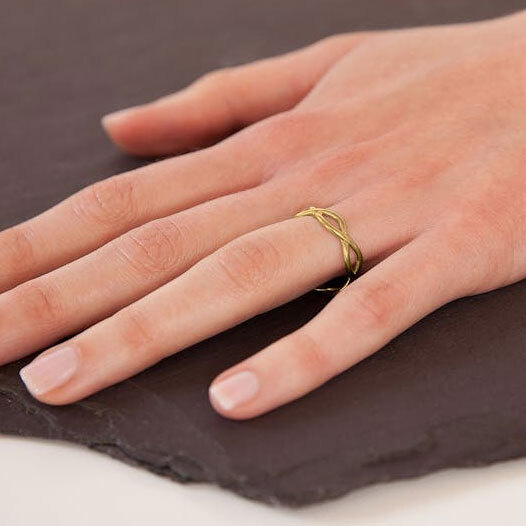 Womens
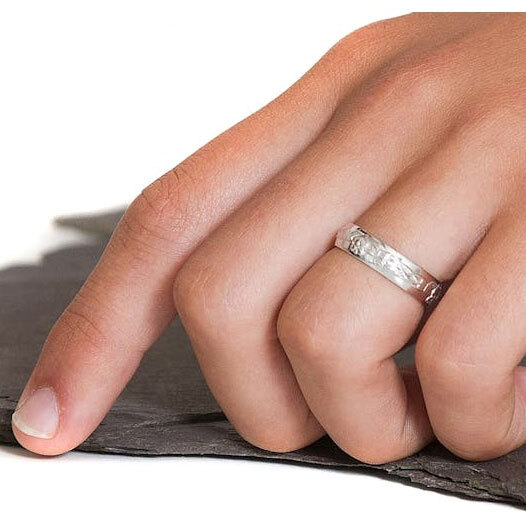 Mens
Mens
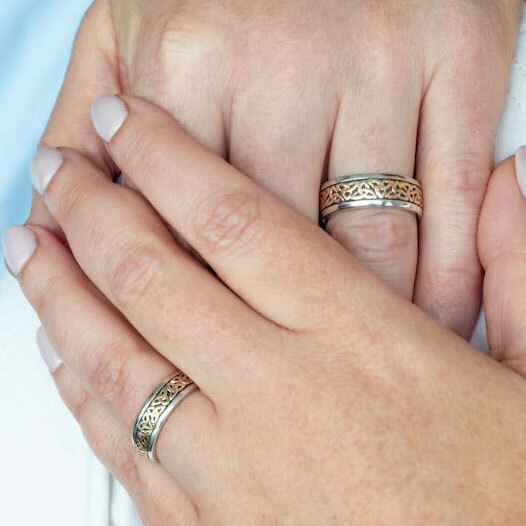 His & Hers
Save 10% with Matching Bands
His & Hers
Save 10% with Matching Bands
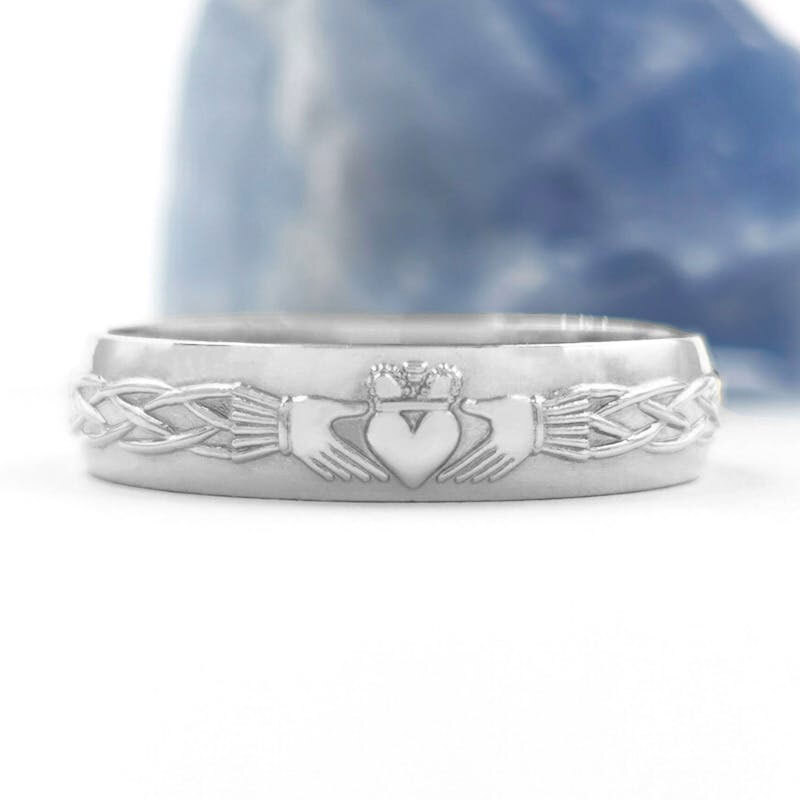 Claddagh
Love, Loyalty & Friendship
Claddagh
Love, Loyalty & Friendship
 Celtic Knot
No Beginning, No End
Celtic Knot
No Beginning, No End
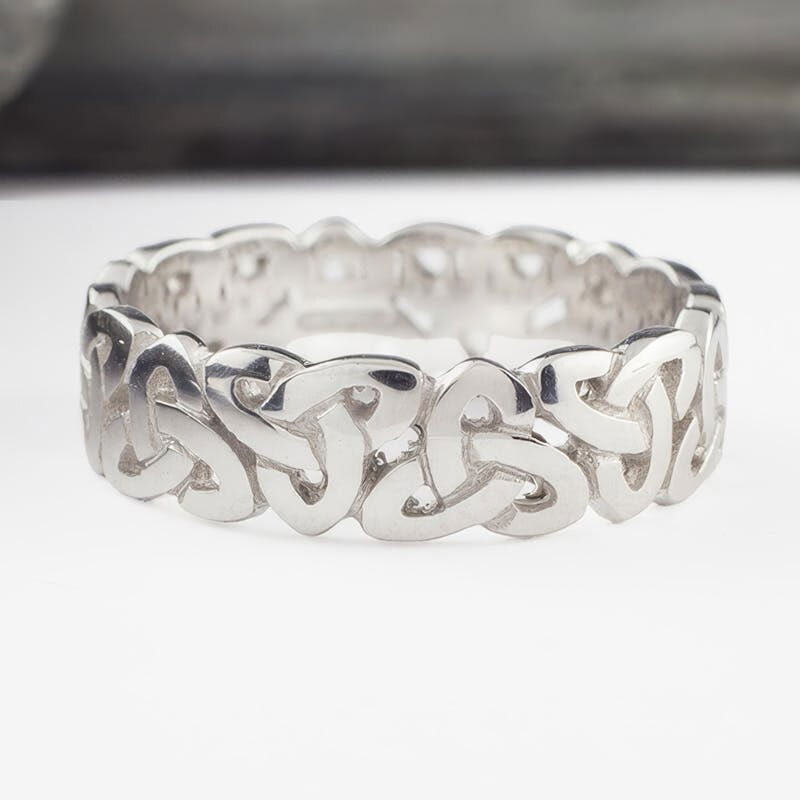 Trinity Knot
Faith and Eternity
Trinity Knot
Faith and Eternity
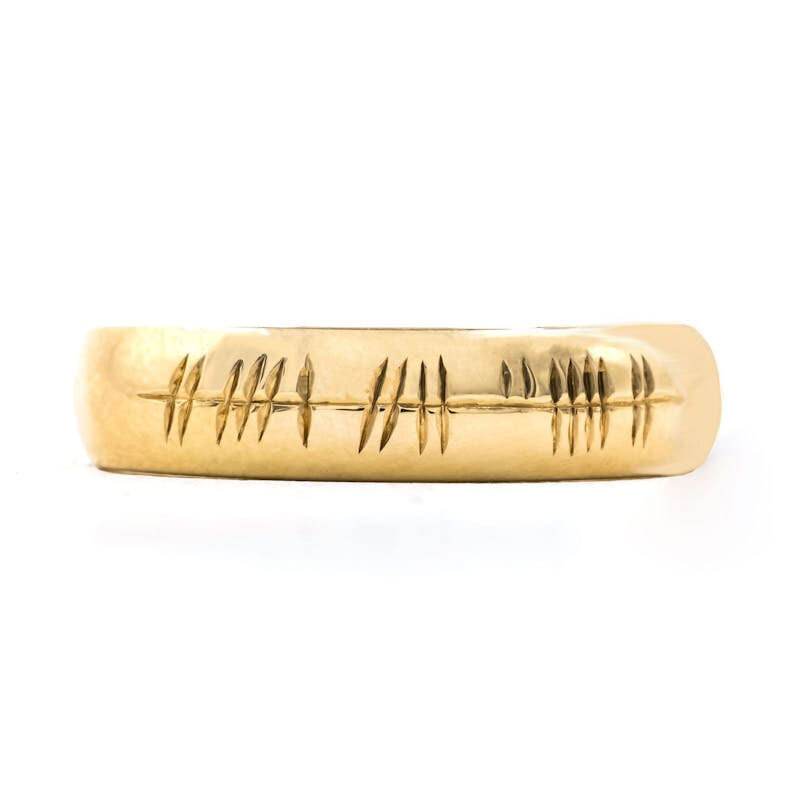 Ogham
Personalized with Ireland's ancient alphabet
Order a Free Ring Sizer
Get it right first time
Ogham
Personalized with Ireland's ancient alphabet
Order a Free Ring Sizer
Get it right first time
 Book an Appointment
See your ring in-person or by video call
Book an Appointment
See your ring in-person or by video call
 Claddagh
Love, loyalty & friendship
Claddagh
Love, loyalty & friendship
 Celtic Knot
No beginning. No end.
Celtic Knot
No beginning. No end.
 Trinity Knot
Eternal love
Trinity Knot
Eternal love
 Solitaire
 Oval
Oval
 Halo
Halo
 3 Stone
Make an appointment
See your ring in-person or by video call
Order a Free Ring Sizer
Get it right first time
3 Stone
Make an appointment
See your ring in-person or by video call
Order a Free Ring Sizer
Get it right first time
 Celtic Cross
Inspired by the Irish High Cross
Celtic Cross
Inspired by the Irish High Cross
 Personalized Ogham
Ireland's ancient alphabet
Personalized Ogham
Ireland's ancient alphabet
 Claddagh
Love, loyalty & friendship
Claddagh
Love, loyalty & friendship
 Celtic Knot
No beginning. No end.
Celtic Knot
No beginning. No end.
 Trinity Knot
Eternity
Trinity Knot
Eternity
 Shamrock
Ireland's best-loved symbol
Shamrock
Ireland's best-loved symbol
 St Brigid's Cross
Ireland's female patron saint
St Brigid's Cross
Ireland's female patron saint
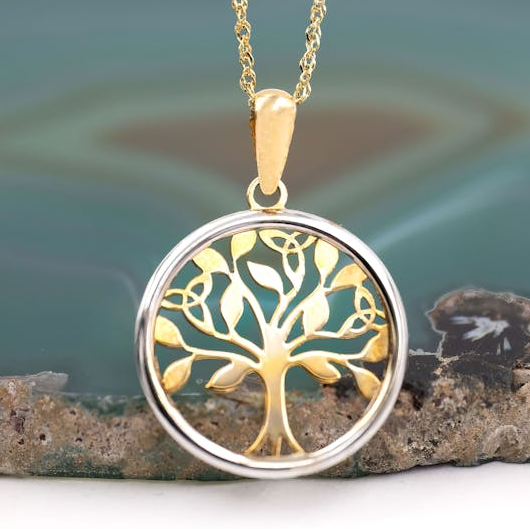 Tree of Life
Cherish your Irish roots
Tree of Life
Cherish your Irish roots
 Rare Irish Gold
Mined in Co. Tyrone
Rare Irish Gold
Mined in Co. Tyrone
 Coat of Arms
Featuring your family crest
Coat of Arms
Featuring your family crest
 Womens
 Mens
Mens
 Chains
Silver & Gold
Chains
Silver & Gold
 Celtic Knot
No beginning. And no end.
Celtic Knot
No beginning. And no end.
 Claddagh
Love, loyalty and friendship
Claddagh
Love, loyalty and friendship
 Trinity Knot
Faith and Eternity
Trinity Knot
Faith and Eternity
 Ogham
Personalized with Ireland's ancient alphabet
Ogham
Personalized with Ireland's ancient alphabet
 Tree Of Life
Cherish your Irish roots
Tree Of Life
Cherish your Irish roots
 Shamrock
Ireland's best-loved symbol
Shamrock
Ireland's best-loved symbol
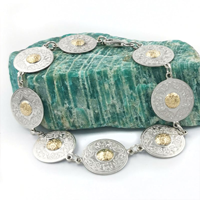 Celtic Warrior
Inspired by the Ardagh Chalice
Celtic Warrior
Inspired by the Ardagh Chalice
 Womens
 Mens
Mens
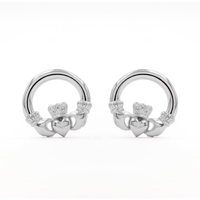 Claddagh Earrings
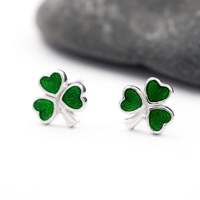 Shamrock Earrings
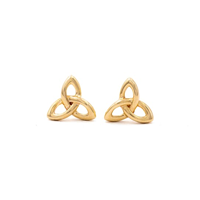 Trinity Knot Earrings
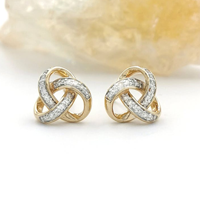 Celtic Knot Earrings
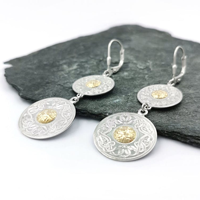 Celtic Warrior Earrings
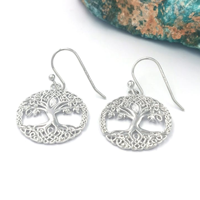 Tree of Life Earrings
 Studs
Studs
 Hoops
Hoops
 Drops
Drops


 Ask Gemma


Those are such inspiring and wonderful stories of fabulous Irish women. And, the story of Jane Chadwick's travels and stories is warm, loving and beautiful. Everything always leads back home to Ireland 🇮🇪 ☘️.